How to grow Crown of Thorns (Euphorbia milii)? A detailed guide to its care methods
Crown of Thorns, also known as Christ thorn, is one of the most popular houseplants. It can bloom all year round, with the heaviest flowering in winter in the Northern Hemisphere. Christ thorn has a very long lifespan; a potted plant can live for more than 30 years. However, growing Christ thorn well is not so easy. So, how do you grow Christ thorn? Next, let us introduce the care methods for Christ thorn.
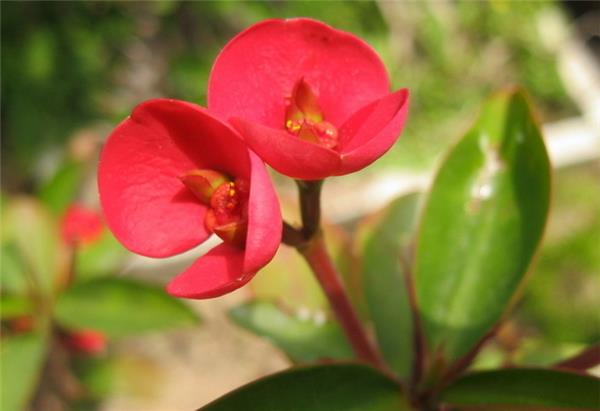
I. Care methods for Crown of Thorns
1. Temperature: Christ thorn likes warmth and is not cold-tolerant. It grows best at around 22°C during the day and around 15°C at night. Kept at 15°C to 20°C in a greenhouse, it can bloom continuously all year. If the temperature drops to 10°C, it sheds its leaves and enters a semi-dormant state, then in the following spring it puts out new leaves and continues to bloom.
2. Sunlight: Christ thorn loves light and is not afraid of intense summer heat or strong sun; it needs plenty of light all year round. If light is insufficient, it easily becomes leggy and flowering is affected. Christ thorn loves light: the more abundant the sunlight before flowering, the more vivid and eye-catching the flowers and the longer they last; with insufficient light, the flower color is dull, and if kept in shade for a long time, it will not bloom. Also be sure to maintain air circulation.
3. Fertilizing and watering: For Christ thorn, you can use potting soil with hoof and horn pieces as a base fertilizer. During the growing season, fertilize once every half month; stop fertilizing after the Start of Autumn. Avoid oily fertilizers to prevent root rot. Christ thorn is drought-tolerant; in spring and autumn, water according to the principle of watering when dry and letting it dry between waterings. In summer, water once a day; in the rainy season, guard against waterlogging; in winter, do not water unless the soil is dry, and do not keep the pot moist for long periods. During the flowering period, also control water; too much water easily causes flower drop and root rot.
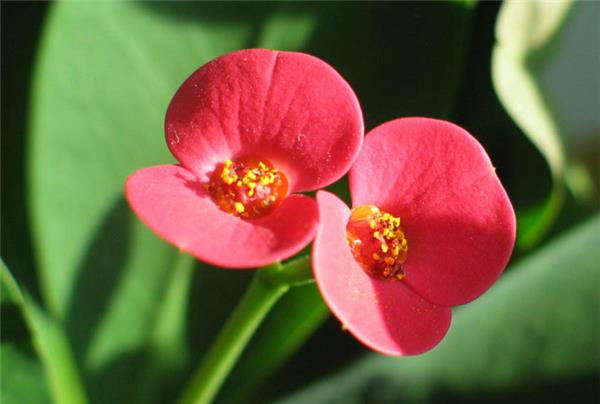
II. Cultivation methods for Christ thorn
Christ thorn is native to Madagascar, Africa, and likes a warm climate. When the indoor temperature is too low in winter, the leaves will drop completely and it enters dormancy. Although the dormant period is not long, you must still be careful to reduce watering and keep the potting soil dry. After March, as the temperature gradually rises, watering can be gradually increased. After the weather warms up, the pot can be moved to a balcony or yard, but generally do not water too much.
The potting soil should be sandy loam; there are no strict requirements regarding fertilizing. During the growing period, as the plant gradually grows larger, you can use bamboo sticks and galvanized wire to make a cylindrical support, then bend the stems evenly and tie them to the support, forming a flower column with evenly spaced blooms, which is very beautiful. Christ thorn has sharp thorns all over the plant, and the white sap in the stems is toxic. Therefore, when growing it at home, pay attention to placing it appropriately, and do not let the plant get too large, so that children do not touch the thorns and get injured or poisoned.
Christ thorn is very easy to propagate by cuttings. Cuttings can be taken throughout the growing season, but survival is best when done in May and June. Choose relatively plump stem sections for the cuttings. Since white sap flows from the cut, you can smear wood ash on the cut and leave it for a few days. After the cut has fully dried, insert it into a pot filled with sandy soil. After inserting, be careful to keep the potting soil slightly dry; it roots very easily.
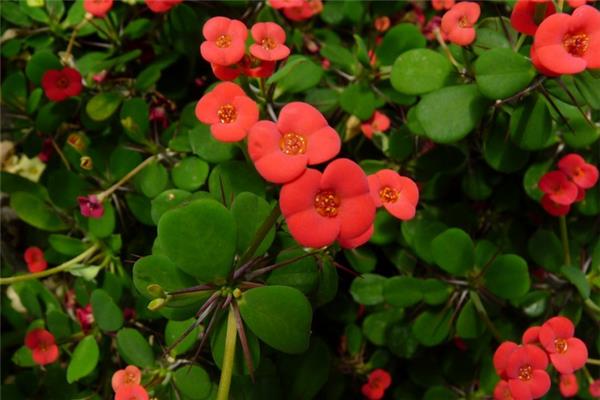
III. The role of Christ thorn in the home
Christ thorn has gray-green, spiny stems, with bright red and rose-red small flowers at the tips of the branches. It has a long flowering period, vivid flower colors, an elegant form, and is easy to cultivate, making it a favorite flower. The blooming Christ thorn flowers look from afar like little rubies, and also like tiny stars; up close, they look like a little doll's smiling face. When the flowers on all the branches open, a few dots of red among the green leaves are even more beautiful and lovely.
Christ thorn is a vine-like, spiny plant in the spurge family (Euphorbiaceae). A common feature of Euphorbia plants is that after the plant body is injured, white sap is secreted from the wound, and it is toxic. The white sap secreted from wounds of Christ thorn-type plants irritates human skin and mucous membranes, and if swallowed, it can cause nausea, dizziness, and so on. It is a useful weapon that plants evolved to protect themselves and prevent damage from pests and diseases. For home cultivation, as long as you do not casually break off flowers for children to play with, it will not cause harm. People can use the soaked filtrate of Euphorbia plant stems and leaves to control flower pests such as aphids and red spiders. Because its sap is toxic, it is best not to grow it in pots indoors; as an outdoor ornamental flower, it is also a very good choice.
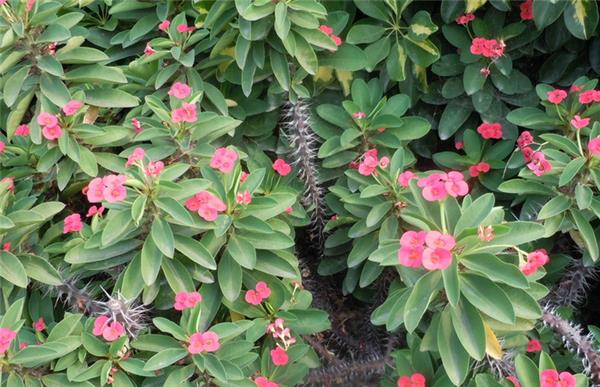
The above is what this article introduces for everyone about how to grow Christ thorn and the care methods for Christ thorn. Christ thorn has very strong drought tolerance, so it is relatively easy to grow and is also suitable for indoor potted cultivation. Just remember that it needs to be moved to a bright spot indoors for care.