Sweet Alyssum Planting Methods and Detailed Photo Guide
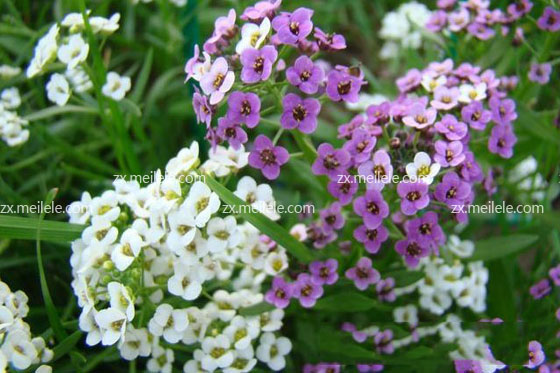
Sweet alyssum is a perennial herbaceous plant with a woody base, and its flowers bloom in corymb-like clusters, with pale purple or white, oblong petals. When sweet alyssum blooms, its shape looks especially like a sphere. Sweet alyssum is a highly ornamental plant; it produces many offsets, blooms profusely, and gives off waves of delicate fragrance. It is an excellent flower for rock gardens. So, what are the planting methods for sweet alyssum? Today, let's take a look at the sweet alyssum photo gallery and information about its planting methods that the editor has brought you.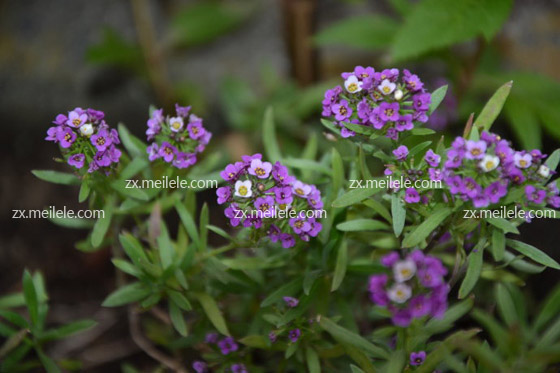
Introduction to Sweet Alyssum
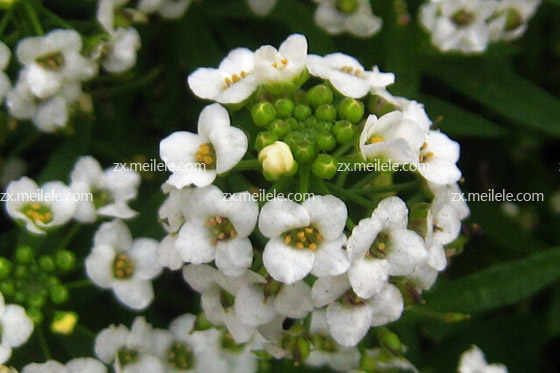
Sweet alyssum, also known as alyssum (Alyssum), small white flower, and jade butterfly ball, is a plant in the Brassicaceae family, genus Alyssum. It is a perennial herb with a woody base, but cultivated plants, whether annual or biennial, do not become woody. Its plants are 10-40 cm tall, and the entire plant is covered with "T"-shaped hairs that have a silvery-gray tint. The stems branch upward from the base, often forming dense clumps. The leaves are linear or lanceolate. It is native to the Mediterranean coast. Sweet alyssum is a flower that prefers cool climates, dislikes extreme heat, and is resistant to frost and cold. It likes a relatively dry air environment; if rainy days last too long, it is very susceptible to infection by pathogens. It also fears rain, and the leaves should be kept dry at night as well.
Sweet Alyssum Planting Methods
Since sweet alyssum is a plant that likes cool conditions and fears heat, when planting it, the temperature is best kept at 15-20°C. Generally, sowing in late September each year is better. When planting sweet alyssum, it is best to disinfect the substrate used for sowing; the best method is to heat the substrate in a pan, so that any pests and diseases in the substrate are killed by the heat.
Germination: Soak the seeds in warm water for 24 hours, until the seeds absorb water and swell.
Sowing: Sweet alyssum can be propagated by sowing or cuttings. If using the sowing method, it is generally best to sow in autumn, so that seedlings emerge quickly and fairly uniformly. The suitable germination temperature for sowing is generally 20°C. Scatter the seeds on loose sandy loam, press them down lightly, water to maintain moisture, and seedlings will emerge in 5-10 days. When the sweet alyssum seedlings have 3-4 true leaves, they can be planted into pots. For potted plants, the growing medium is best pre-treated with a small amount of decomposed compost or phosphorus and potassium fertilizer.
Management after sowing: After sowing in autumn, if the temperature is relatively low, you can wrap the flower pot with plastic film to keep it warm and moist. When the seedlings emerge, uncover the film promptly. Also let the seedlings receive sunlight before 9:30 every morning, or after 3:30 in the afternoon, as this is beneficial to seedling growth. When most of the seeds have grown into seedlings, appropriate thinning is needed: promptly pull out diseased and unhealthy seedlings so that the remaining seedlings have a certain amount of space between each other. When most of the seedlings have grown 3 or more leaves, they can be transplanted into pots.
Cutting substrate: If using the cutting method for propagation, it is recommended to use a already prepared and sterilized cutting substrate for sweet alyssum cuttings. Medium-coarse river sand can also be used, but it should be rinsed several times with clean water before use. Do not use sea sand or river sand from saline-alkali areas; these substrates are not suitable for the growth of flowering plants.
Selection of cutting branches: The branches used for cuttings are called cuttings. Usually, in combination with pinching work, the robust, pest- and disease-free top shoots that are removed are used as cuttings; the top shoots can be used directly for cuttings.
Sweet Alyssum Management Methods
Temperature: The best rooting temperature for sweet alyssum cuttings is 18-25°C. At temperatures below 18°C, rooting of the cuttings is relatively difficult, and their growth rate is also very slow. At temperatures above 25°C, they are more susceptible to infection by pathogens and rot, and the higher the temperature, the greater the proportion of rot. When low temperatures are encountered after cutting, the main measure for keeping warm is to wrap the flower pot or container used for cuttings with film. When the temperature is too high after cutting, the main cooling measure is to shade the cuttings with a shade net, blocking out 50-80% of the sunlight. At the same time, mist the cuttings at least 3-5 times a day; on sunny days with higher temperatures, the number of mistings should be increased, while on cloudy and rainy days with lower temperatures and higher humidity, mist less or not at all.
Light: Cutting propagation generally cannot do without sunlight, but the stronger the light, the higher the temperature inside the cuttings, the more vigorous the transpiration of the cuttings, and the more water consumed, which is very unfavorable for the survival of the cuttings. Therefore, after cutting, 50-80% of the sunlight must be blocked with a shade net, and after the root system grows out, gradually remove the shade net: on sunny days, remove the shade net at 4:00 every afternoon and cover it again before 9:00 the next morning.
Fertilizer and water management: Sweet alyssum is most afraid of indiscriminate fertilization, so when fertilizing sweet alyssum, it is required to follow "light fertilizer applied frequently, small amounts but many times, complete nutrition" and "alternate dry and wet, when dry let it dry thoroughly, do not water if not dry. At night, the flowers and leaves must be kept dry.
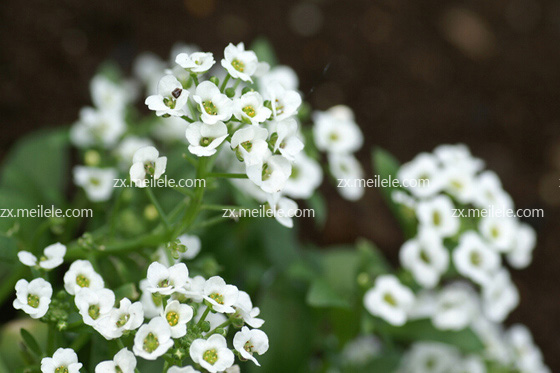
Summary: Sweet alyssum's growth habits are that it likes cool conditions, dislikes heat, requires sufficient sunlight, is slightly shade-tolerant, prefers loose soil, dislikes waterlogging, and is relatively tolerant of drought and poor soil. Therefore, when planting sweet alyssum, be sure to cultivate it according to its growth habits. The above is the information the editor has introduced about sweet alyssum planting methods. After reading the editor's introduction, I believe everyone will grow sweet alyssum better when planting it.
When dry let it dry thoroughly, do not water if not dry. At night, the flowers and leaves must be kept dry.
Summary: Sweet alyssum's growth habits are that it likes cool conditions, dislikes heat, requires sufficient sunlight, is slightly shade-tolerant, prefers loose soil, dislikes waterlogging, and is relatively tolerant of drought and poor soil. Therefore, when planting sweet alyssum, be sure to cultivate it according to its growth habits. The above is the information the editor has introduced about sweet alyssum planting methods. After reading the editor's introduction, I believe everyone will grow sweet alyssum better when planting it.