What to Do When ZZ Plant Leaves Turn Yellow? Causes and Solutions
The ZZ plant, also known as Zamioculcas zamiifolia or the aroid palm, is a perennial evergreen herbaceous plant and a rare foliage plant with underground tubers. Because its leaves somewhat resemble old-style coins, it is called the money tree or coin tree. Many people today like growing ZZ plants, because growing a money tree carries the meaning of abundant wealth rolling in. When many people grow ZZ plants, improper cultivation can cause the leaves to turn yellow, and yellowing leaves greatly affect the ZZ plant's ornamental value. Today, let's take a look at the information the editor has put together about what causes ZZ plant leaves to turn yellow and how to solve it.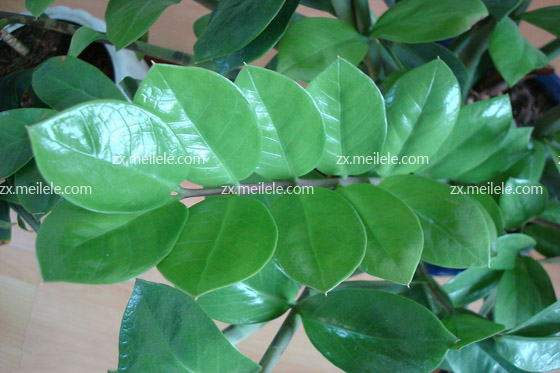
Introduction to the ZZ Plant
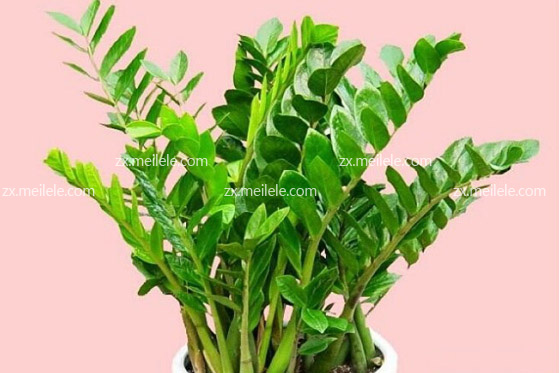
The ZZ plant, also known as Zamioculcas zamiifolia or the aroid palm, is a plant with no main stem above ground, in which adventitious buds sprout from the tubers to form large compound leaves, with fleshy leaflets that have short petiolules and are firm and deep green. The underground part of the ZZ plant is a plump tuber, and pinnate compound leaves emerge from the top of the tuber. The leaf rachis is sturdy, and the leaflets are opposite or nearly opposite along the rachis. The base of the petiole is swollen and woody. Generally, a ZZ plant lives more than five years, and its characteristic is that the leaves are constantly renewed by new leaves.
Growth Habits of the ZZ Plant
The ZZ plant originates from eastern Africa and is a tropical plant. It likes warm, hot, slightly dry, semi-shaded environments with small annual average temperature fluctuations. It is fairly drought-tolerant but rather afraid of cold, and it dislikes strong direct sunlight and exposure. It is afraid of heavy, sticky soil and water accumulating in the pot. If the potting soil for a ZZ plant has poor permeability, it very easily leads to rot of its tubers. The ZZ plant has relatively high soil requirements, requiring loose, fertile, well-drained soil rich in organic matter that is acidic to slightly acidic. But the ZZ plant has very strong sprouting ability: after cutting off the thick, large compound leaves, new leaves quickly emerge from the top of its tuber.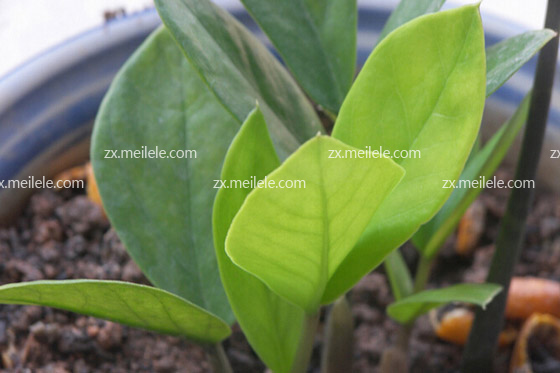
Causes of Yellowing Leaves in ZZ Plants
1. Overwatering
The ZZ plant is a plant that likes warm, hot, slightly dry conditions and is fairly drought-tolerant. If watered too much, its leaves will turn yellow. Generally, when growing a ZZ plant indoors, once the room temperature reaches above 33°C, the plant should be sprayed with water once a day, keeping the potting soil slightly moist. In winter, be sure to spray water on the leaf surfaces and the surrounding environment so that the relative air humidity can reach above 50%. After Mid-Autumn Festival, watering should be reduced, or spraying water should replace watering, to help the newly sprouted tender leaves safely get through the winter.
2. Fertilization Problems
The ZZ plant fairly likes fertile conditions, and if fertilization is not done properly, it can also turn the ZZ plant's leaves yellow. Generally, during the growing season, the ZZ plant can be watered with 2 to 3 applications per month of a mixed solution of 02.% urea plus 0.1% monopotassium phosphate, or with a balanced fertilizer 20-10-20 (20-20-20) at a concentration of 200-250 ppm used together with calcium nitrate. After Mid-Autumn Festival, nitrogen fertilizer should be stopped for the ZZ plant, and 0.3% monopotassium phosphate solution should be applied 2 to 3 times in succession to promote the hardening and filling out of its young leaf rachises and newly sprouted leaves. Once the temperature drops below 15°C, all forms of topdressing should be stopped, to avoid fertilizer damage under low-temperature conditions harming the ZZ plant's roots.
3. Pests
Pests are one of the important causes of yellowing ZZ plant leaves. In poorly ventilated environments with poor light, ZZ plant leaves are very easily harmed by scale insects. To prevent pest damage to the ZZ plant, transparent tape can be used to stick off the scale insect bodies, or a damp cloth can be used to wipe away the scale insect bodies. During commercial cultivation, at the peak hatching period of the nymphs, spraying a 1000-fold dilution of 20% buprofezin wettable powder also gives a very good insecticidal effect.
4. Soil
When growing a ZZ plant, the soil chosen is generally acidic soil. If the soil is not acidic enough, the leaves will also turn yellow. Generally, the substrate for growing a ZZ plant is mostly a mix of peat, coarse sand or washed coal cinder with a small amount of garden soil, with its pH adjusted to between 6 and 6.5, in a slightly acidic state.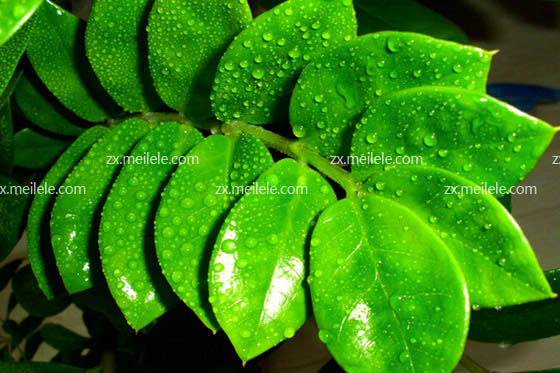
Summary: The ZZ plant is a popular large bonsai-type plant placed indoors, especially in larger living rooms, studies and sitting rooms, where it has an elegant, simple style with a southern charm. It is an indoor foliage plant with a graceful, neat plant shape. That is all the content the editor has introduced for everyone. After reading the editor's introduction, I believe everyone has gained some understanding. That is all the content the editor has introduced for everyone. After reading the editor's introduction, I believe everyone has gained some understanding.