When Does the Hibiscus Bloom? A Detailed Guide to Care Points
The distinguishing features of the hibiscus are its elegantly understated corolla and fresh, plain flower colors. Every time you see a hibiscus in bloom, it gives you a feeling of calm and peace, leaving body and mind relaxed and cheerful, which is why the hibiscus is very well suited to being grown.
I. Morphological Characteristics of the Hibiscus
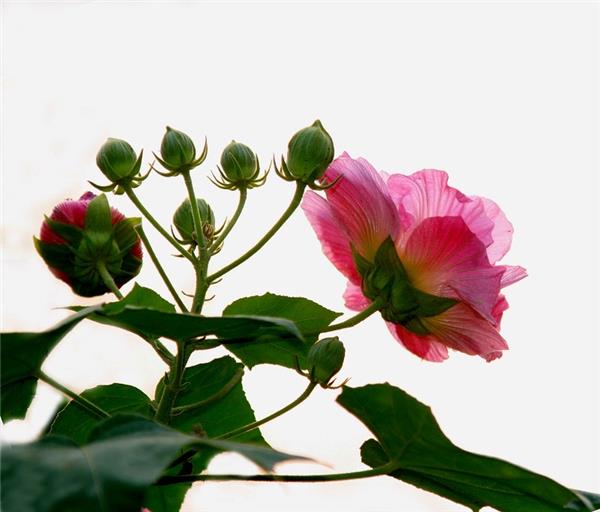
Flowers are solitary, borne in the leaf axils at the tips of branches; the pedicel is about 5-8 cm long, with a joint near the end; bracteoles 8, linear, 10-16 mm long, about 2 mm wide, densely covered with stellate woolly hairs, connate at the base; calyx campanulate, 2.5-3 cm long, with 5 lobes, ovate, acuminate at the tip; the flower is white or pale red when it first opens, later turning deep red, about 8 cm in diameter; petals suborbicular, 4-5 cm in diameter, hairy on the outside, with a bearded tuft at the base; the staminal column is 2.5-3 cm long, glabrous; style branches 5, sparsely hairy.
II. Varieties of Hibiscus
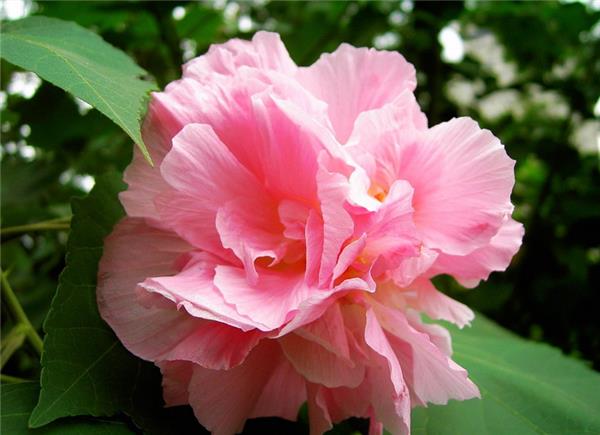
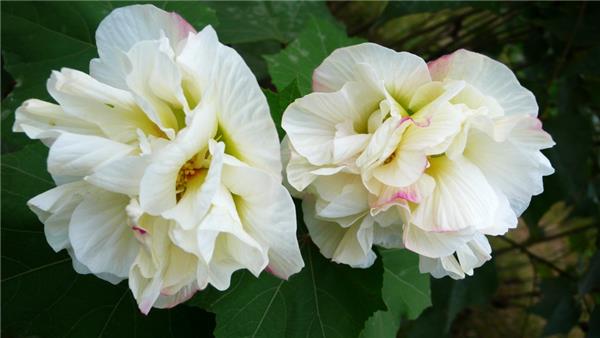
By growing environment, hibiscus is divided into: water hibiscus and dry-land hibiscus. By color, it is divided into: red hibiscus, white hibiscus, yellow hibiscus and five-colored hibiscus. There is also a rare, precious variety: the drunken hibiscus. The drunken hibiscus changes color three times within a single day, so it is also called the three-drunk flower.
III. Propagation Methods for Hibiscus
Cuttage propagation: Cuttage is widely used. After the flowers fade in winter, prune and take cuttings in December, or in March to April of the following year cut the branches into 15 to 20 cm lengths for cuttings, inserting about one third of the branch length; keep them moist after insertion, and they will root after one month. They strike very easily and grow fast, and can bloom in the same year. Hibiscus cultivation is best carried out in early spring before the leaves emerge.
Division propagation: For plants that are not particularly large when cultivated in the early growth stage, they can generally be divided without a soil ball, and division cultivation can be done with just some of the perennial root soil. If cultivating during the growth period, a soil ball is needed, otherwise survival is difficult. After planting, water thoroughly once, and thereafter water appropriately according to the soil moisture conditions, keeping it moist.
Seed propagation: Harvest ripe fruits in November-December, store them dry until March-April of the following year, then sow. Bury the seeds deep in furrows and cover with soil and grass; seedlings emerge in about 15 days. After one year of raising seedlings, they can be lifted from the nursery and planted out.
Layering propagation: In July-August, bury the branches in the soil. After about more than 1 month, the layered branches in the soil take root; after another 1 month, they can be separated from the mother plant and will survive the winter.
IV. When Does the Hibiscus Bloom
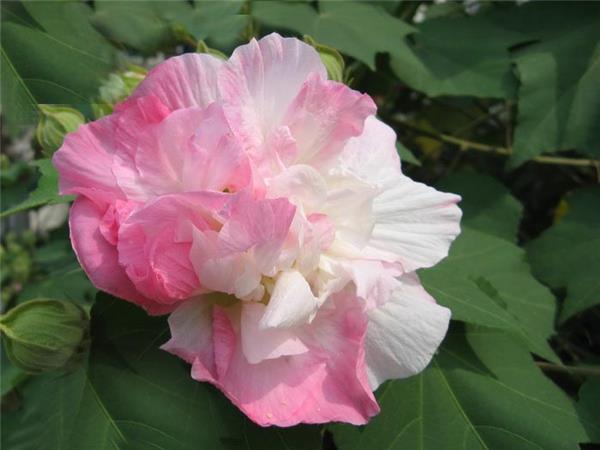
The hibiscus changes three times a day: pinkish-white in the morning, light red at noon, and deep red at dusk; its delicate, bewitching appearance often makes people linger. Second is its unique "frost-defying" character: this flower blooms from the ninth to the eleventh lunar month, that is, in late autumn, when the hundred flowers have withered, yet it blooms proudly against the frost. Hence Bai Juyi wrote in a poem: Do not fear that autumn has no companion against sorrow; when the water lotus is gone, the wood lotus blooms.
V. Care Points for Growing Hibiscus
Soil: The hibiscus likes a warm, humid environment with plenty of sunlight, tolerates partial shade slightly, and has a certain cold hardiness. It is not demanding about soil, but grows best in fertile, moist, well-drained sandy soil.
Water and temperature: During the growing season, keep adequate moisture to meet its growth needs. Because its cold tolerance is rather poor, it should be moved indoors in winter, with the temperature kept at 0°C to 10°C, allowing it to go into natural dormancy.
Weeding: Each year, weed once in summer and once in winter, and apply topdressing 2-3 times. The hibiscus sprouts very slowly and should not be exposed to direct sunlight; suitable light conditions are enough.
Pruning: The cotton rose hibiscus tolerates pruning and can be pruned into shape as needed; cut the dead branches and fallen leaves into small pieces to ensure light penetration. In winter, pay attention to keeping it warm. It is also best to train its plant shape into a shrub form.
Pests and diseases: The common red spider mite is the most common pest and disease; it can be sprayed with 73% propargite 3000-fold solution or 20% amitraz emulsifiable concentrate 1000-fold solution. The harm caused by the lesser green leafhopper and the cotton leafhopper should not be underestimated either; they can be sprayed with 5% carbaryl powder.
Growing hibiscus has many benefits and many effects, so if after reading the above introduction you have also developed some fondness for the hibiscus, do not hesitate any longer; go and grow one right away.