Reasons Why Aglaia odorata Flowers Are Not Fragrant and Key Points for Flowering
Why are Aglaia odorata flowers not fragrant? How can you make Aglaia odorata bloom abundantly and fragrantly? Aglaia odorata has small flowers and small leaves, and when it blooms, the flowers are extremely fragrant, making it one of people's favorite flowering plants. Because Aglaia odorata is evergreen year-round, it is also called four-season Aglaia odorata, and because its flowers are relatively small, it is also called broken-flower Aglaia odorata. This article provides a detailed analysis of the cultivation methods and precautions for Aglaia odorata for flower-loving friends, hoping everyone can successfully grow Aglaia odorata, which will bloom as long as it is alive.
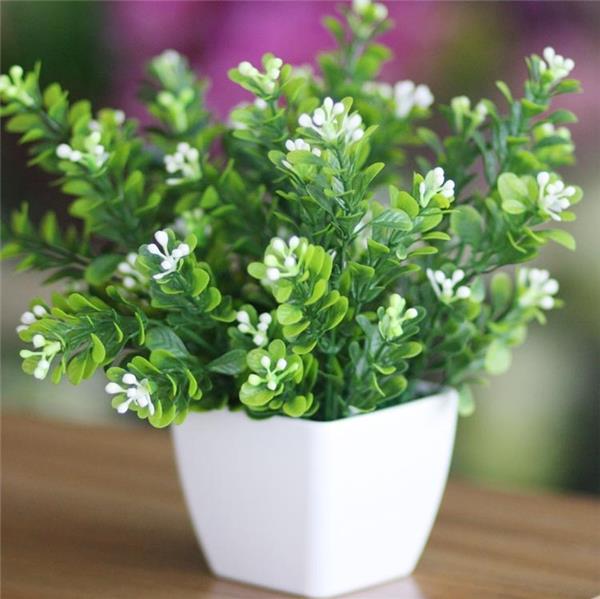
Why Aglaia odorata Flowers Are Not Fragrant
The intensity of Aglaia odorata's fragrance is first closely related to sunlight and temperature. It requires more than 8 hours of light per day, or sufficient light at around 30°C, for Aglaia odorata to grow with dark green leaves, thick and strong branches and leaves, increased flower numbers, and intense fragrance.
Secondly, the intensity of Aglaia odorata's fragrance is also related to the amount of fertilizer applied and the type of fertilizer. Aglaia odorata blooms multiple times within a year, consuming a lot of nutrients, so nutrients must be supplemented in time to keep it blooming continuously. Starting from late May, fertilizer can be applied once every half month, using a quick-acting liquid fertilizer containing more phosphorus, or a 0.5% potassium dihydrogen phosphate solution can be applied as a top dressing. Applying this type of fertilizer helps produce more flowers, making the flowers golden yellow with a strong fragrance.
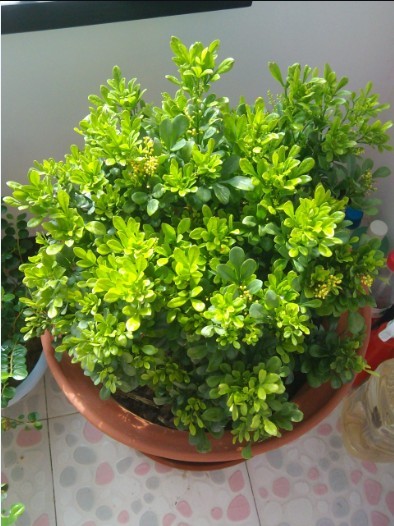
How to Make Aglaia odorata Bloom Abundantly and Fragrantly
For Aglaia odorata flowering, taking East China as an example, from June to October, it blooms once each month, totaling as many as 5 times. Some, after October, when moved into a high-temperature warm shed, can still bloom again. So why do some Aglaia odorata plants bloom little, and the flowers produced are not fragrant or only slightly fragrant? Practice has proven that the key to Aglaia odorata flowering is temperature and fertilizer.
Aglaia odorata's habits are that it likes warmth, likes sunlight, and also likes fertilizer. The higher the temperature, the more fragrant the flowers it produces. Generally speaking, at a temperature of 30°C and under sufficient sunlight, the flowers produced have a strong fragrance. Conversely, at below 30°C or with insufficient light, the flowers produced are not very fragrant. Why? This is the activity of a biological catalyst - enzymes. Within a certain range, as temperature and light rise and fall in intensity, the fragrance or lack of fragrance of Aglaia odorata is determined. For Aglaia odorata to bloom abundantly and fragrantly, there is another important reason: rational fertilization. Because Aglaia odorata blooms relatively many times, it also consumes many nutrients, which must be supplemented in time; otherwise, after blooming once or twice, it will be difficult for it to bloom again. As for the fertilization method, generally speaking, after each blooming period, nitrogen, phosphorus, and potassium fertilizers should be applied in time 1-2 times, among which more organic fertilizer mainly containing phosphorus should be applied. The concentration of the fertilizer can be considered according to the size and growth condition of the plant. If the plant is large and growing well, it can be a bit stronger; otherwise, it can be lighter. Through the above management, Aglaia odorata will bloom continuously with a rich fragrance.
Cultivation Methods for Aglaia odorata:
1. Aglaia odorata likes a warm climate, so it is generally recommended to grow it in a greenhouse. In summer, it can be placed outside, but attention should be paid to shading; appropriate shading is still acceptable. Generally, keep the temperature at around 25°C, and during the hottest time in summer, water appropriately to lower the temperature. In winter, it must not be lower than 10°C, otherwise it will suffer frost damage.
2. Aglaia odorata likes moisture, so it needs timely watering, especially during the growing period, but remember that waterlogging must not occur, because excessive watering can cause a series of problems such as yellowing leaves and root rot. Therefore, generally watering twice a day is sufficient, and in summer the leaves need to be appropriately sprinkled with water.
3. Aglaia odorata does not have very high fertilizer requirements, but because it blooms many times a year, this causes a shortage of nutrients, so after flowering it needs a little fertilizer applied in time, but not too much.
4. For soil, choosing acidic soil is fine. The humus content should mainly be leaf mold, or you can buy special fertilizer on the market.
When choosing potted Aglaia odorata, the soil should be loosened frequently to ensure air circulation and drainage. Generally, repot every 2 years, and during the growth period, fertilize the potting soil every 2 weeks. Seedlings must not be exposed to strong sunlight.