What to Do When a Peace Lily Won't Bloom? Causes and Solutions
The peace lily (Spathiphyllum) is a common ornamental plant. Because its flower meaning is considered auspicious, many people like to grow it. What are the benefits of the peace lily? What should you do if it won't bloom?
What to Do When a Peace Lily Won't Bloom
To get a peace lily to bloom, the first thing to consider is light. Although the peace lily is very shade-tolerant, it is very difficult for it to bloom if it stays in a very dark place for a long time. However, it should not be placed under blazing sun either; bright, indirect light is most suitable. In addition, you need to ensure adequate fertilizer. If the potting soil is too poor, it is not conducive to blooming either. In winter, it is best to provide sufficient light, which not only helps keep the leaves dark green but also helps the plant overwinter.
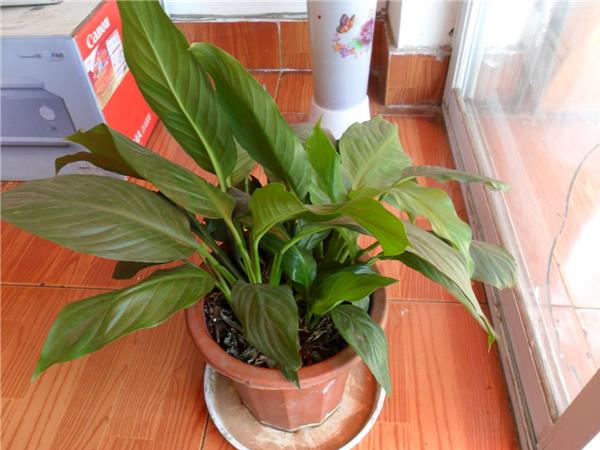
There is a method circulating online to induce a peace lily to bloom by spraying gibberellic acid to artificially induce the plant to flower. Different varieties bloom at different times. Small varieties respond more quickly to gibberellic acid and can bloom 7-9 weeks after spraying, medium varieties need 10-11 weeks, and large varieties need 12-13 weeks. Note that too high a concentration of gibberellic acid will cause the plant's flowers to become deformed, so generally a dilution of 1000-1500 times is sufficient. This method has not been tested, but it makes me think of a question: if the peace lily a gardener buys was induced to bloom, then after the first blooming period, will it have to be induced again in order to bloom? So it cannot be ruled out that some gardeners' peace lilies were originally induced to bloom by sellers using gibberellic acid, which is why they are difficult to get to bloom later on.
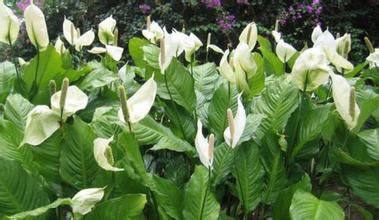
The Benefits of the Peace Lily
1. The Peace Lily Flower
Flower meaning: it signifies that the owner can have smooth sailing. It represents a kind of hope, a kind of prayer.
2. Purifying the Air
The peace lily can remove: ammonia, acetone, benzene, trichloroethylene, and formaldehyde, thereby purifying the air. A few pots of peace lily can be placed in a newly renovated house. Households with children must pay special attention, to avoid the plant being accidentally eaten.
Bathrooms are often warm and humid, which exactly suits the habits of the peace lily. It is an "expert" at suppressing waste gases exhaled by the human body, such as ammonia and acetone. It can be placed in the bathroom to purify the air. We know that bathrooms may produce ammonia, so placing it in the bathroom not only beautifies the environment but also purifies the air, making the air fresh and new. Two benefits in one.
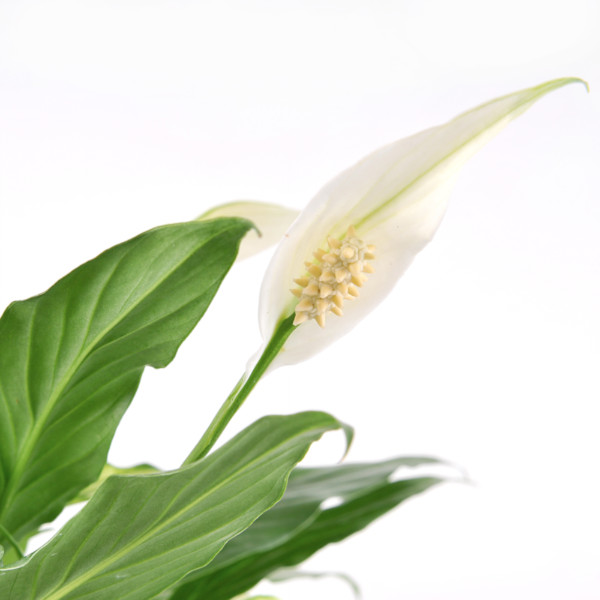
In addition, the bedroom is also a fairly suitable place for the peace lily to live. Moreover, the peace lily can absorb indoor waste gases, and its high transpiration rate can prevent the nasal mucosa from drying out, greatly reducing the possibility of illness, which is undoubtedly good news for everyone.
At the same time, weaker light in the bathroom and bedroom is best, as it is more suitable for the growth of the peace lily.
How to Grow a Peace Lily in Water
Growing a peace lily hydroponically lets you admire its white, tender roots and also see the lovely little fish swimming among the roots. It is truly delightful. The key points of hydroponic peace lily: oxygen, light, and nutrients.
1. Change the water every 15-20 days when it is hot, and about once a month when it is cold. The water level should just cover three-quarters of the root system.
2. Normally indirect light is sufficient; avoid light in summer, and avoid direct strong light.
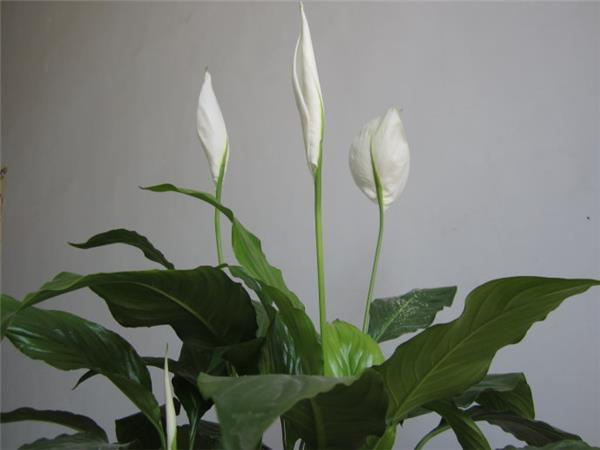
3. Use a nutrient solution for foliage plants.
4. Spray water on the leaves appropriately to increase air humidity. If using tap water, it must be drawn in advance and left in the air for more than a day to fully dissolve oxygen and release chlorine. When changing the water, wash away the mucus on the roots and cut off rotten roots and scorched leaves.
For hydroponic flowers, use a dedicated nutrient solution formulated for foliage plants. In spring and autumn, when growth is vigorous, add the nutrient solution more frequently.