What to Do When a Jade Plant Drops Its Leaves? Causes and Solutions
The jade plant (Crassula ovata) is a common foliage plant, but it can also bloom. Many plant lovers do not know when the jade plant flowers, and seeing their own jade plant grown for five or six years, or even over a decade, without blooming, they wonder: when exactly does the jade plant bloom? And what should be done when a jade plant drops its leaves?
What to Do When a Jade Plant Drops Its Leaves
1. A sudden, long period without water.
2. Low temperatures.
3. Poor ventilation and air flow.
Check these three aspects, identify the main cause, and after correcting it, the plant will gradually recover.
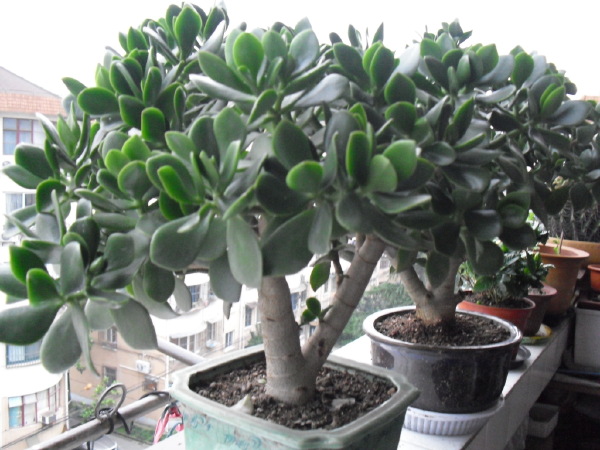
In Which Season Does the Jade Plant Bloom?
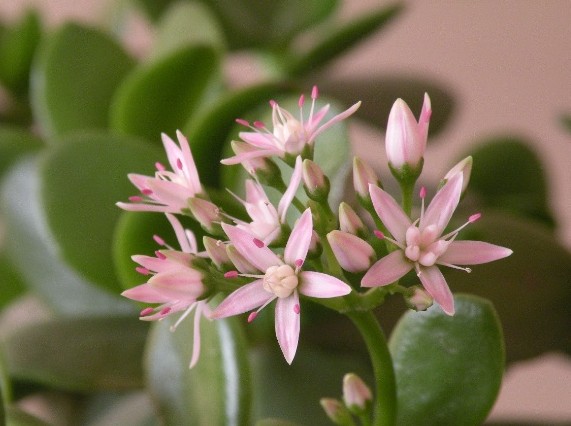
The jade plant generally blooms in summer and autumn, but some plant lovers' jade plants bloom in winter. The flowering period of the jade plant is very long, lasting up to a hundred days.
Cultivation Techniques for the Jade Plant
The jade plant is very easy to grow; the main thing is to give it plenty of sunlight and not to water it too much. The jade plant is highly adaptable, extremely drought-tolerant, and not demanding about soil.
During the growing period, the jade plant only needs the potting soil kept slightly moist and a well-ventilated environment. Do not water too much; water again only after the soil has dried. Waterlogged potting soil will cause root rot. In summer, if the potting soil is too dry, it will also cause leaf drop. During cultivation, it generally needs little fertilizer; applying a thin liquid fertilizer once or twice a year is enough.
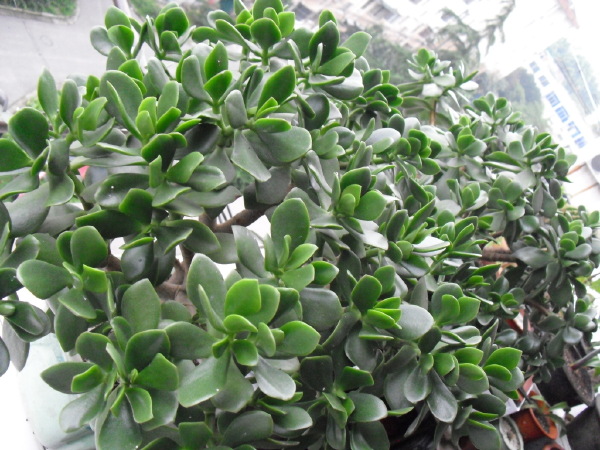
Light and Temperature Control
Spring and autumn are the suitable growing seasons for the jade plant, with an optimal growing temperature of 20-30°C. In summer, when temperatures are high, provide shade to avoid direct sunlight. When the temperature exceeds 38°C, growth slows down. In winter, place it indoors in a sunny spot and maintain a room temperature of 7-10°C. If the temperature drops below 0°C, it will freeze and die.
Water and Fertilizer Management
During the growing period, water the jade plant once every 2-3 days, but do not let water accumulate. In the hot summer, strictly control watering and increase ventilation, otherwise leaf drop is likely. In winter, reduce watering, and keep the potting soil slightly dry. During the growing period, apply topdressing, generally 2-3 times a month with a thin, well-rotted cake fertilizer liquid. To keep the jade plant's shape full, do not apply too much fertilizer or water, to avoid leggy growth.
Feng Shui Applications of the Jade Plant
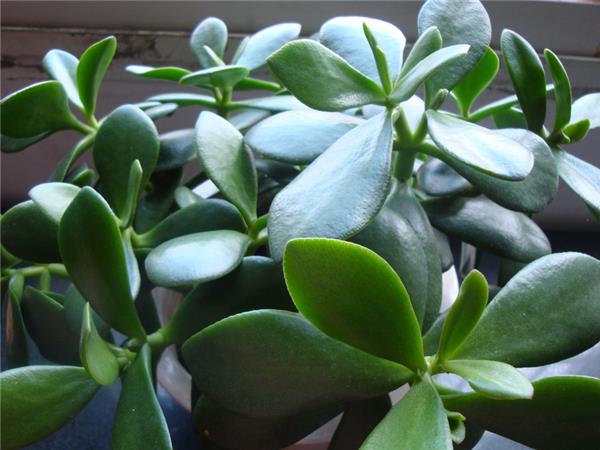
The jade plant has thick, fleshy branches and leaves, stays green all year round, has peculiarly shaped leaves, a dignified plant form, is easy to cultivate, and simple to manage. It is suitable for potted cultivation and can be placed on a balcony or as an accent on an indoor table, looking very delicate and elegant. Its crown is upright and graceful, its stems and leaves are emerald green, and it bears white flowers at the tips, making it very refined and distinctive. If matched with a pot stand and gravel and made into a small bonsai, the jade plant is suitable for potting, and can also be trained into the posture of an old tree with a thick trunk, making it even more attractive when decorating a coffee table or desk. However, its leaf sap is toxic and can cause blindness. The latest research reports: medicine made from jade plant extract can effectively treat diabetes.
The sap of the jade plant is toxic. Do not let young children accidentally ingest the sap, otherwise it will cause skin redness, swelling, pain, and blistering; if it accidentally gets into the eyes, it can cause blindness. Of course, as long as you do not injure the jade plant so that it bleeds sap, or even if it does bleed sap and you avoid contact with it, you will be perfectly fine.
In fact, many plants that can purify the air, such as oleander and Alocasia macrorrhizos (giant taro), are toxic. Of course, the toxicity is limited to their sap and the like; as long as contact is avoided, they will not cause any harm to the human body. Therefore, when growing indoor plants, everyone should understand their habits and know what they are dealing with. When growing them indoors, open the windows more, pay attention to ventilation and air exchange, and it is best to move them outdoors at night.