What to Do When Sedum rubrotinctum Drops Its Leaves? Teach You the Correct Care Method
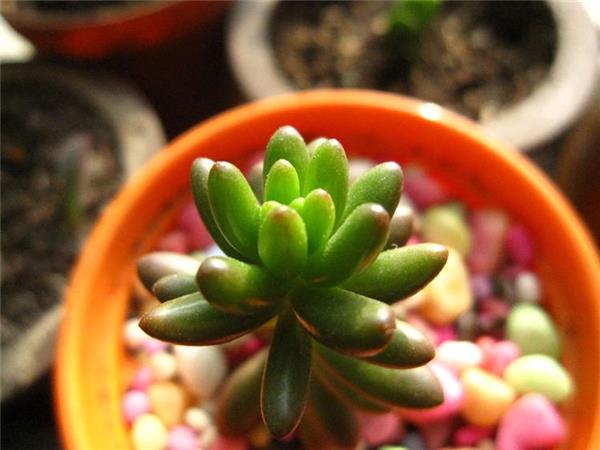
What to do when Sedum rubrotinctum drops its leaves? The leaves are fleshy, long oval-shaped, about 1 cm long, and alternate. The flowers are yellow and star-shaped. In autumn and winter or under strong light, some or all of the leaves turn bright red. The leaf tips are slightly translucent, and at this time the leaves are red and green interlaced with vivid colors, like a rainbow or jade, hence the name "rainbow jade" (Sedum rubrotinctum). How do you grow Sedum rubrotinctum?
Reasons Why Sedum rubrotinctum Drops Its Leaves
Sedum rubrotinctum is actually a very easy succulent plant to grow; as long as you cultivate it according to its habits, there won't be any major problems. Sedum rubrotinctum is a plant that likes warmth and light, and especially likes environments with large temperature differences. So it needs little water and plenty of sun; plenty of sun does not mean scorching sun, as scorching sun can also cause problems, and little water also depends on the situation - less water in winter, more water in summer, and keep it ventilated. So if your Sedum rubrotinctum is dropping leaves, leggy growth and root problems may be caused by the following reasons.
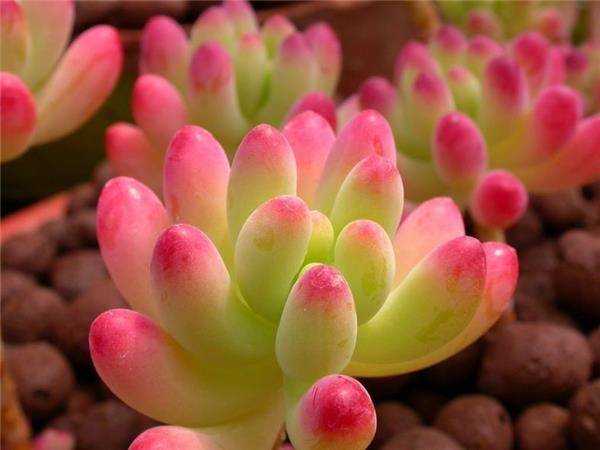
1. Watering: Sedum rubrotinctum grows slowly and is drought-tolerant, so it should not be given heavy fertilizer or large amounts of water. If you keep watering it, it will absolutely drop leaves and rot its roots.
2. Light: Sedum rubrotinctum likes warmth, and it should be given full light throughout the growing period. But exposure to scorching sun in summer will cause sunburn on the leaves.
3. Ventilation: Sedum rubrotinctum has few diseases, but if ventilation is poor and air humidity is high, stem rot and leaf spot disease may occasionally occur.
How to Grow Sedum rubrotinctum
1. A warm environment with obvious day-night temperature differences. It has strong adaptability to temperature and can grow well between 10°C and 28°C.
2. In autumn and winter, as temperatures drop and light intensifies, the fleshy leaves gradually turn red, so artificially lowering the temperature during cultivation can increase its ornamental value.
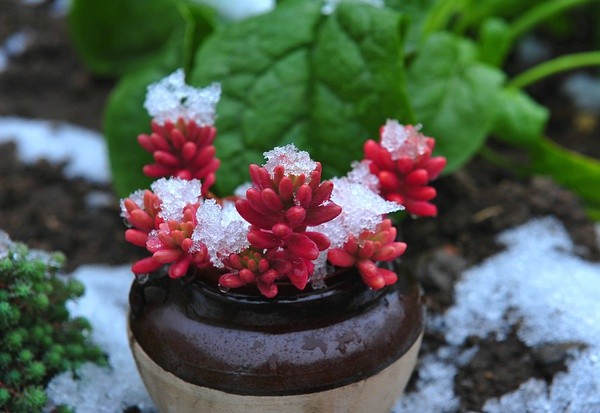
3. In winter, room temperature should not be lower than 5°C. Sedum rubrotinctum likes light, and it should be given full light throughout the growing period. But exposure to scorching sun in summer can cause sunburn on the leaves, so appropriate shading or half-day sun is acceptable, and direct sunlight at noon should be avoided. Sedum rubrotinctum grows slowly and is drought-tolerant, so it should not be given heavy fertilizer or large amounts of water; water when the soil is dry and water thoroughly, while in winter when room temperature is lower, reduce the amount and frequency of watering. Generally, apply organic liquid fertilizer once a month.
4. In summer, pay attention to maintaining good ventilation. Sedum rubrotinctum grows relatively slowly, and generally after 3 years of cultivation the plant shape begins to become messy, so pruning should be done in advance.
Disease Prevention and Control of Sedum rubrotinctum
Sedum rubrotinctum has few diseases, and leaf spot disease and stem rot may occasionally occur. Leaf spot disease is mainly caused by poor ventilation and high air humidity. Systemic fungicides can be used for prevention and control. Improving ventilation is the key to preventing leaf spot disease. Stem rot is mostly caused by an overly humid environment in winter. Healthy stem segments from the upper part of the plant should be cut for propagation, while avoiding excessive and frequent watering in winter, and keeping the potting soil slightly dry.
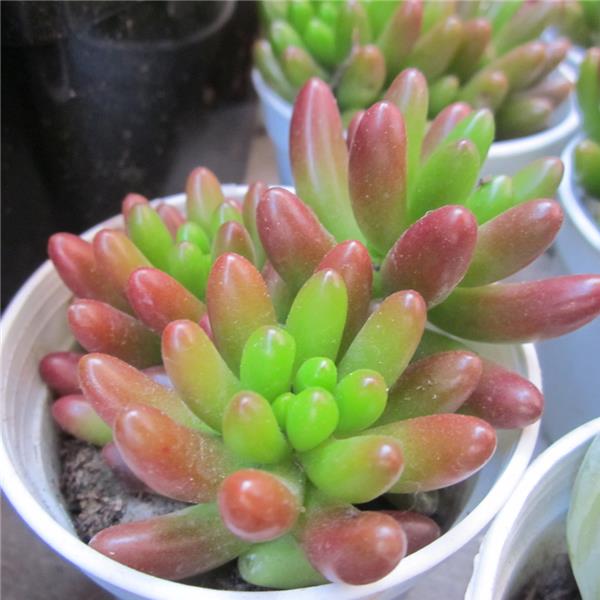
The main problems harming Sedum rubrotinctum are leaf spot disease and stem rot, mainly caused by poor ventilation and careless watering. When leaf spot disease symptoms appear, 50% carbendazim wettable powder at 1000 times dilution or 50% thiophanate-methyl wettable powder at 2000 times dilution can be used for control. When stem rot symptoms appear, 70% thiophanate at 600-1000 times dilution can be used to smear the diseased spots or coat the branches and stems, or 500 times dilution of thiram, which also works well.