[When Does the Jade Plant Bloom] How to Get a Jade Plant to Bloom
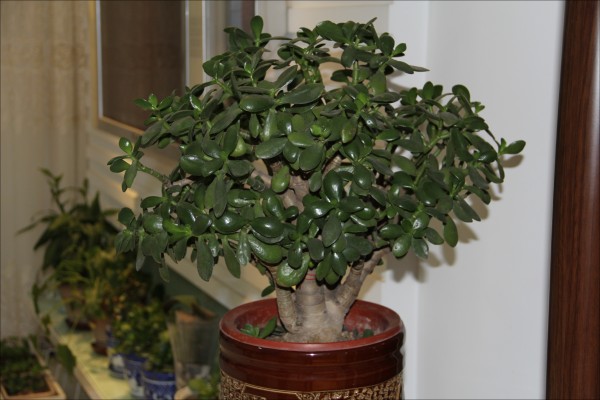
The jade plant (Crassula ovata) is a plant, and an old saying goes, "jade tree in the wind," describing a person as elegant and graceful as a jade tree, beautiful and full of charm. Today the jade plant is often cultivated artificially as bonsai material, and jade plant bonsai has its own unique advantages, such as being very tolerant of pruning, tolerant of poor soil, tolerant of dry environments, and growing very quickly. So when does the jade plant bloom? How can you get a jade plant to bloom?
How to Make It Bloom Every Year
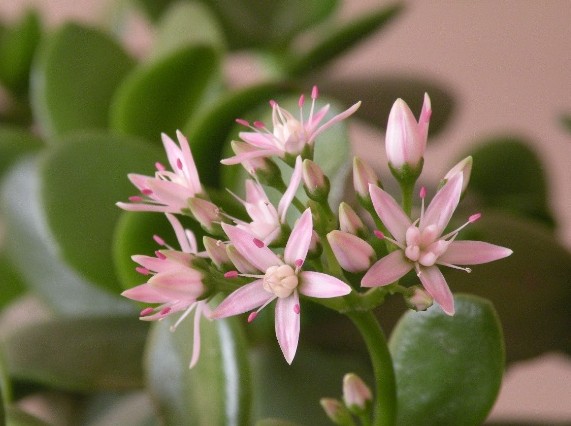
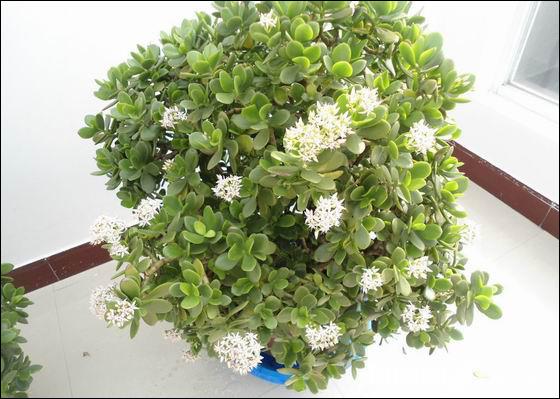
It loves light, and it should be placed in a bright, warm environment all year round; this is the key to blooming. The jade plant is a succulent, very drought-tolerant, and should not be watered too much ordinarily; water it on a wet-dry cycle, watering only after the soil has dried out completely. In the hot summer season, be careful to avoid leaf drop caused by heavy watering right after exposure to intense sun. During the growing season, apply a thin, diluted liquid fertilizer containing nitrogen, phosphorus and potassium once every 6-10 days; never make it too concentrated. By mid-to-late November, flower buds can appear at the tips of the leaves, and from January to March the tree is covered in blooms. If you cultivate the jade plant with moderate water and fertilizer during the growing season, and in winter keep it in a room with ample light, fresh air and stable temperatures, healthy old plants can produce small pinkish-white flowers in winter and spring, and they are fragrant.
1. It loves light, and it should be placed in a bright, warm environment all year round; this is the key to blooming.
2. The jade plant is a succulent, very drought-tolerant, and should not be watered too much ordinarily; water it on a wet-dry cycle, watering only after the soil has dried out completely.
3. In the hot summer season, be careful to avoid leaf drop caused by heavy watering right after exposure to intense sun.
4. During the growing season, apply a thin, diluted liquid fertilizer containing nitrogen, phosphorus and potassium once every 7-10 days; never make it too concentrated.
If you do the above, by mid-to-late November flower buds can appear at the tips of the leaves, and from January to March the tree is covered in blooms.
How to Grow the Jade Plant
Plant the jade plant or repot it with fresh soil in early spring before it starts growing. The potting soil should be loose, fertile and well-draining. Generally choose 2 parts leaf mold or peat soil, 2 parts garden soil, 3 parts coarse sand, and 1 part limestone gravel, or a potting mix of 3 parts leaf mold, 3 parts garden soil and 3 parts coarse sand, plus 1 part bone meal and 1 part plant ash, thoroughly mixed, as the potting soil.
The jade plant's suitable growing temperature is 20-30°C. Spring and autumn are the suitable growing seasons. In the high temperatures of summer, shade it or place it under tree shade to avoid direct strong sunlight. When the temperature exceeds 38°C, growth slows or the plant enters a brief dormancy. In winter it should be brought into a greenhouse or placed in a sunny spot indoors, with the room temperature kept at 7-10°C, and never lower than 5°C. If it drops below 0°C, the plant will freeze and die. During the growing season, except for shading needed during the hot summer, it should be placed in a spot with ample sunlight.
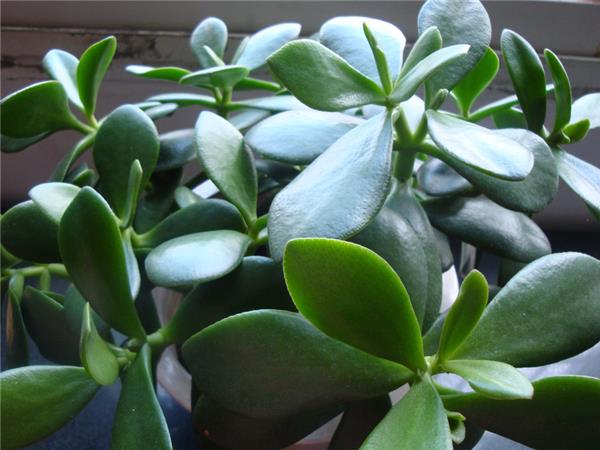
During the jade plant's growing season, water once every 2-3 days, but do not let the potting soil become too wet, and especially do not let water accumulate. In the hot summer, watering must be strictly controlled and ventilation increased, otherwise leaf drop is likely. In winter, reduce watering, and it is best to keep the potting soil slightly dry. During the growing season, apply topdressing, generally 2-3 times a month with a fermented, diluted cake fertilizer liquid. Before repotting or planting, apply enough base fertilizer; fermented organic fertilizers such as chicken manure, pigeon manure, bone meal, night soil and various cake fertilizers can all be added to the potting soil as base fertilizer. To keep the plant's shape full, do not use too much fertilizer or water, so as to avoid leggy growth.