How to Grow Thyme Well? A Detailed Guide to Practical Growing Methods
Thyme is an herb that has been widely used since ancient Greece, and it is still used today to add a distinctive flavor to dishes. Thyme also has a strong antibacterial effect and can be used to make thyme tea, gargle, and clean minor skin wounds. So how do you grow thyme?
Thyme Requires Attention to Cultivation and Management
Thyme is mainly planted by transferring potted seedlings into the ground or by bare-root planting, with spring and autumn planting being preferable. When planting European thyme, the plant and row spacing can be slightly larger. During the growing season, after planting at a spacing of 15 cm x 15 cm and once established, it will produce a creeping effect after 20 to 30 days; Mongolian thyme requires more than 45 days. If planted at a spacing of 30 cm x 30 cm, it can also creep into a continuous patch within the same year.
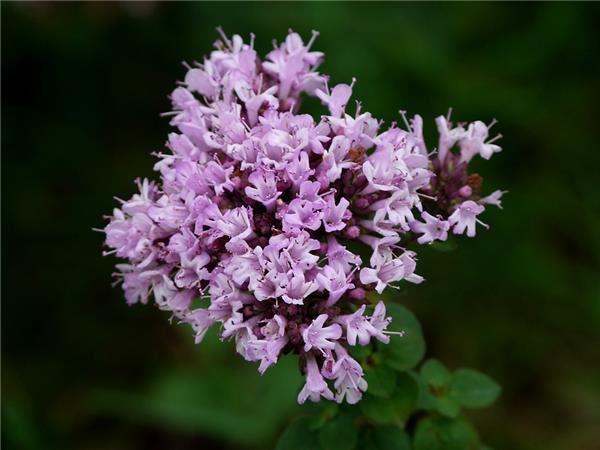
If a creeping effect is urgently needed, thyme rolls can be used for planting when greening sloped roofs. After planting, press the soil down, water two or three times depending on the weather, and then carry out routine management.
For later maintenance, in addition to routine watering during the growing season, several waterings should be scheduled before the late-spring rainy season to lower the temperature and address the water issue. No watering is needed during the rest of the period, which also helps root establishment and improves disease resistance and cold resistance.
European thyme overwinters naturally in the open ground in a perennial-root form, and it takes more than 20 days of regrowth each year to form a turf. Under intensive management, edging and thinning of flower branches can be done to enhance the landscape effect. If there is no snow, the green period can be extended to mid-December, and dead branches should be cleared before mid-March.
After Mongolian thyme forms a turf, in early spring of each year in early March, it first sprouts from small branches, and then produces vegetative branches from the rhizome. After 4 years of turf formation, a dead branch layer of a certain thickness will appear. To ensure the landscape effect, a flat cut at ground level should be carried out once in winter to help extend the lifespan after turf formation.
Temperature: It prefers a warm climate, and the most suitable temperature for growth is 20-25°C. It is relatively cold-tolerant. It dislikes high temperature and high humidity; under high temperature and high humidity, plant growth weakens and rot is likely to occur. It is suitable for cultivation in cool areas, or placed in a shaded spot to pass the summer, while measures such as spraying the environment with water and increasing ventilation should be taken to lower the temperature.
Light: It prefers ample sunlight. Insufficient light will cause the plant to grow leggy. However, in summer and autumn when sunlight is intense, appropriate shading is needed to avoid scorching the branches and leaves.
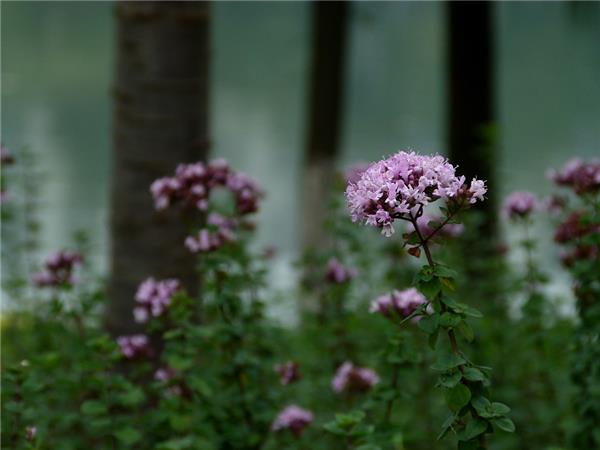
Watering: Because the leaves are slightly fleshy, it is somewhat drought-tolerant and dislikes waterlogging. When the potting soil is too wet, the root system and branches and leaves grow poorly, and the essential oil content is reduced, and it may even lead to root rot or plant death. During the growing period, watering should follow the principle of "do not water if not dry, and water thoroughly when watering." It is better to let it be a little dry than to keep it too wet. During the rainy season, accumulated water in the pot should be poured out promptly. In summer during high temperatures, prevent the potting soil from becoming too wet; in winter, watering should be even more controlled to keep the potting soil relatively dry.
Fertilizing: Because it grows relatively slowly, it does not need much fertilizer. In spring and autumn during vigorous growth, apply a dilute fertilizer once every half month. For types with markings on the leaves, a fertilizer combining phosphorus and potassium should be applied to make the markings more brightly colored. Fertilizing should be stopped in summer and winter, especially in summer when plant growth is relatively weak, as fertilizing can easily cause root rot and plant death. °C
Pruning: During the seedling stage, pinching should be carried out to promote branching and form a dense shape. Normally, pruning can be combined with harvesting branches and leaves for use at any time. Prune to keep the plant attractive and to facilitate ventilation and light penetration. When pruning, be careful not to cut too low to the woody part, otherwise the sprouting ability and budding ability will be affected and regrowth will be affected. For types with variegated or colored leaves, if reversion occurs (branches turning entirely green), remove them immediately. For older plants whose stems have become woody and whose growth has declined, if normal growth cannot be restored after pruning, consider culling them.
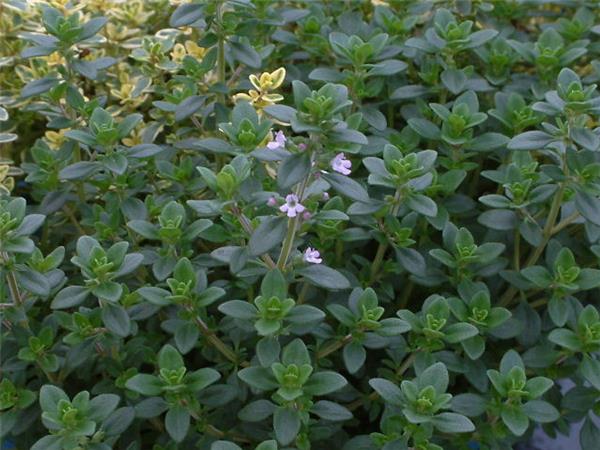
Planting and Repotting: Generally, repotting is needed about once every 2 years. It prefers well-drained neutral or alkaline soil. For potted substrate, materials such as leaf mold and peat soil can be used, and 20<>% or so of perlite, rice husk ash, coarse sand, and other water-permeable materials should be added, while placing more drainage material at the bottom of the pot.
Morphological Characteristics:
The plant is about 20 cm tall, and the whole plant has fragrance and a mild pungent taste. The lower part of the stem is creeping and clustered, while the upper part is upright, four-angled, and much branched. The leaves are opposite, narrowly oblong-elliptical or lanceolate, about 0.7 cm long and about 0.3 cm wide, gray-green, with revolute leaf margins. It blooms in early summer, with white flowers tinged with red, 0.2 cm in diameter, in terminal verticillasters. The seeds are small and round, about 6000 seeds per 1 g.
Ecological Habits:
It prefers sufficient light. It does not have high requirements for soil quality, but it needs good drainage.
Cultivation and Management:
It can be propagated by sowing, cuttings, layering, and division. Because the seeds are tiny, broadcasting is better. The medium can first be thoroughly watered, and then the seeds spread evenly on the surface. When 4-6 leaves have grown, they can first be moved to a smaller container (such as a plug tray), and when the root system has developed better, they can then be moved into a pot for final planting. For cuttings, the terminal bud can be taken as the cutting, preferably with 3-5 nodes, but be careful not to take branches that have already become woody, as their rooting ability is poor. If peat soil is used as the growing material for potting, about 20% river sand should be added to facilitate drainage. It is better to let it be a little dry before watering than to keep it moist. Because growth is slow, it does not need much fertilizer. If peat is used as the medium, only about 5%-10% decomposed organic fertilizer needs to be added. After the plant grows larger, apply liquid fertilizer once every 1-2 weeks. Growth weakens in summer, so fertilizing is not suitable at that time.
Uses:
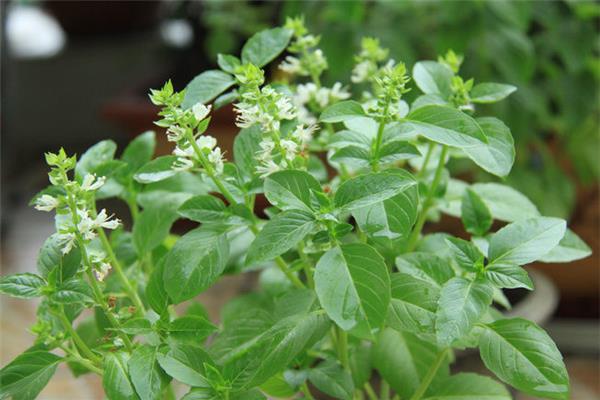
It can be planted in the ground in courtyards. Fresh branches and leaves can be eaten directly raw, or used as a spice, and essential oil can also be extracted for use in bath products. It has effects such as improving nasal and throat discomfort, aiding digestion, promoting urination, and expelling roundworms.
Medicinal Effects:
Dispels wind and releases the exterior, promotes the movement of qi and relieves pain, relieves cough, and lowers blood pressure.
If peat soil is used as the growing material for potting, about 20% river sand should be added to facilitate drainage. It is better to let it be a little dry before watering than to keep it moist. Because growth is slow, it does not need much fertilizer. If peat is used as the medium, only about 5%-10% decomposed organic fertilizer needs to be added. After the plant grows larger, apply liquid fertilizer once every 1-2 weeks. Growth weakens in summer, so fertilizing is not suitable at that time.
Uses:
It can be planted in the ground in courtyards. Fresh branches and leaves can be eaten directly raw, or used as a spice, and essential oil can also be extracted for use in bath products. It has effects such as improving nasal and throat discomfort, aiding digestion, promoting urination, and expelling roundworms.
Medicinal Effects:
Dispels wind and releases the exterior, promotes the movement of qi and relieves pain, relieves cough, and lowers blood pressure.