How to Grow Alfalfa? A Detailed Explanation of Key Cultivation Techniques
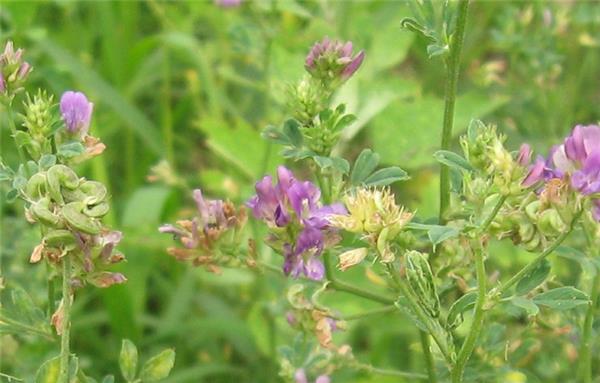
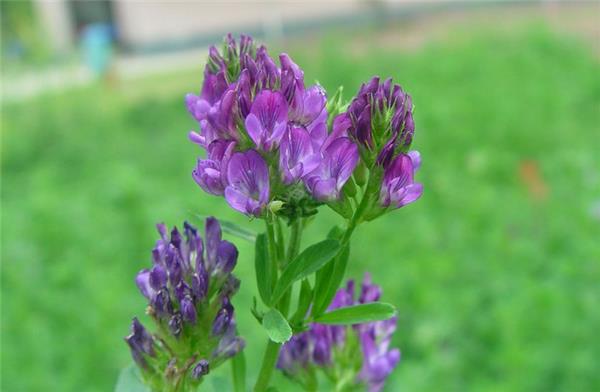
Alfalfa (Medicago sativa), of the order Rosales, family Fabaceae, genus Medicago, is a perennial herb with a thick root that penetrates deep into the soil and a well-developed root crown. It grows at field edges, roadsides, open fields, grasslands, riverbanks and valleys, and is widely cultivated across Eurasia and countries around the world as feed and forage. Below, we will explain the cultivation techniques for alfalfa.
I. Alfalfa Cultivation Techniques
1. Soil and fertilization: For irrigated land, irrigate sufficiently with winter water; before sowing, carry out shallow plowing or harrowing to prepare the soil. In combination with deep plowing or shallow plowing before sowing, apply 1500-2500 kg of organic fertilizer and 20-30 kg of superphosphate per mu as base fertilizer. For soil with low fertility, apply quick-acting nitrogen fertilizer such as ammonium nitrate at sowing time to promote seedling growth. After each cutting, apply topdressing: 10-20 kg of superphosphate or 4-6 kg of diammonium phosphate per mu.
2. Sowing: The sowing period should be from April to August, when the minimum soil temperature is above 5°C and the soil moisture content is generally 18%-23%. Before sowing, sun-dry the seeds for 2-3 days to break dormancy and improve the germination rate and seedling uniformity. For seed fields, use 3.75-7.5 kg per hectare; for grassland use, 11.25-15 kg per hectare; for dry land, hillside fields or high-cold regions, increase the sowing rate by 20%-50%.
3. Field management: After sowing and before emergence, if rain causes soil crusting, promptly break up the crusted layer to facilitate emergence. During the seedling stage, growth is very slow and the plants are susceptible to weed damage, so carry out 1-2 rounds of intertillage and weeding. In the sowing year, before the growing season ends, cut and utilize once; if the plant height does not reach the usable level, leave the seedlings to overwinter, and grazing is strictly prohibited in winter. For alfalfa fields over two years old, each spring before regrowth, clear the stubble in the field and carry out plowing to preserve moisture; after the last cutting and seed harvest in autumn, loosen the soil and apply topdressing. After each cutting, also harrow and apply topdressing; in irrigation areas, apply topdressing together with irrigation, and irrigate sufficiently with winter water when winter arrives.
II. Field Management of Alfalfa
1. After sowing and before emergence, if rain causes soil crusting, promptly break up the crusted layer to facilitate emergence.
2. During the seedling stage, growth is very slow and the plants are susceptible to weed damage, so carry out 1-2 rounds of intertillage and weeding.
3. In the sowing year, before the growing season ends, cut and utilize once; if the plant height does not reach the usable level, leave the seedlings to overwinter, and grazing is strictly prohibited in winter.
4. For alfalfa fields over two years old, each spring before regrowth, clear the stubble in the field and carry out plowing to preserve moisture; after the last cutting and seed harvest in autumn, loosen the soil and apply topdressing. After each cutting, also harrow and apply topdressing; in irrigation areas, apply topdressing together with irrigation, and irrigate sufficiently with winter water when winter arrives.
5. The stubble height for alfalfa cutting is 3-5 cm, but in arid and cold regions the stubble height for the last cutting in autumn should be 7-8 cm, to preserve root nutrients and facilitate snow accumulation in winter, which has a good effect on overwintering and spring regrowth.
6. The last cutting in autumn should be completed 20-30 days before the end of the growing season; if too late, it is detrimental to the accumulation of nutrients in the plant roots and root crown.
7. Seed fields should rely on artificial pollination or bee pollination during the flowering period to increase the seed-setting rate.
III. Nutritional Value of Alfalfa
Alfalfa contains a large amount of iron, so it can be used as an auxiliary food for treating anemia; the B-vitamin components contained in alfalfa can treat pernicious anemia;
In addition, alfalfa also contains vitamin K, which has a hemostatic effect; it is often used in folk medicine to treat stomach problems or hemorrhoids bleeding, and some proven remedies use it to treat stomach, hemorrhoid or intestinal bleeding.
Alfalfa also contains substances such as alfalfa extract and alfalfa phenol, which have cough-relieving and asthma-calming effects and have a certain therapeutic effect on bronchitis.
In addition, alfalfa contains crude fiber, which can promote large intestine peristalsis, help with the excretion of stool and toxins, and prevent and treat constipation and colon cancer.
Moreover, the alfalfa extract contained in alfalfa can inhibit intestinal contraction and increase the content of thyroxine in the blood, and can prevent the oxidation of adrenaline and has an anti-cancer effect.
The above is an introduction to the cultivation techniques of alfalfa. Through the content above, everyone should have gained some understanding of alfalfa cultivation techniques and the issues that need attention. We hope the above content is helpful to everyone.