Why won't the osmanthus tree bloom? Cause analysis and methods to promote flowering
In recent years, many large osmanthus trees have been planted along roadsides, in residential areas, government offices, enterprises and institutions. When the flowers bloom, the city should be filled with fragrance, but it is hard to smell the osmanthus scent. Why is it that flowers can be seen but no fragrance can be smelled? Some say the high-rise buildings in the city block the sunlight, and some say car exhaust pollutes the environment, but even in places with plenty of sunlight and little car exhaust pollution, the osmanthus is still not fragrant. What is the reason? It is mainly related to the osmanthus variety. In recent years, what has been planted in large quantities is not the August osmanthus with a rich floral fragrance, but the Four Seasons osmanthus, which blooms little and has very little fragrance. There are many types of osmanthus, such as golden osmanthus, silver osmanthus, red osmanthus, Four Seasons osmanthus, etc. Their characteristics and uses are not all the same. Why won't the osmanthus tree bloom?
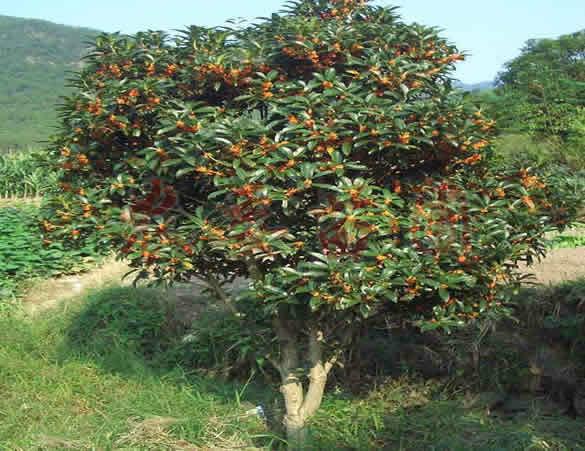
Why won't the osmanthus tree bloom? This needs to be analyzed from several causes.
Cause one: the basic conditions for flowering have not been met, that is, the natural laws of osmanthus flowering. If propagated by seed, it takes about 10 years to bloom; seedlings propagated by grafting, layering or division mostly bloom the next year; those propagated from cuttings take 4 years to bloom.
Cause two: fertilization, watering and pruning have not kept up. Osmanthus that has entered the flowering age should be given more fertilizer mainly of phosphorus and potassium before August. Once the season is missed, it is very difficult to promote flowering in the same year. It will not do if water is not supplied in time during summer droughts, or if drainage is not done in time during the rainy season. It also needs proper pruning to concentrate the supply of nutrients and promote the physiological balance of vegetative growth.
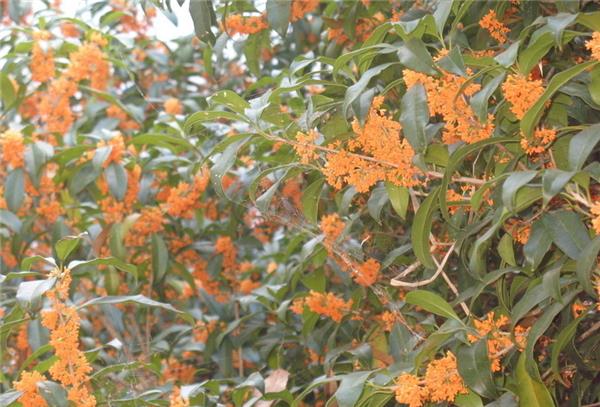
Cause three: insufficient light. If there is insufficient light for a long time or no light at all, it may fail to bloom, and may even cause the whole plant to stop flowering.
Cause four: failure to bloom caused by coal smoke pollution. If the osmanthus is planted beside the chimney of a coal yard, or if one's own chimney happens to face the osmanthus tree, as well as at construction sites with especially severe pollution, it can also cause failure to bloom.
Cause five: failure to bloom caused by pests and diseases. If the osmanthus leaves turn yellow, fall off, are bored by insects, and some branches dry up, then in such a situation, how could it possibly bloom?
How does the osmanthus tree bloom
Generally, the cutting time for osmanthus trees is May to June or August to September. If cuttings are taken in May to June, by December the osmanthus tree generally reaches a height of about 20CM. At this time, because the density during cutting is high, it needs to be transplanted into a field nursery.
By May and June of the second year, the osmanthus seedlings generally reach a height of 50-70 cm and can already adapt to extensive transplanting. If the method is appropriate, the survival rate is above 98%.
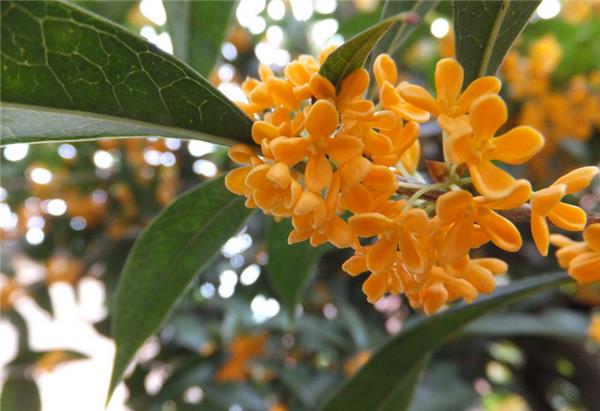
By March to April of the third year, the osmanthus saplings reach a height of 1.5-2 m, and the trunk diameter is as thick as 1 cm.
The third and fourth years are the sapling cultivation period. During this period, the main trunk diameter of the osmanthus tree increases from 1 cm to 3 cm, which is called the first "rapid
growth period"
In the fifth and sixth years, the trunk diameter of the young osmanthus tree increases from 3 cm to 6 cm, which is called the second "rapid growth period"
Five-year-old tree - 5CM Six-year-old tree - 6CM Seven-year-old tree - 7CM Eight-year-old tree - 8CM
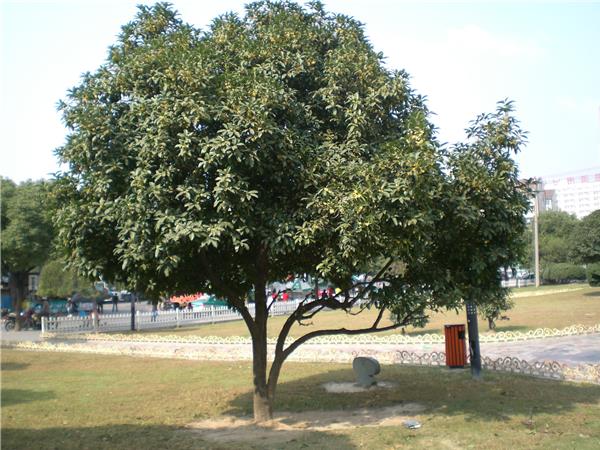
Osmanthus cuttings generally bloom after 4 years (some bloom in two years). A 5-year-old tree can begin to have cuttings taken from it. A 6-year-old tree is not only the high-yield period for osmanthus, but also a good time for large-scale planting. Generally speaking, as long as the soil ball is dug well and the packaging is done well, during a suitable transplanting season, even if it is not planted immediately after being dug up, it can still survive for about 30 days.
As for how long you need to grow them before you can gain returns, that depends on how long you want to cultivate them.