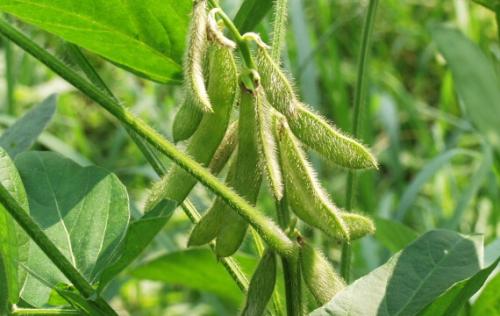
Advantages, Cultivation Methods and Precautions of the New Soybean Green Manure Variety Tainan No. 4
The new green manure soybean variety Tainan No. 4 - do you know what advantages this soybean has, its cultivation methods and precautions to note? Want to learn about it? Then let's take a look together!
Advantages of the variety
One, green manure cultivation saves seed quantity per unit area: Tainan No. 4 has small seeds, with a 100-seed weight of about 6-10 grams, and requires only 25-30 kg of seeding rate per hectare, saving half the amount compared with ordinary soybean seeds, and cultivation saves labor and is easy to manage.
Two, long growth period and high adaptability to cultivation environments: it is a late-maturing variety, adapted to growth in high-temperature and high-humidity environments, with luxuriant stems and leaves during the growth period, maintaining field coverage for 4 to 5 months, with a strong suppressive effect on weeds and complete field coverage, not only producing high fresh grass yield of the plants, but also having high nutrient content in the plants.
Three, Tainan No. 4 has a wide range of uses: the plants can be cut green for feed, plowed into the soil as green manure, and the seeds are rich in protein and oil with extremely high nutritional value; moreover, the variety is non-genetically modified, truly the best nutritional product for human health, and can be used for green-shelled bean sprouts, soy milk, tofu and seasoned instant powder.
Four, suitable for autumn seed production in the Tainan area: when Tainan No. 4 is grown for autumn seed production in Tainan County, the yield from manual harvesting can reach 2200-2800 kg per hectare, with a propagation ratio of about 70 times, higher than that of Huwei green-shelled bean. Tainan No. 4 has upright stems, with the lowest pod position reaching more than 10-12 cm above the ground, suitable for mechanical harvesting.
Cultivation methods and precautions
One, promotion areas: Tainan No. 4 is suitable for the Yunlin-Chiayi-Tainan area, Changhua, Miaoli, Yilan, Hualien, the Kaohsiung-Pingtung area, and Taitung, for first and second crop green manure cultivation and autumn seed production in Tainan County.
Two, suitable cultivation period: for green manure cultivation purposes, sowing can be done from early February to August; for seed production purposes, it is suitable for planting from mid-August to late September.
Three, cultivation density: for green manure cultivation, using the broadcast sowing method, the seeding rate is about 30 kg per hectare; if using mechanical drilling, with a row spacing of 50 cm, 20-25 kg of seed per hectare. For autumn seed production, using land preparation and mechanical sowing, the seed rate is 25 kg per hectare with a row spacing of 50 cm.
Four, fertilizer application rates: no fertilizer is applied for green manure cultivation; for seed production fields, the fertilizer application rate per hectare is 30-40 kg of nitrogen, 90 kg of phosphorus pentoxide and 60 kg of potassium oxide.
Five, green manure sowing methods are divided into dry field cultivation and paddy field cultivation:
1. Dry field green manure cultivation: after the previous crop is harvested, immediately prepare the land, evenly broadcast the seeds in the field, then till to cover with soil; the soil covering depth should not be too deep, about 2-5 cm, or directly use machinery to make ridges and sow, or sow directly without making ridges.
2. Paddy field green manure cultivation: one day before rice harvest, evenly broadcast the seeds on the field surface; the next day when harvesting the rice, use the harvester to finely cut and spread the rice straw to cover the seeds, which can save land preparation costs. During the rainy season, the paddy field should strengthen drainage to facilitate the growth of green manure soybean.
Six, other management operation precautions:
1. The seed germination rate must reach above 90%; if it does not reach the germination rate standard, the seeding rate should be increased to ensure the seed germination rate, so as to achieve the effect of early coverage.
2. At sowing, keep the field soil moist, but it should not be waterlogged, so as to improve the seed emergence rate and seedling growth vigor. When broadcasting seeds, the distribution of landing points should be even; the field can be divided into several small plots and then a fixed amount of seed broadcast in each, which will improve emergence uniformity, increase field coverage effect, and suppress weed growth.
3. Tainan No. 4 has small seeds; when using the land preparation cultivation method, the soil covering after sowing should not be too deep, so as to avoid great resistance to the emergence of the young embryo stem and cotyledons, which would affect the germination rate. The ideal soil covering depth is 2-5 cm.
4. During cultivation, to reduce the occurrence of insect pests, large-area cultivation by collectives is relatively safe. In addition, during the planting period, hang insect sex pheromones to trap and kill cutworm and beet armyworm adults, hanging 5-10 sex pheromone lures per hectare. If the green manure growth period exceeds 80 days, and field pest occurrence is severe, an insecticide should be applied once at the appropriate time for prevention and control, giving better results for green manure cultivation or seed production.
5. Green manure application methods can be tilled-in burial or no-till burial; the burial time is better when applied 15-20 days or more before sowing of the following crop.