How to Grow a Rubber Plant? Detailed Guide to Care Methods and Precautions
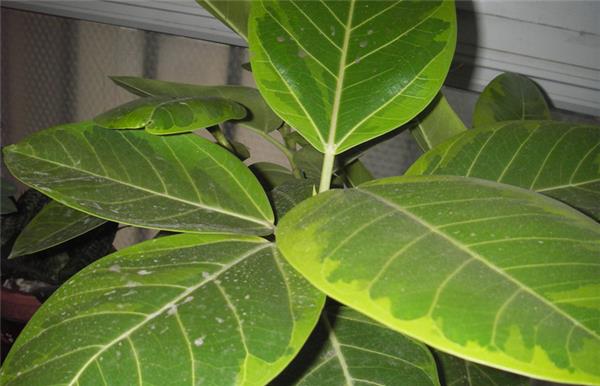
The rubber plant's leaves are thick and gorgeous, broad, beautiful and glossy, and its red new growth resembles floating clouds, full of phoenix-like charm. The rubber plant has high ornamental value and is one of the famous indoor potted foliage plants. The rubber plant adapts well to light conditions and is extremely suitable for beautifying and decorating relatively dark interiors.
I. Rubber Plant Care Methods
Sunlight for Rubber Plant Care
It is often said that sunlight is the food of plants, and this is indeed true. In rubber plant care, sunlight is also a treasure; giving it plenty of sunlight allows it to grow vigorously. From May to September, provide appropriate shade.
Fertilizing for Rubber Plant Care
Fertilizer acts like calcium supplementation, strengthening its "health." In rubber plant care, fertilizing is also one of the key points; it can reduce the occurrence of mottling and make the leaves brighter. Using nitrogen fertilizer alone is sufficient, and remember to stop fertilizing in winter.
Pruning and Repotting for Rubber Plant Care
When spring arrives, it is time to prune the rubber plant. Cut off the forked branches inside the crown, the inward-growing branches and the thin, weak branches to maintain internal ventilation, good light penetration and the overall shape. In rubber plant care, it is usually necessary to repot once every 2 years, adding materials such as leaf mold and reconfiguring the soil; it prefers loose, well-drained loam.
II. Precautions for Rubber Plant Care
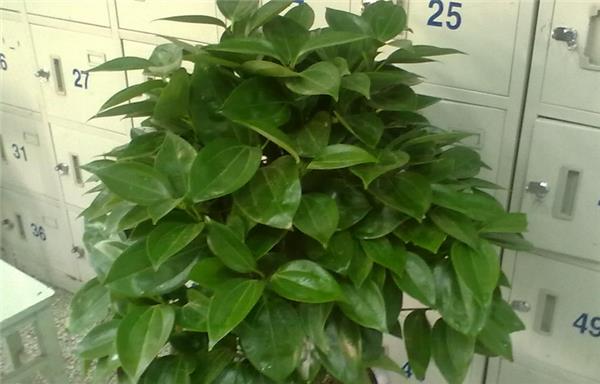
1. The rubber plant has strong apical dominance and should be pruned in time to encourage side branches.
2. The rubber plant likes light and can also tolerate shade; variegated varieties need bright light every day, otherwise the leaf color will be poor.
3. Sudden leaf drop in rubber plants: for tree-type varieties, it may be due to overwatering; winter temperatures being too low; too much or too concentrated fertilizer; or sudden exposure to cold wind. For trailing varieties, it may be due to light being too weak; or possibly being moved from a suitable environment to another environment.
4. Insufficient nitrogen fertilizer for rubber plants can cause the lowest old leaves to drop, so fertilizer should be supplemented in time.
5. During the vigorous growth season, diammonium phosphate, potassium dihydrogen phosphate, etc. should be applied as a top dressing.
III. The Role of Rubber Plants in the Home
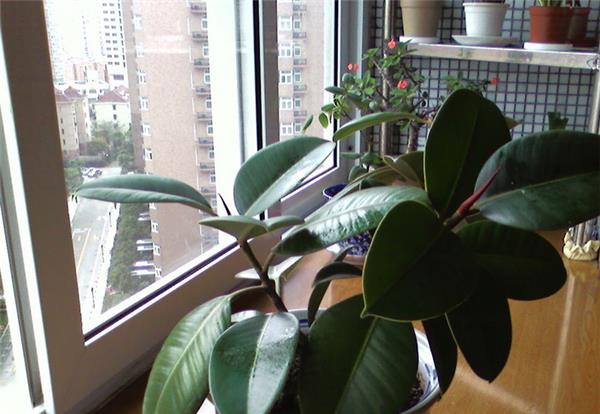
Today's living environment is polluted, and the rubber plant has the function of purifying dust and can absorb formaldehyde. Not only that, the rubber plant can also effectively absorb harmful gases such as carbon monoxide and carbon dioxide in the air, purifying indoor air. In places with sufficient sunlight, the rubber plant can carry out photosynthesis and transpiration, regulating air humidity and oxygen content. For homes with a lot of dust and poor ventilation, the rubber plant is best placed by the window.
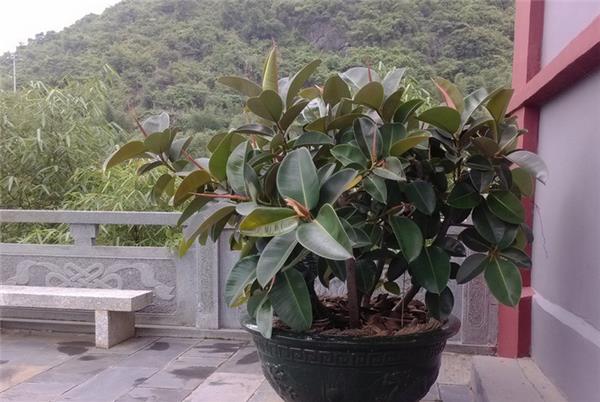
The rubber plant can let the eyes rest. It is an evergreen large tree. The bark is smooth, the twigs are green, and it branches little. The leaves are elliptical, about 15 cm long, thick and leathery, with a blunt tail-like tip and a rounded base; the upper surface is dark green with grayish-green or yellowish-white markings and brown spots, and the underside is light green.
The rubber plant is about 2 m tall, with hairless stems and milky sap. The rubber plant's leaves are thick and gorgeous, broad, beautiful and glossy; the red new growth resembles reclining clouds, and when the stipules split open they look just like red tassels hanging down, full of phoenix-like charm. The rubber plant has strong vitality, giving people a feeling of unremitting self-improvement. The rubber plant has a beautiful form and can embellish the home.
The rubber plant is a green "vacuum cleaner." Placing some plants in a closed room makes dust decrease significantly faster than when there are no plants. Dust in indoor air mainly comes from smoking, heating, cooking, office equipment, and the wear and heating of building materials.