What are the cultivation methods and precautions for Bambusa multiplex?
Bambusa multiplex is a plant that likes a warm and humid, semi-shaded environment. It has poor cold tolerance and is a plant that greatly fears strong light. It fears fertile soil and prefers loose soil with very good drainage. So when cultivating Bambusa multiplex, you need to pay attention to some of its unique habits. Generally speaking, as long as you have a good grasp of the habits of Bambusa multiplex, you will have more or less some understanding of how to cultivate it.
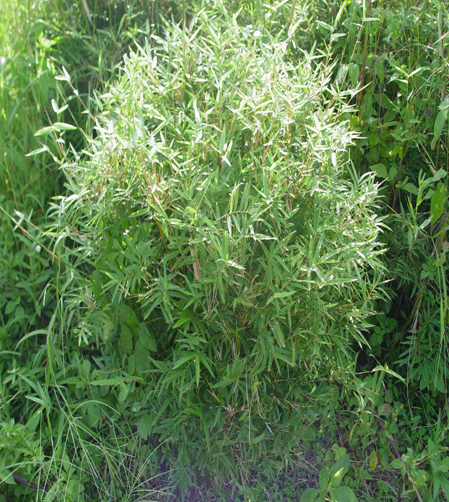
Cultivation methods for Bambusa multiplex
Soil:
Bambusa multiplex prefers acidic, slightly acidic or neutral soil, with pH4.5 to 7.0 being suitable, and it dislikes heavy, clayey and alkaline soil. The soil used for growing Bambusa multiplex is best a loose, fertile, well-drained sandy loam, and you can use farmland soil mixed with red-yellow soil, humus soil and fine sand. If Pleioblastus fortunei is planted in ordinary potting soil, the survival rate is low; you can use vermiculite or peat mixed with perlite as the substrate, which gives a higher survival rate. To maintain its graceful posture, it is not demanding about soil, and generally loose sandy soil is enough.
Water:
Bambusa multiplex likes moisture and fears waterlogging. After potting, the first watering should soak through, and afterward keep the potting soil moist; do not water too much, otherwise the rhizomes and roots are prone to rot. From potting to the stage when it has established, you should also frequently spray water on the leaves. If the potting soil lacks water, the bamboo leaves will curl; at this time, water promptly, and the bamboo leaves will unfold again. In summer, water once every 1 to 2 days on average; in winter, water less, but make sure the potting soil stays moist to prevent "dry freezing".

Light and temperature:
It likes a warm, humid and semi-shaded environment, has slightly poor cold tolerance, and cannot withstand strong sunlight. In winter it should be moved indoors to a sunny place, and the winter temperature should be kept no lower than 0 degrees. Bambusa multiplex likes sunny, high and airy places, and there is a saying that "it flourishes facing the sun and should be planted on a high terrace"; in spring, summer and autumn, it only needs to be placed in a ventilated spot by a window, and in winter placed in a sunny spot, and it can grow well.
Fertilizing:
The fertilizer for Bambusa multiplex is mainly organic fertilizer; decomposed livestock manure, garbage compost and river mud are all suitable. Organic fertilizer is mainly used as a base fertilizer, mixed into the potting soil for use, generally at 10% to 15% of the volume of the potting soil. During the growth period, Bambusa multiplex needs 1 application of liquid fertilizer about every 20 days. The fertilizer for Bambusa multiplex is mainly organic fertilizer; the liquid fertilizer can be decomposed diluted soybean cake water, or a compound liquid fertilizer. Fertilizing should stop in winter.
Precautions for cultivating Bambusa multiplex
1. Bambusa multiplex is an evergreen clumping shrub. It likes a warm, humid and semi-shaded environment. It has slightly poor cold tolerance, cannot withstand strong sunlight, fears waterlogging, and prefers fertile, loose and well-drained loam. The winter temperature should not be lower than 0 degrees.

2. It likes light and is slightly shade-tolerant, and likes a warm and humid climate. It likes moisture and warmth, and also likes semi-ventilated and semi-shaded conditions. In winter it should be moved indoors to a sunny place. Bambusa multiplex likes sunny, high and airy places, and there is a saying that "it flourishes facing the sun and should be planted on a high terrace"; but it can also tolerate shade, and can serve as an ideal indoor decoration for foliage and form appreciation. In spring, summer and autumn, it only needs to be placed in a ventilated spot by a window, and in winter placed in a sunny spot, and it can grow well. For Bambusa multiplex planted in the ground, after spring it sends out new leaves (this is a reflection of its fear of cold), and in warm regions it stays evergreen all year round.
3. Bambusa multiplex prefers acidic, slightly acidic or neutral soil, with pH4.5 to 7.0 being suitable, and it dislikes heavy, clayey and alkaline soil. Northern soil is strongly alkaline, so 0.2% ferrous sulfate can be added. The soil is best a loose, fertile, well-drained sandy loam, and you can use farmland soil mixed with red-yellow soil, humus soil and fine sand. If Pleioblastus fortunei is planted in ordinary potting soil, the survival rate is low; you can use vermiculite or peat mixed with perlite as the substrate, which gives a higher survival rate. To maintain its graceful posture, it is not demanding about soil, and generally loose sandy soil is enough.
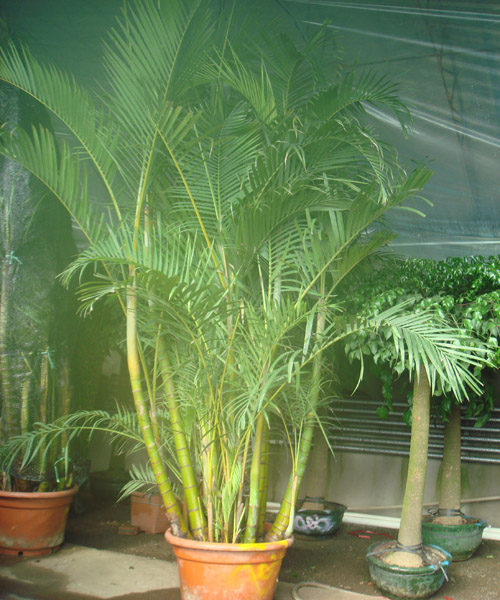
4. Bambusa multiplex likes moisture and fears waterlogging. After potting, the first watering should soak through, and afterward keep the potting soil moist; do not water too much, otherwise the rhizomes and roots are prone to rot. From potting to the stage when it has established, you should also frequently spray water on the leaves. If the potting soil lacks water, the bamboo leaves will curl; at this time, water promptly, and the bamboo leaves will unfold again. In summer, water once every 1 to 2 days on average; in winter, water less, but make sure the potting soil stays moist to prevent "dry freezing".
5. The fertilizer for Bambusa multiplex is mainly organic fertilizer; decomposed livestock manure, garbage compost and river mud are all suitable. Organic fertilizer is mainly used as a base fertilizer, mixed into the potting soil for use, generally at 10% to 15% of the volume of the potting soil. During the growth period of Bambusa multiplex, applying 1-2 times a month of diluted nitrogen fertilizer is enough.