How to Grow a Jade Plant? Detailed Guide to Growing Methods and Precautions
The jade plant has thick, fleshy branches and leaves, stays green all year round, has unusual leaf shapes, and a stately form. Its elegant appearance is deeply loved by people, so how do you grow a jade plant? Now let's learn together how to grow a jade plant, its growing methods and precautions.
I. Growing Methods for the Jade Plant
1. Soil: For potted jade plants, the soil is best chosen as a mix of leaf mold and garden soil with a small amount of river sand added as the growing medium. A little hoof and horn meal and other slow-release fertilizer can be added as a base fertilizer.
2. Temperature: The optimum growing temperature for the jade plant is 15°C to 32°C. It fears high heat and stuffiness, and enters a dormant state when the summer heat exceeds 33°C. It is intolerant of cold and frost, and the overwintering temperature must be kept above 10°C. When the winter temperature drops below 7°C, it also enters a dormant state. If the ambient temperature approaches 4°C, it will die from frost damage.
3. Sunlight: The jade plant likes sunlight. If light is insufficient, it easily leads to damp heat, root rot and leaf drop, but the intense summer heat and strong direct sunlight are unfavorable to plant growth. In winter, the pot should be moved to a sunny spot in a shed or greenhouse to keep the leaves fresh and green.
II. Precautions for Growing the Jade Plant
The jade plant grows relatively quickly and needs repotting once every spring. When repotting, add decomposed bean dregs, cake fertilizer and other organic fertilizers to the potting soil. Spring and autumn are the peak growing seasons for the jade plant. At this time, apply a dilute cake fertilizer solution once every half month. To keep the plant's form full, do not apply too much fertilizer or water.
During the high temperatures of midsummer, the jade plant enters a semi-dormant state and grows slowly. At this time, stop fertilizing and slightly reduce watering, as the jade plant itself is relatively drought-tolerant. In midsummer, poor ventilation or excessive lack of water can also cause leaves to turn yellow and drop, so it should be kept in a semi-shaded spot. Wait until the weather cools in autumn before resuming normal care.
When grown outdoors, avoid letting it be washed by heavy rain, otherwise too much water accumulates at the roots and easily causes root rot. When caring for it indoors, watering should depend on whether the potting soil is dry or moist, and basically it is enough to follow the principle of watering when dry and stopping when moist. In autumn and winter, when the weather is cool, watering should be adjusted flexibly according to weather changes. Each year when repotting, attention should be paid to shaping and pruning to maintain its form.
III. The Role of the Jade Plant in the Home
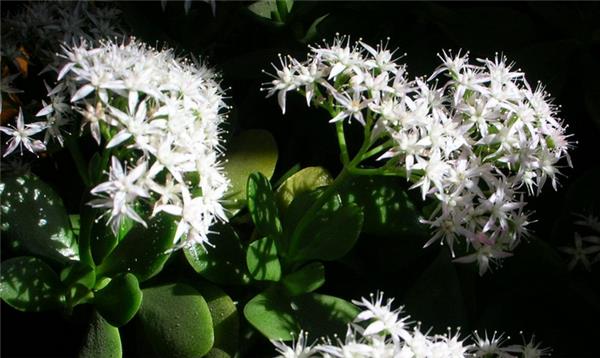
In contemporary society, more and more people pursue a beautiful home environment and choose to buy plants to decorate their beautiful homes. The jade plant is a good choice: its branches and leaves are thick and fleshy, it stays green all year round, its leaf shapes are unusual, its form is stately, it is easy to cultivate and simple to manage. It is suitable for potting and for decorating interiors, being elegant and refined. Its stems and leaves are green, and its white flowers borne at the tips are very beautiful. Paired with a pot stand and gravel and made into a small bonsai, trained into the posture of an old tree stump, it is even more attractive. The jade plant is a perennial evergreen succulent, known as the fleshy evergreen. Often looking at green plants effectively relieves mood and also effectively relieves the eye fatigue of office workers.
It is a very good landscaping plant with a certain air-purifying effect. It is non-toxic and can be placed indoors. It also has a certain radiation-resistant effect, so it can be grown indoors with peace of mind. It absorbs harmful gases, reduces noise, kills bacteria, creates a comfortable living environment, and can also cultivate character, improve health, and enhance cultural and artistic accomplishment. Extracts of the jade plant used in medicine can effectively treat diabetes.
Summary: The jade plant is not uncommon in home greenery displays, but many people do not know enough about its living habits, so they are also not clear enough about growing methods. The growing methods and precautions for the jade plant are introduced here. I hope this article is helpful to everyone.