How much does okra mallow cost per jin and an introduction to its edible uses
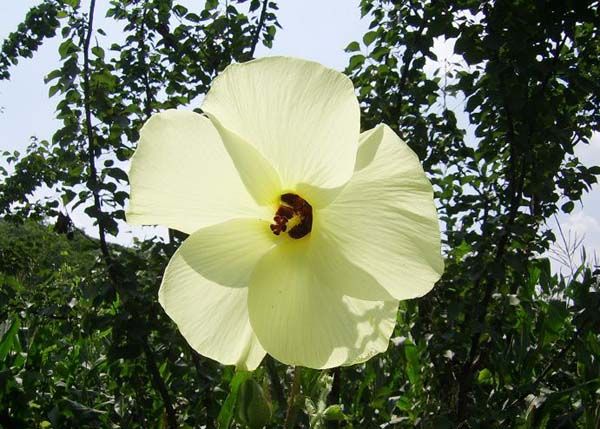
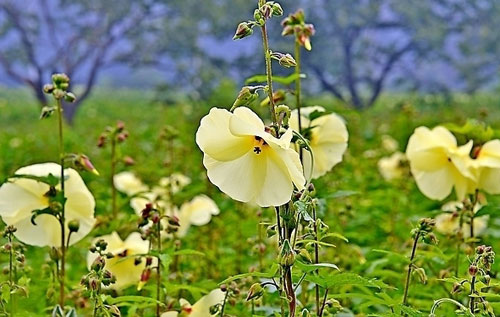
The plant we are going to learn about today is called "okra mallow" (Abelmoschus manihot). Its flowers are a brilliant golden color and very beautiful. But it is not just a pretty little thing with only good looks; it is also rich in all kinds of nutrients and has very high edible value.
I. The benefits and effects of okra mallow
Okra mallow, also known as vegetable hibiscus and wild hibiscus. The benefits and effects of okra mallow: its medicinal value was already recorded in the Compendium of Materia Medica. It can clear heat, cool the blood and remove toxins. Its flowers are nontoxic and have the effects of clearing damp-heat, reducing inflammation and relieving pain. Taken internally, it mainly treats five types of strangury and edema; applied externally, it treats scalds from hot water and the like. The benefits and effects of okra mallow: its fruit and seeds have the effects of tonifying the spleen and strengthening the stomach and promoting tissue regeneration, and treat indigestion, loss of appetite, bruises and injuries, and so on. Okra mallow flowers are used both as medicine and as food. The total flavonoids in the flower have effects such as relieving pain, resisting cerebral ischemia and treating mouth ulcers. The complete protein, high-polymer gums, dietary fiber, trace elements selenium and zinc, and various unsaponifiables it contains have notable effects in regulating the human endocrine system and immunity, increasing the body's resistance, improving cardiovascular, cerebrovascular and microcirculatory function, enhancing the body's antioxidant capacity, resisting cardiac and cerebral ischemia and hypoxia, resisting inflammation, relieving pain, resisting fatigue, resisting aging, resisting and preventing cancer, and lowering blood lipids.
II. The economic value and price of okra mallow
1. As a delicious vegetable, 667 sq m yields 1000 kg, with a selling price of 30 yuan/kg and an output value of more than 30000 yuan;
2. As a rare ornamental flower, 667 sq m can raise 20000 seedlings, at 2 to 4 yuan per seedling, for an output value of 40000 to 70000 yuan;
3. As a simply processed product for drinking as tea, the 12 premium okra mallow flowers weighing 6 g contain 384 mg of naturally occurring bioflavonoids, equivalent to the content in 96 g of ginkgo leaves. The current market price is 68 yuan. Calculated on this basis, the output value per 667 sq m is more than 100000 yuan.
III. How to eat okra mallow
1. Cold-tossed okra mallow:
Ingredients: 300 g okra mallow (stems or flowers both work), half a cucumber, 1 red chili, one sprig of cilantro, 2 cloves of garlic, 1-2 small spoons of soy sauce, 2-3 spoons of oyster sauce, 1 small spoon of sesame oil, 1 small spoon of sugar, a little salt and chicken bouillon, and an appropriate amount of water.
Method:
① Wash the okra mallow, boil it in boiling water for 3-5 minutes until cooked, scoop it out, rinse it cool under cold water, then put it on a plate and set aside.
② Cut the cucumber into even small strips, cut the red chili into fine shreds, crush the garlic and chop it into small bits, and cut the cilantro into small sections and set aside.
③ In a container, add the soy sauce, water, sesame oil, sugar, oyster sauce, chopped garlic, salt and chicken bouillon one after another, and stir well.
④ Add the prepared cucumber and red chili along with the okra mallow, stir appropriately, and finally add the cilantro and it is ready to serve.
2. Stir-fried okra mallow with shrimp
Ingredients: okra mallow, sea shrimp, sliced garlic, cooking wine, white pepper powder, a little sugar, salt and chicken bouillon.
Method:
① Wash the okra mallow and remove the stems, blanch it in boiling water for half a minute, then scoop it out and cool it in cold water and set aside.
② Wash the fresh shrimp, cut open along the back and remove the digestive tract, remove the heads and tails, peel, add cooking wine, a little salt and white pepper powder, mix well with your hands, and marinate for five minutes.
③ Scoop out the okra mallow, drain the water, cut it into sections, and slice the garlic and set aside.
④ Heat a pan over medium heat with an appropriate amount of oil, stir-fry the garlic slices until fragrant, then add the shrimp and stir-fry until they change color.
⑤ Pour in the prepared okra mallow, stir-fry quickly and evenly, add salt and chicken bouillon and stir-fry until flavorful, then it is ready to serve.
IV. Cultivation and growing of okra mallow
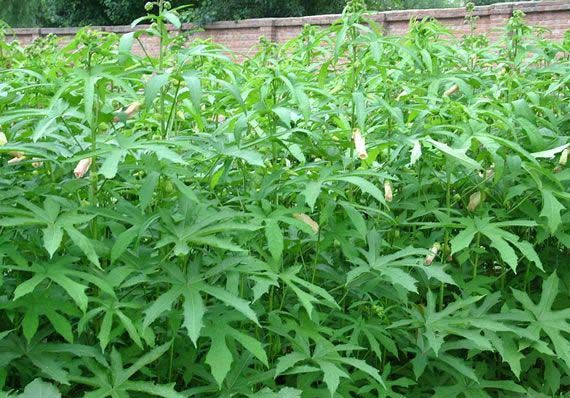
1. Okra mallow is propagated by seed. It can be sown directly in an open-air seedbed in early May. At temperatures above 22 degrees, seedlings emerge in about 10 to 15 days. When they grow to 3 to 4 true leaves, transplant them. They bloom in summer of the same year and set fruit in autumn, which is harvested to keep seed.
2. Hibiscus likes a warm environment with plenty of sunlight. It is drought-tolerant and cold-tolerant, and is not strict about soil, but sandy loam with good drainage is best. It fears waterlogging, but it is also not suitable to plant it in an overly dry place.
3. It has strong adaptability and grows vigorously. It mostly sprouts and grows in early May. When planting, it can be sown in holes or in rows. Plant spacing is 30 cm and row spacing is 50 cm, and about 3000 seeds are needed per mu.
4. During the growing period, liquid fertilizer can be applied 3 to 5 times, and take care to pull out weeds in the field. The seeds scatter easily when ripe. Take care to harvest them in time.
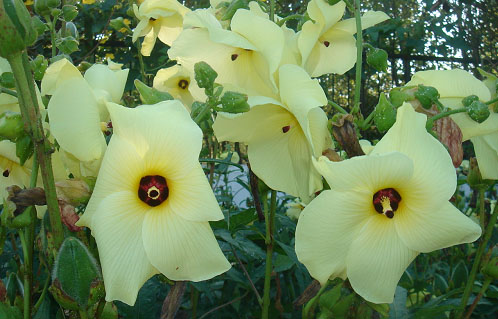
Okra mallow is a remarkable plant. Its bioflavonoid content is as high as 6%, nearly a hundred times higher than that of ginkgo, soybean and others now widely used in bioflavonoid production. It is currently the highest known among plant resources, making it truly the big sister of the plant world. Growing and eating okra mallow both bring people joy, so get moving right away.