How to Grow Bromeliads? A Detailed Guide to Cultivation Methods
The bromeliad is a highly ornamental plant grown for both its flowers and foliage, and it is especially well suited to indoor cultivation. As a home gardening ornamental, it is considered very refined. Below, let us appreciate and learn about the bromeliad:
I. Cultivation of Bromeliads
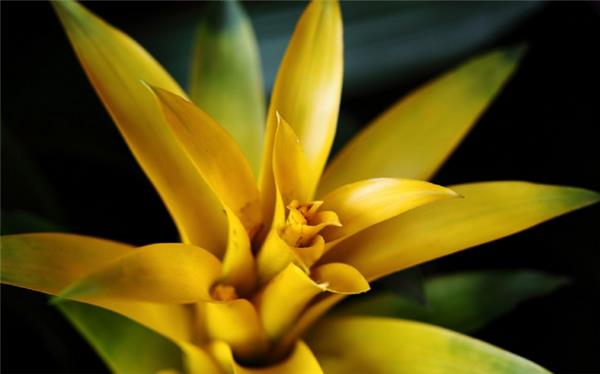
Bromeliads are epiphytes, native to the tropical rainforests of Central America. From observing the bromeliad's native environment, most bromeliads prefer semi-shaded conditions and cannot tolerate direct sunlight. Generally speaking, the suitable light level for bromeliads is around 18000lux, and relative humidity needs to be maintained between 68-75%; as for temperature, daytime requirements are around 22-28C, while at night it is best to maintain around 20-21C. Bromeliads are very sensitive to relative humidity (RH). Under strong light or dry conditions, when humidity is below 50%, the leaves will curl inward or fail to extend. Therefore, in environments with high light intensity, we should appropriately match humidity at above 75%. Although bromeliads like humid environments, during periods of high temperature and high humidity in summer, inadequate ventilation can easily occur, hindering growth and making the plant prone to pests and diseases, so ventilation must be maintained. And under strong light, when air humidity is below 65%, or when it is dry with good ventilation, the leaf tips can also wither. Note that after the flower spike emerges, if it encounters high temperatures (30 degrees), the color of the flower spike will fade and the flowering period will also be shortened.
II. Bromeliad Propagation Methods
Propagation by Seed
It is best to sow seeds under sterile conditions. After harvesting mature but unopened fruit, rinse with clean water for 15min, wipe the fruit skin with 75% alcohol, then sterilize with 10% hydrogen peroxide for 12min, afterwards rinse 2-3 times with sterile water, cut open the fruit, take out the seeds, and sow the seeds in a solid culture medium; the medium is 1/2MS + 2% sucrose + 1% activated charcoal. Sowing by this method, germination can occur in about one month, and the germination rate can reach over 80%. When the plant's true leaves grow to about 5, it can be removed from the flask and transplanted into plug trays.
Propagation by Division
After ornamental bromeliads finish flowering, multiple offsets (pups) will form at the leaf axils at the base. Generally, April to June is the suitable period for division. Wait until the offsets grow to about 10cm with 3-5 leaves, then first take the whole plant out of the pot, remove some of the potting soil, hold the mother plant with one hand, and with the thumb and index finger of the other hand firmly pinch the base of the offset, and with a downward slanting force you can snap the offset off. Disinfect the wound with a fungicide and let it dry slightly, then insert it into perlite or coarse sand for cuttings. Keep the medium and air moist, provide appropriate shade, and after 1-2 months when new roots have grown, it can be transferred to normal management.
III. How to Grow Bromeliads
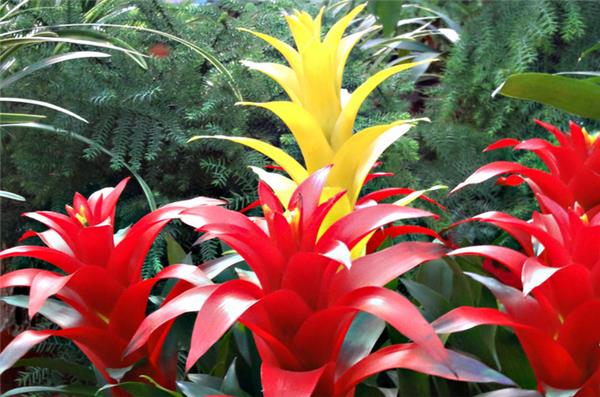
To grow bromeliads well, the main thing is to understand their growth habits. Bromeliads originate from the tropical regions of the Americas. Considering the hot and humid tropical environment, home cultivation should also try to recreate their original growing environment as much as possible, such as sunlight, moisture, and air. Bromeliads can grow very well between 15-20 degrees, and you can spray water on the leaves every day to increase air humidity.
The root system of bromeliads is not very developed, so stem-cutting and offset division transplantation are mostly used, which can greatly increase the survival rate. If you want bromeliads to bloom abundantly, note that water must not accumulate in the pot during flowering, and appropriate light-blocking measures can effectively extend the flowering period.
During the bromeliad's growing season, appropriately increase the amount of watering, and if necessary you can also pour some clean water into the leaf cups, but change the water promptly to prevent the water from turning foul. From May to September is the bromeliad's growing period; at this time you can apply a nitrogen fertilizer once a week, and apply a phosphorus-potassium fertilizer once before flowering, which can make the flowers larger and more colorful.
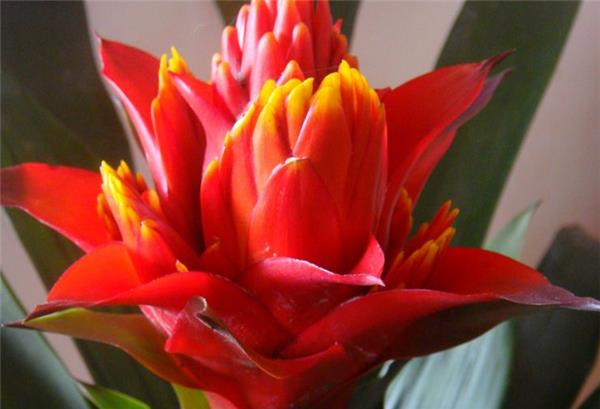
The most important thing in growing bromeliads is still to care for them according to their growth patterns, which can extend their flowering period. The above are the cultivation methods and precautions for bromeliads, and I hope they are helpful to you as you read this.