What to Do When Peace Lily Leaves Turn Yellow? Peace Lily Care Tips
Those who grow peace lilies probably know that if a newly purchased peace lily is cared for improperly or for some other reason, its leaves will gradually begin to turn yellow. What causes peace lily leaves to turn yellow and drop off?
Causes of yellowing and dropping leaves in peace lilies:
Yellowing peace lily leaves are mostly caused by waterlogging; of course, fertilizer burn and other causes cannot be ruled out, but based on case analyses from many flower growers, most yellowing peace lily leaves are caused by waterlogged soil and poor ventilation. The following are other common causes of yellowing peace lily leaves.
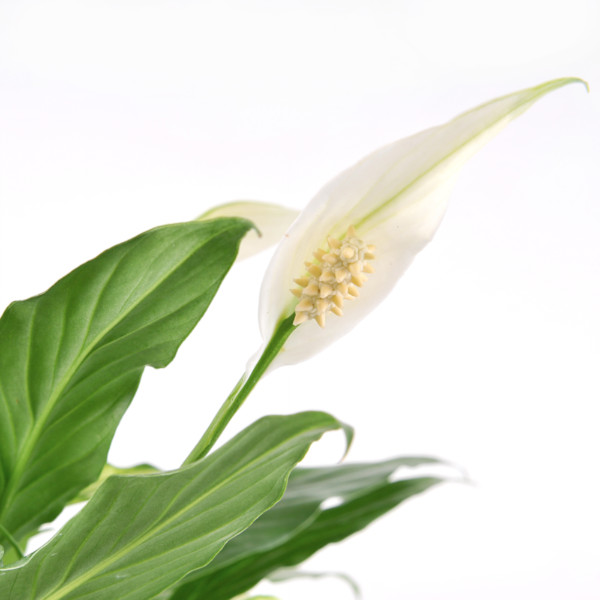
1. The peace lily's leaves turn yellow shortly after purchase
This is generally caused by the plant not adapting to its new environment. Some flower growers immediately ask how to help a peace lily adapt to its environment. First of all, do not start watering, fertilizing, changing the soil or repotting as soon as you buy it. You might think this gives the plant a good life, but that is not the case. For a newly purchased plant, according to its habits, try not to change the soil or repot it; after letting it settle for a few days and once the plant is growing normally, then consider repotting and similar tasks.
After saying all that, we still have not gotten to the cause of the yellowing peace lily leaves: for a newly purchased plant, after repotting or changing the soil, the roots cannot recover, which leads to the leaves turning yellow.
2. After growing it for some time, the peace lily's leaves begin to turn yellow
In this case, you need to look at the watering situation. Some flower growers water once every three days, only keeping track of the days and not checking the potting soil, which ultimately keeps the potting soil wet for a long time. This easily causes waterlogging and leads to yellowing leaves. Could it be fertilizer burn? If you have not been growing it for very long, this is generally not the case, unless it has been grown for a very long time; if growth is normal but the leaves are yellowing, it may be yellowing caused by a nutrient deficiency.
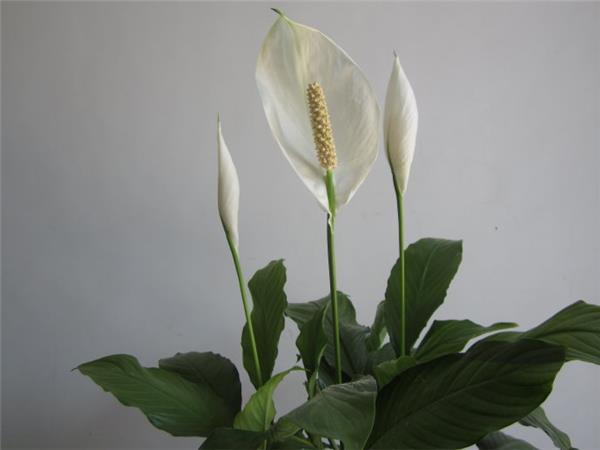
Introduction to indoor care of peace lilies:
Peace lilies are fairly sensitive to temperature. The suitable growing temperature is 14-35°C, with the optimum temperature being 19-25°C. The day-night temperature difference is 3-6°C, that is, ideally 21-25°C during the day and around 19°C at night. At such temperatures, the absorption and accumulation of nutrients by the peace lily are favored, which is extremely beneficial for growth and flowering.
Peace lilies are a flower variety relatively sensitive to salinity, so the pH of the growing medium should be kept between 5.2-6.1 as much as possible, which is most suitable for peace lily growth. If the pH is too low, the flower stems become shorter, reducing their ornamental value. Tap water is suitable for planting peace lilies, but it is expensive; natural rainwater is the best water source for peace lily cultivation. Potted peace lilies have different water requirements at different growth and development stages.
According to Dutch cultivation experience, root fertilization of peace lilies is much more effective than foliar feeding. This is because the leaf surface of the peace lily has a waxy layer that cannot absorb fertilizer well. Liquid fertilizer application should follow the principle of regular and measured amounts. In autumn, a cycle of 3-4 days is typical; if the temperature is high, depending on how dry or wet the medium in the pot is, you can apply fertilizer water once every 2-3 days; in summer, you can apply fertilizer water once every 2 days, and when the temperature is high, you can water once more; in autumn, generally apply fertilizer water once every 5-7 days.
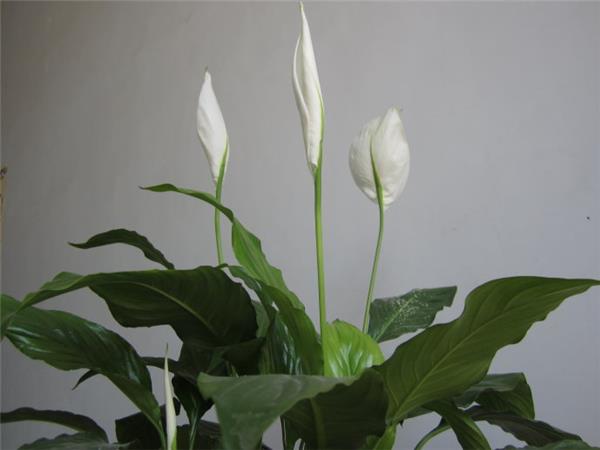
Peace lilies grow in a cycle of "leaf→flower→leaf→flower". The inflorescence forms in the axil of each leaf. This results in the same yield of flowers and leaves, and the most important factor affecting yield is light. If there is too little light, under the influence of photosynthesis the plant also produces very few assimilates; when light is too strong, some of the plant's leaves will heat up, possibly causing leaf discoloration, scorching or withering. Therefore, whether light management succeeds or not directly affects how many assimilates the peace lily produces and the quality of the later product.
Peace lily growth requires relatively high temperatures and quite high humidity, so high temperature and high humidity favor peace lily growth. Temperature and humidity are closely related. When the temperature is below 20°C, maintaining the indoor natural environment is sufficient; when the temperature reaches above 28°C, a sprinkler system or misting system must be used to increase the indoor relative air humidity, so as to create a high-temperature, high-humidity growing environment for the peace lily. However, in winter, even if the greenhouse temperature is relatively high, excessive cooling and humidifying is not advisable, because overly wet leaves at night actually reduce the plant's cold resistance, making it prone to frost damage and unfavorable for safe overwintering.
Peace lily growing methods and precautions:
1. Light: Light is very important for plant growth. Peace lilies need relatively good light in winter and early spring, but as the light gradually intensifies, they should be shaded gradually. If they are enjoyed in a shady spot, they must not be placed directly in the sun to bake, as this is very bad for peace lily growth.
2. Temperature: Peace lilies are a high-temperature-loving species and should be cultivated in a high-temperature greenhouse. In winter, the minimum nighttime temperature should be 14~16°C, and the daytime temperature should be around 25°C.
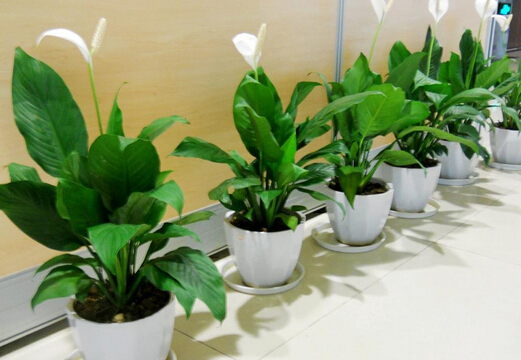
3. Watering: During the growing period, the potting soil for peace lilies should be kept moist regularly, but do not water too much. Too much watering will keep the potting soil wet for a long time, easily causing root rot and the plant to wither and yellow.
4. Fertilizing: Do not apply concentrated fertilizer or raw fertilizer, and after applying solid fertilizer, water once with clear water. It is best to use dilute fertilizer water instead of clear water for irrigation; this generally will not cause fertilizer burn, and the peace lily will grow very lushly.
5. Pests: Plants are most favored by pests during their growing period. Mite-specific acaricides should be sprayed regularly for prevention and control, such as dicofol, hexythiazox, pyridaben, etc.