How to Grow a Horse Chestnut? A Detailed Guide to Care Precautions
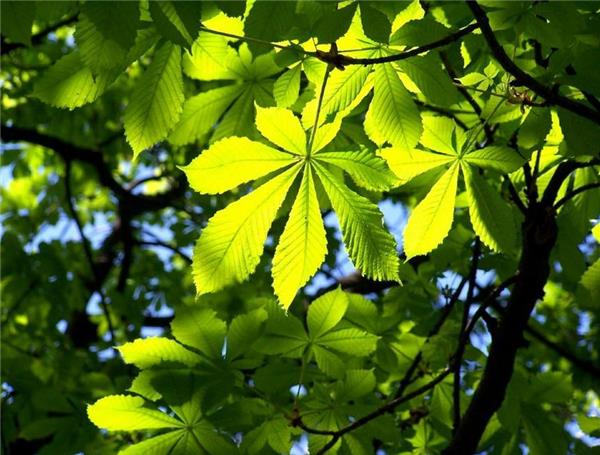
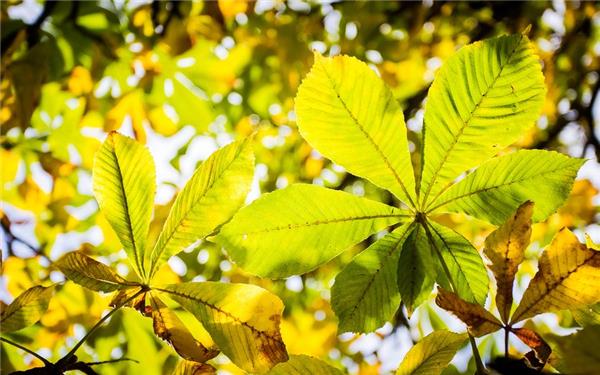
The horse chestnut got its name because its leaf is made up of 5 to 7 leaflets that together form one large leaf shape, giving it great ornamental value. Growing a horse chestnut is fairly demanding, so let's learn about it together.
I. Morphological Characteristics of the Horse Chestnut
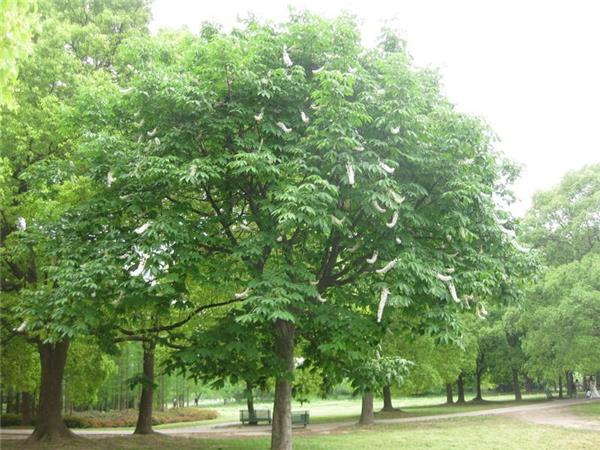
The horse chestnut can reach a height of 25 m. Its bark is grayish brown and peels off in flakes. The twigs are thick and sturdy, chestnut brown, smooth and hairless. The winter buds are large and resinous. The leaflets number 5 to 7, obovate-oblong to oblong-obovate, 9 cm to 17 cm long, with a wedge-shaped base and finely serrated leaf margins, and 13 to 17 pairs of lateral veins. The leaflet stalks are 4 mm to 16 mm long. The upright, dense panicles are nearly cylindrical, 20 cm to 25 cm long. The flowers are small, with 4 white petals, and the upper 2 petals often have orange-red or yellow markings. The capsule is spherical or obovate, 3 cm to 4 cm in diameter, yellow-brown when mature, with a rough surface, and contains 1 to 2 seeds. The flowering period is May, and the fruit ripens from September to October.
II. Ecological Habits of the Horse Chestnut
The horse chestnut likes light but also tolerates half shade, prefers a mild and humid climate, is not tolerant of severe cold, and likes fertile, deep soil.
III. Care Precautions for Growing Horse Chestnut
Sowing: The horse chestnut is mainly propagated by sowing. Horse chestnut seeds have a high water content and poor viability, so it is best to sow them immediately after collection or store them mixed with sand and the fruit coat at low temperature until spring sowing the following year. Note that when sowing, the hilum should face downward; because the seedlings are weak at emerging, cover with only 3-4 cm of soil. Germination occurs 25-30 days after sowing. During the seedling stage, shade is needed, and transplanting should be done from leaf fall in autumn to before bud break the following spring. After transplanting young trees, wrap the trunk with straw rope and provide appropriate shade to prevent sunscald of the bark and withered leaves.
Soil: The horse chestnut likes light, tolerates slight shade, likes a mild climate, and is suited to deep, fertile, moist but well-drained soil.
Fertilizing: Seedlings like moisture and fertilizer. Later, to improve the seedlings' ability to overwinter and resist low temperatures and drought, fertilizing should stop after mid-September. For mature trees, after leaf fall each winter, trenches should be opened around the tree for fertilizing, preferably with organic fertilizer, to encourage more branches and more flowers the following year.
Transplanting: One-year-old seedlings are transplanted in spring, and thereafter once every 1 year. In November to December, at 20-30 cm from the roots, use a seedling-lifting shovel at a 45 degree angle to quickly cut off the main root. This can both control the seedling's water uptake and promote lignification of the seedling while growing more absorbing roots.
Pest and disease control: Common insect pests include the Parasa lepida, the Anomala corpulenta, the golden hairy caterpillar, and the mulberry longhorn beetle. If Parasa lepida occurs, adults can be trapped and killed with black light lamps during the adult stage, and in the young larval stage, spray 3% high-permeability fenoxycarb emulsifiable concentrate at 3000 times dilution for control. If Anomala corpulenta occurs, black light lamps can also be used to trap and kill adults, and Metarhizium can be used to infect and kill the larvae. If the golden hairy caterpillar occurs, during the larval damage period, spray Bacillus thuringiensis wettable powder at 8000IU/ml diluted 400 to 600 times, or 25% diflubenzuron suspension concentrate diluted 2000 to 2500 times. If the mulberry longhorn beetle occurs, adults can be caught by hand, larvae can be hooked out, and aluminum phosphide tablets can be inserted to fumigate the larvae inside the trunk. The main disease of the horse chestnut is root rot. On rainy summer days, standing water in the tree pit should be drained promptly. If there are consecutive overcast and rainy days, after the rain stops, the soil should be promptly pulled back to air the roots, and fungicides such as chlorothalonil and sulfur powder should be used to disinfect the soil, then cover it back with soil.
IV. Reference Prices for Horse Chestnut
Ground diameter 5 cm: 80 yuan/tree
Meter diameter cm: 400 yuan/tree
Meter diameter 4 cm: 35 yuan/tree
Ground diameter 6 cm: 147 yuan/tree
Meter diameter 19 cm, ground diameter 20 cm: 4000 yuan/tree
Meter diameter 2 cm: 20 yuan/tree
In addition, there are also prices such as 6.5 yuan-26 yuan/tree. Generally speaking, meter diameter, height and ground diameter are all major references for the price of horse chestnut.
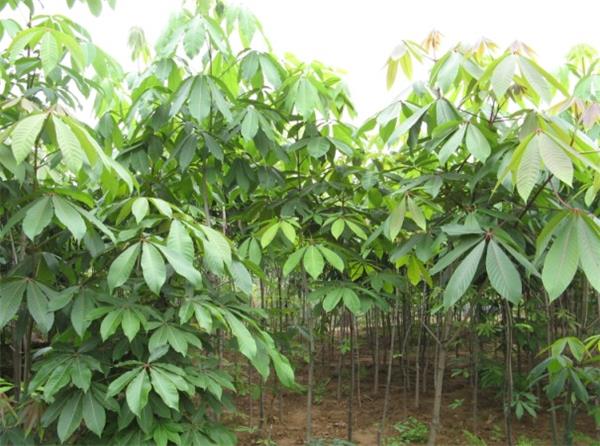
Because the horse chestnut is tall, it is more suitable for growing in fields and courtyards. Friends with suitable conditions at home can give it a try. Besides sowing, it can also be propagated by cuttings, and conditions such as light must also be ensured.