Is Peperomia obtusifolia toxic? Causes of leaf drop and solutions
Peperomia obtusifolia is a small green plant particularly suited to being placed in offices, on coffee tables, or on curio shelves as an ornamental. Because its color is rather elegant and refined, it adds a touch of freshness to a room. How to grow Peperomia obtusifolia is something many flower enthusiasts want to know. In fact, its cultivation method is similar to that of other green plants. As long as flower enthusiasts have a loving heart and always remember to pay attention to them, growing a beautiful Peperomia obtusifolia is no problem. So what should be done when Peperomia obtusifolia drops leaves?
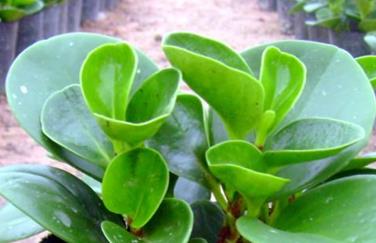
What to do when Peperomia obtusifolia drops leaves
To start with the analysis, Peperomia obtusifolia likes a warm, humid, semi-shaded environment, but its temperature requirements are relatively strict. The suitable indoor growing temperature is around 15-25°C, and it must not go below 10°C; it is not tolerant of high temperatures. Moreover, Peperomia obtusifolia requires relatively high air humidity and dislikes direct sunlight; it likes loose, fertile, well-drained, moist soil.
Propagate by division in spring and autumn. Propagate by leaf cuttings between May and June, using whole-leaf cuttings, with the cutting leaf bearing about 1 cm of petiole, inserted to 1/3 of the leaf blade, using river sand etc. as the substrate; under 20-25°C conditions, roots can form in 15 days. Be careful to keep the substrate moist and maintain a certain level of air humidity.
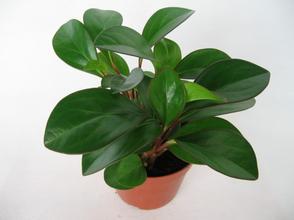
The benefits of Peperomia obtusifolia
Green-leaf Peperomia obtusifolia can be used medicinally. According to the principles of traditional Chinese medicine, taken internally it can dispel wind and remove dampness, relieve cough and resolve phlegm. Applied externally it can treat traumatic injuries and fractures, so it is also an important part of Chinese herbal medicine.
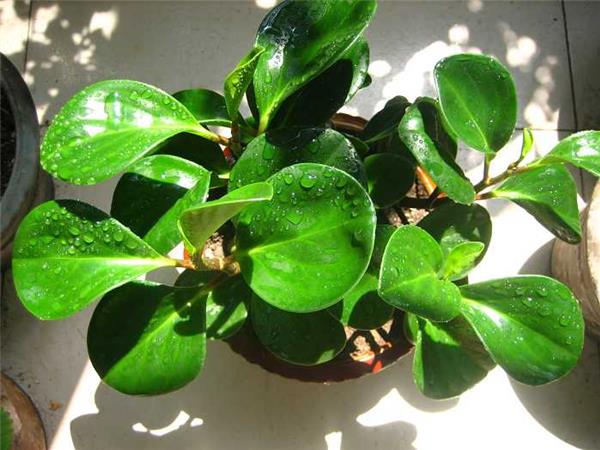
Dispels wind and removes dampness, relieves cough and resolves phlegm, invigorates blood and relieves pain. Used for rheumatic muscle and bone pain, pulmonary tuberculosis, bronchitis, asthma, whooping cough, pulmonary abscess, infantile malnutrition, and dysmenorrhea; applied externally to treat traumatic injuries and fractures.
Green-leaf Peperomia obtusifolia takes in carbon dioxide at night and produces oxygen, so it can be grown indoors. However, the radiation-proof function currently claimed online does not exist. To protect against radiation, you should use professional radiation-protection clothing and the like.
Is Peperomia obtusifolia toxic?
Green-leaf Peperomia obtusifolia is also called Peperomia obtusifolia, pepper grass, jade pepper grass, or small-house Peperomia obtusifolia; it is a perennial evergreen herbaceous plant of the genus Peperomia in the family Piperaceae. The plant height is 20-25 cm, the stem is round and branched, light green with purplish-red markings. The leaves are alternate, slightly succulent, oblong, deep green, glossy, up to 15 cm long, wedge-shaped at the base, with short petioles. The spike inflorescence is 2.5-18 cm long, with small greenish-white flowers; the peduncle is shorter than the spike inflorescence, smooth and hairless. The fruit has a curved, sharp beak. It is the representative species of upright Peperomia obtusifolia. It is non-toxic, and the plant can also be used medicinally. According to the principles of traditional Chinese medicine, taken internally it can dispel wind and remove dampness, relieve cough and resolve phlegm. Applied externally it can treat traumatic injuries and fractures, so it is also an important part of Chinese herbal medicine.
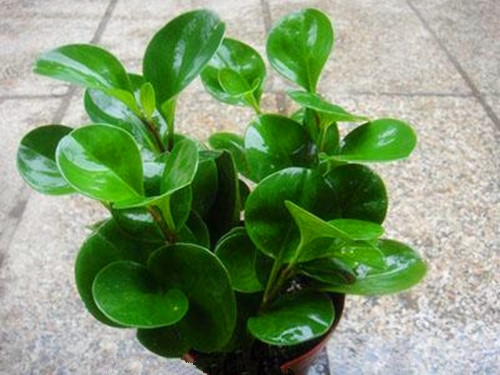
Of course, the Peperomia obtusifolia flower is a green plant and is absolutely natural and non-toxic. It also has a radiation-proof effect. For plants with thicker, fleshy leaves, the radiation-proof effect of the Peperomia obtusifolia flower will be relatively stronger. This is also the reason most people say that plants of the cactus family are radiation-proof, because plants of the cactus family and similar families are mostly succulent and pulpy plants, with relatively thick and fleshy leaves or stems.