A Detailed Explanation of Flax Cultivation Techniques and Uses
Flax is a very versatile plant that can be used as both a grain and an oil crop, and it also has very high medicinal value. Let us now get to know flax before it is made into oil.
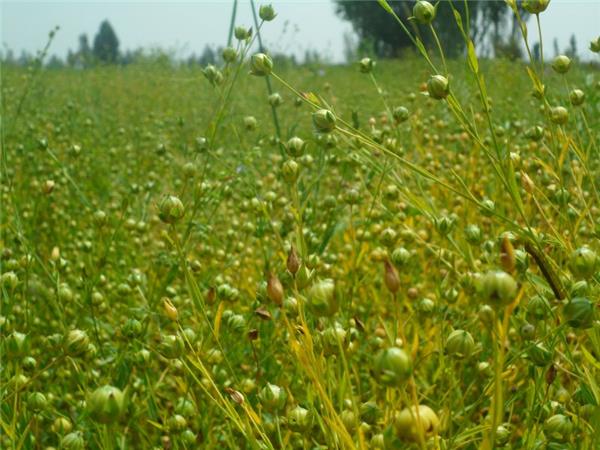
I. Medicinal Uses of Flax
1. Pain in the lower back and legs. Take one sheng of fresh flax, roast it until fragrant, then pound it into a paste. Swallow an appropriate amount daily, and it may be taken with ginger juice, honey water, or warm wine.
2. Aching and sore hands and feet with slight swelling. Cook flax thoroughly, grind it finely, take five sheng and add one sheng of wine, soak overnight, then drink as desired.
3. Occasional wind-cold. Fry flax until scorched, pound it while hot, and soak it in wine to drink. After drinking, lie down warmly and it is best to break into a light sweat.
4. Heat strangury. Take five ge each of flaxseed and turnip seed, fry until yellow, place in a bag, soak in three sheng of water, and take one qian before each meal.
5. Boils and malignant sores. Take flax (burned to ash) and needle filings, grind in equal parts into a powder, add vinegar, mix, and apply to the affected area.
6. Scalds and sores from sitting. Chew raw flax into a paste and apply.
7. Scalds and burns. Grind raw flax into a paste and apply to the injured area.
8. Eyebrows that do not grow. Dry flax flowers in the shade, grind into a powder, soak in sesame oil, and apply to the eyebrows daily.
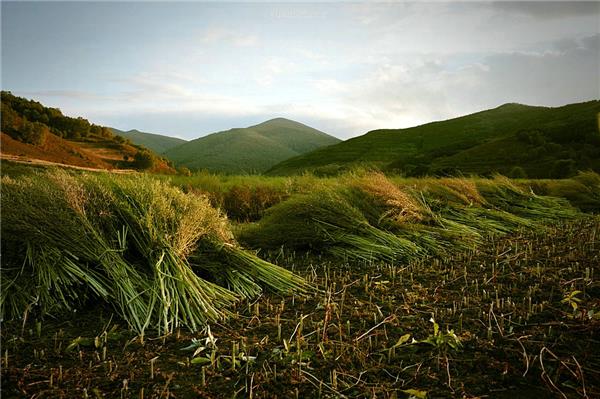
II. Autumn Fertilization and Drought-Resistant Flax Cultivation Techniques
1. Tillage and land preparation After the previous crop is harvested, carry out deep plowing in summer and autumn to capture summer and autumn rainfall. Before the soil freezes in winter, harrow and roll to compact it; in spring, avoid fertilization and tillage to prevent soil moisture loss.
2. Autumn fertilization In autumn, combined with land preparation, apply 2,000-3,000 kg of organic fertilizer, 10-12 kg of urea, and 20-25 kg of superphosphate per mu at sowing; the fertilizer may also be broadcast on the soil surface, plowed into the soil, mixed thoroughly with the soil, and then raked level and finely broken up.
3. Sowing Avoid tillage in spring. After the average temperature steadily passes 5°C, sow directly. A flax hill-drop seeder may be used for direct sowing, or a seed drill or animal-drawn drill may be used for row sowing. After sowing, harrow and roll promptly to prevent soil moisture loss. Row spacing is 15-20 cm, and sowing depth is 2-3 cm. The sowing rate is about 3 kg/mu, and it is appropriate to retain 200,000-250,000 plants/mu. Properly early sowing can effectively use stored soil moisture and improve emergence rate and drought resistance.
4. Weed control Carry out timely control according to the degree of weed damage in the field. When weeds are sparse, manual weeding may be carried out. When weeds are dense, 200-300 g of 20% sethoxydim plus 50-70 g of 70% MCPA may be mixed with 30-40 kg of water and sprayed for chemical control.
5. Timely harvest Flax can be harvested when the lower leaves turn yellow, some leaves fall off, and 50%-60% of the capsules turn yellow.
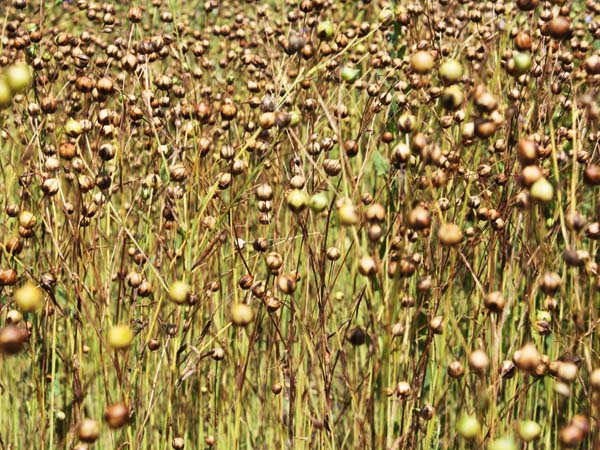
III. Pest and Disease Control
1. Agricultural control Select excellent disease-resistant (tolerant) varieties; arrange varieties rationally and rotate crops; carry out soil testing and balanced fertilization, increase phosphorus and potassium fertilizer, and apply chemical fertilizer appropriately; strengthen intertillage, keep the field clean, reduce the number of disease and pest sources, and promptly handle disease centers.
2. Biological control Protect and use natural enemies such as the seven-spotted ladybird, hoverflies, and green lacewings to control aphids, create an environment favorable for the survival of natural enemies, and choose pesticides with low lethality to natural enemies.
3. Physical control According to the biological characteristics of the pests, use a sugar-vinegar liquid with a sugar:vinegar:alcohol:water ratio of 1:4:1:16 or set up 15-30 solar insect-killing lamps/hm2 to trap and kill pests such as armyworms.
4. Chemical control
① Flax capsule maggot, armyworm, and black velvet chafer Select 2.5% deltamethrin emulsifiable concentrate 300 mL/hm2 mixed with 600 kg of water and spray, controlling 2-3 times, with a safety interval of 7 days; or select 50% phoxim emulsifiable concentrate 750 mL/hm2 mixed with 750 kg of water and spray 1-2 times, with a safety interval of 20 days.
② Aphids Select a 1,000-2,000-fold solution of 50% pirimicarb wettable powder 150-450 g/hm2 for control, with a safety interval of 11 days.
③ Wireworms, cutworms, and white grubs Select a 1,000-fold solution of 90% trichlorfon emulsifiable concentrate 375 g mixed evenly with 75-120 kg of roasted oil residue, and broadcast it in the sowing furrow at sowing to trap and kill, with a safety interval of 7 days.
④ Damping-off, anthracnose, and powdery mildew Select 75% thiophanate-methyl wettable powder 750-1,125 g/hm2 mixed with 600 kg of water and spray 1-2 times, with a safety interval of 7 days; or select a 1,000-2,000-fold solution of 64% oxadixyl wettable powder 750-1,500 g and spray 2-3 times, with a safety interval of 4 days; select a 1,000-2,000-fold solution of 20% triadimefon emulsifiable concentrate 750 mL to spray for powdery mildew control, with a safety interval of 7 days.
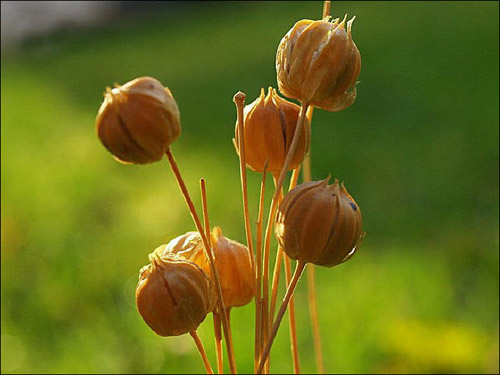
Do you now have a deeper understanding of flax, and are you also clearer about this plant before it is made into flax oil? If you or relatives and friends around you are growing flax, I hope the above introduction can help everyone.