What are the uses of the Redbud? A detailed introduction to its medicinal value
The Redbud is the regional flower of the Hong Kong Special Administrative Region, China. Also known as: Honghua Zijing or Honghua Yangtijia. It is a tree of the genus Bauhinia in the family Fabaceae; it has many branches, and the branchlets are slender and covered with hairs. Below, let us look at an introduction to the medicinal value, effects and functions of the Redbud.
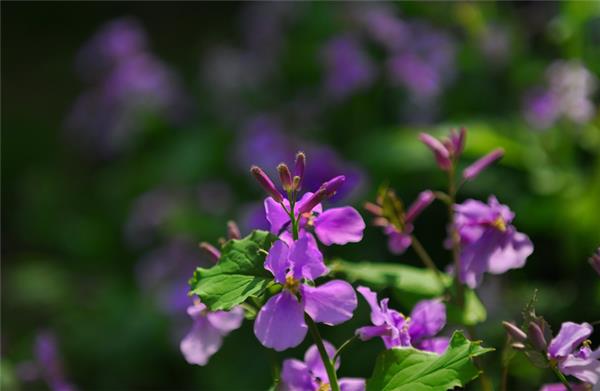
I. The medicinal value of the Redbud
1. Medicinal use
The Redbud contains afzelin, quercetin-3-a-L-rhamnoside, and myricetin-3-a-L-rhamnoside.
2. Redbud
(myricetin-3-a-L-rhamnoside), kaempferol, pinitol, and anthocyanins.
3. Odor:
(Wood, bark) Bitter, neutral, non-toxic.
The flowers, bark and fruit of the Redbud can all be used as medicine. It has effects such as clearing heat and cooling the blood, dispelling wind and detoxifying, activating blood and promoting menstruation, and reducing swelling and relieving pain. It can treat conditions such as rheumatic bone pain, bruises and injuries, wind-cold-dampness arthralgia, amenorrhea, snake and insect bites, disharmony of qi and blood, and rabies. The wood has straight grain and a fine structure, and can be used for furniture, construction and so on.
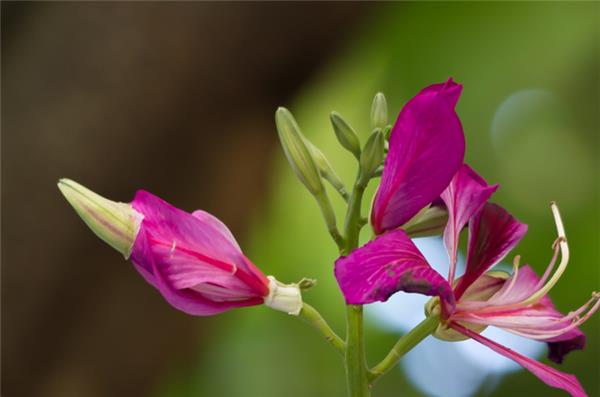
II. Care and management methods for the Redbud
Morphological characteristics: A deciduous clumping shrub, or small tree. The leaves are large and heart-shaped. The flowers are dense, 4 to 10 in number, clustered on old branches, purplish-red. It flowers before leafing out. The pods are purplish-red and mature in October. The flowering period is April.
Ecological habits: It likes light and has a certain degree of cold resistance. It likes fertile, well-drained soil and cannot tolerate flooding. It has strong sprouting ability and tolerates pruning.
Cultivation management: It is mainly propagated by sowing, and can also be propagated by division. For seedlings after planting, in order to encourage more branching, light heading back should be carried out. In early spring of the following year, heavy heading back should be carried out so that it sends out 3 to 5 strong one-year-old branches. During the growing period, appropriate pinching and tip pruning should be done. In winter, moderately thin out the overly dense, crowded branches, useless branches, withered branches and so on within the crown. Avoid excessive pruning in summer, otherwise it will reduce the production of flower buds.
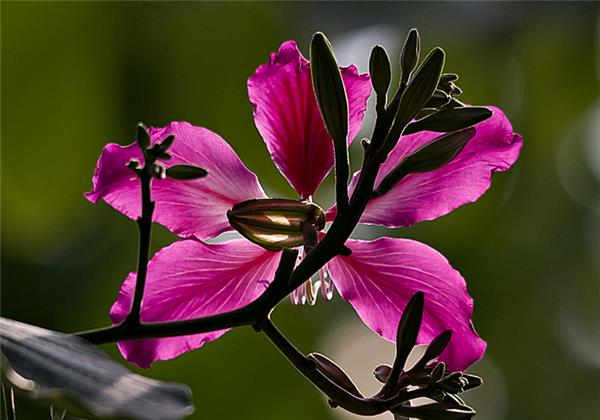
III. Cultivation methods for the Fabaceae Redbud
The Fabaceae Redbud likes a moist environment. After planting, it should be watered thoroughly immediately, watered a second time on the third day, and watered a third time after the sixth day. After the third watering, water according to weather conditions, keeping the soil moist but not waterlogged. Water promptly in summer, and the leaves can also be sprayed. Drain promptly after rain to prevent root rot from excessive water. After the beginning of autumn, if the temperature is not high, watering should be controlled to prevent autumn growth. Before the beginning of winter, water sufficiently with antifreeze water.
For the Fabaceae Redbud, in early March of the following year, water with greening water. Except in July and August, when whether to water is determined according to precipitation, water thoroughly once each month from April to October, and water with antifreeze water before the beginning of winter. In the third year, use the same method for watering. In the fourth year, it enters normal management, but the antifreeze water and greening water must be watered sufficiently and thoroughly. If conditions permit, water thoroughly once in mid-to-late April and once in late September; in other seasons it can rely on natural growth. Some people think the Redbud is drought-tolerant and afraid of flooding, but in fact the Fabaceae Redbud likes a moist environment; it simply cannot grow in a waterlogged state.
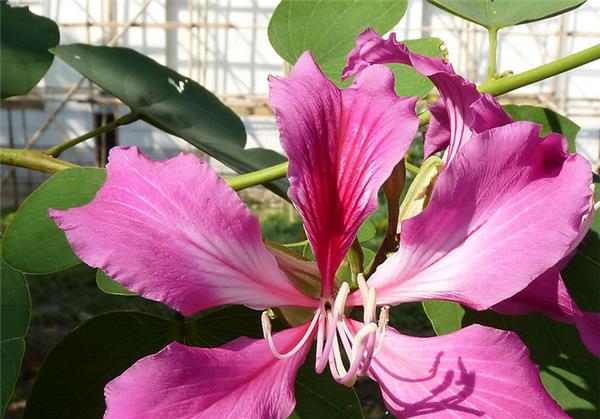
The Redbud puts its roots deep into the courtyards of ordinary people's homes, and has always been a symbol of family harmony and deep kinship. It is often used in community landscaping and has a good ornamental effect. The introduction to the appreciation of Redbud pictures and cultivation methods ends here. Thank you all for enjoying it.