How to Grow Ficus microcarpa? Detailed Guide to Ficus microcarpa Cultivation
How do you grow Ficus microcarpa? Friends who love plants and flowers have all heard of Ficus microcarpa, but many of them do not have a deep, detailed understanding of it. Next, let me explain Ficus microcarpa to you, in the hope that it will help you get to know this plant a little better.

I. Ficus microcarpa Cultivation Methods
Pot selection / repotting: The size of the flower pot is generally determined by the size of the Ficus benjamina seedling. To obtain a good plant shape, it is best to plant 3 seedlings per pot. To replenish nutrients, Ficus benjamina needs repotting once every 1 to 3 years; small potted plants can be repotted once every April, while large ones are repotted once every 2 to 3 years. When repotting in spring, add a 1/4 layer of decomposed compost (such as dried pig manure) at the bottom of the pot, then add fresh potting soil. It is best to prune at the same time as repotting to encourage branching.
Soil: Ficus benjamina grows best in an acidic mixed soil rich in humus. It can be a mix of compost and peat soil in equal proportions with a suitable amount of base fertilizer added, or it can be made by mixing 1/2 garden soil, 1/2 leaf mold and a little coarse sand.
Temperature: Ficus benjamina likes a high-temperature environment, with an optimal growing temperature of 22 to 30°C. It is not cold-tolerant; to prevent frost damage, the temperature during the overwintering period should not be below 5°C.
Light: Ficus benjamina likes light and is generally placed in a sunny spot, but it must not be exposed to direct strong light, and variegated varieties are even less able to tolerate it. Ficus benjamina that receives enough sunlight has thick, glossy leaves; plants lacking light grow poorly, with elongated internodes and soft, drooping leaves.
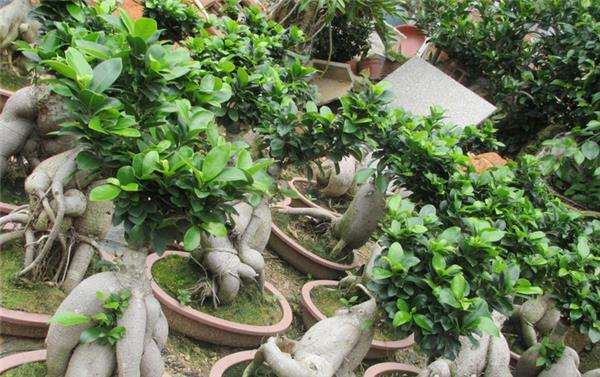
II. Hydroponic Woody Ficus microcarpa
1. Buy a pot of soil-grown Ficus microcarpa at a flower market. When choosing, pay attention: the main trunk should be straight, or multiple main trunks are also acceptable; the side branches on each main trunk should be numerous and evenly distributed; the green leaves should be neat and lush, with no "burned tips," meaning the leaf tips must not be yellow and the leaves must be entirely green.
2. Break the flower pot and take the Ficus microcarpa out of the pot. Gently shake off the soil, being careful not to damage the main roots and the relatively thick roots. Then rinse the entire root system with water; while washing, remove the rotten roots and the overly fine roots, so that you get a clean and tidy Ficus microcarpa root system.
3. Find a cylindrical glass bottle with a diameter of about 100mm and a length greater than about 300mm, colorless and transparent, and clean it for later use;
4. Find a large cola bottle, cut off the threaded bottle mouth and the conical part plus a 20mm section of the cylinder, and discard the rest. Then saw and cut the threaded bottle mouth and the conical part plus the 20mm section of cylinder along the generatrix; this serves as a clip to hold the main trunk of the Ficus microcarpa. Cut the 20mm section of cylinder along the generatrix into small pieces, roast those small pieces over fire, and bend them outward 90 degrees to serve as a planting holder placed on the mouth of the cylindrical glass bottle. Adjust the planting holder by every possible means so that it is in a stable state, keeping the Ficus microcarpa plant in a centered, vertical posture.
III. Cultivation and Management of Ficus microcarpa
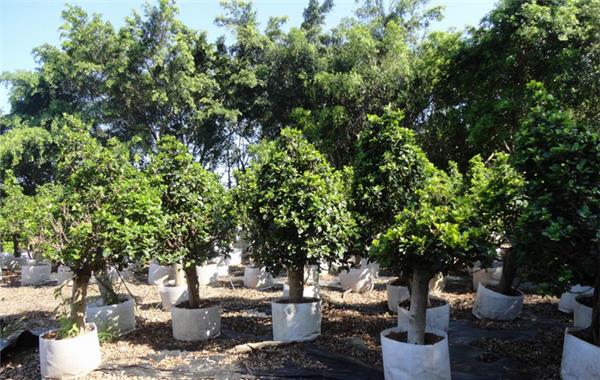
Ficus microcarpa is vigorous and highly adaptable, and it can grow normally even under extensive cultivation conditions. When lifting the seedlings, they need to be kept with an intact soil ball; when potting, use a soil mix that does not contain alkali. Repot and change the soil once every 2 to 3 years. When watering, follow the principle of preferring wet over dry, and never let it suffer drought. Fertilization should not be excessive; topdressing with liquid fertilizer 3 to 5 times a year is enough. It should also not be planted in too large a pot, to prevent the branches from growing excessively and making the tree shape impossible to control. In winter it can be moved into a medium-temperature greenhouse to overwinter, but it should be exposed to plenty of sunlight. In an ordinary home room, it will not freeze.
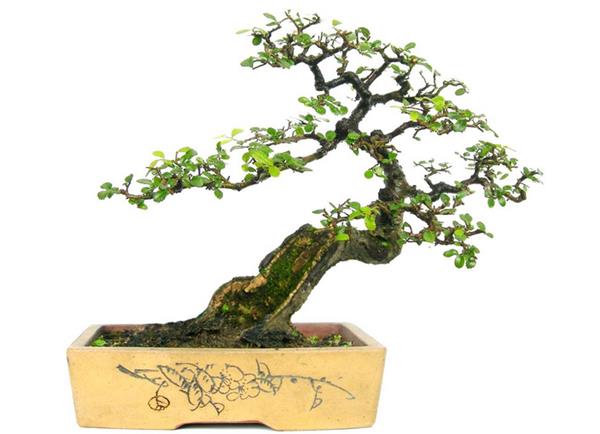
The main purpose of potted Ficus microcarpa is to make stump bonsai. Large potted plants can be cultivated into a main trunk 1.52 m tall, and by pruning, a small number of side branches are retained, letting the side branches cluster and grow at the top of the main trunk, so that aerial roots hang down from the crown. The thick, strong aerial roots are coiled around the main trunk, like jade pillars with coiled dragons, while the thinner aerial roots drift naturally, like bursts of silken rain.
The above is detailed information on how to grow Ficus microcarpa. Friends who love Ficus microcarpa should usually be more patient and careful in caring for it, and especially put more thought into its cultivation. In your spare time, you might as well exchange ideas more with friends who also like plants and flowers.