What Is Magnolia sieboldii? A Detailed Guide to Care Precautions
Magnolia sieboldii is a relatively rare and rather precious magnolia. It generally grows on fairly dangerous mountains and is not easy to pick, so many magnolia enthusiasts now transplant it to their homes to grow it. The most important thing for growing Magnolia sieboldii well is to understand its characteristics and then take good care of it day to day.
I. What Is Magnolia sieboldii
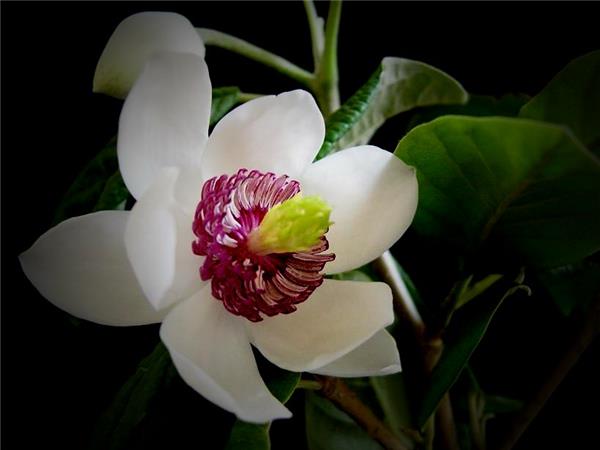
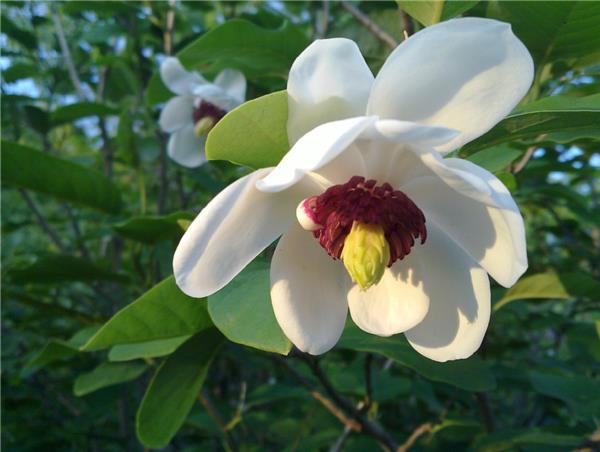
Magnolia sieboldii (Magnolia Sieboldii K. Koch), also known as the Oyama magnolia, is a rare and precious flower that survived the Quaternary Ice Age of the distant past. It belongs to the Magnoliaceae family and is a deciduous small tree. Its broad leaves are elliptical or obovate-oblong, 6 to 15 cm long. The flowers have 9 tepals; the outer whorl of 3 is pink, and the rest are white. The flowers are borne singly at the tips of the branches, with fairly long stalks; when in full bloom they sway in the wind, giving off a rich fragrance, just like a heavenly maiden scattering flowers.
II. Growth Habits of Magnolia sieboldii
Magnolia sieboldii likes sunlight and a warm, humid climate. It is very sensitive to temperature, and the blooming period can differ by as much as 4 to 5 months between the north and the south; even in the same region, the timing of the blooming period varies greatly from year to year. It has a certain resistance to low temperatures and can overwinter safely at -20°C. It has fleshy roots, so it does not tolerate waterlogging; low-lying areas and areas with a high water table are not suitable for planting, as water accumulating around the roots can easily cause leaf drop, or the roots can suffocate and die. After the fleshy root system is damaged, the healing period is fairly long, so as much of the soil ball as possible should be kept when transplanting. It grows best in acidic, humus-rich, well-drained sites, though slightly alkaline soil is also acceptable.
III. Care Precautions for Magnolia sieboldii
1. Sandy loam is best for cultivation soil, and humus soil from under deciduous broad-leaved forest is optimal; a pH between 5.5 and 7.0 is acceptable.
2. Fertilizer should be mild rather than too concentrated. River water, rainwater or pond water is best for irrigation. If grown in the open ground, it can be planted under sparse trees, preferably on a shady slope, and it can withstand low temperatures of -30°C.
3. It can be propagated by cuttings and by sowing.
4. The main disease of Magnolia sieboldii is leaf spot disease. At the beginning of the disease, there are only small dark red dots on the leaf surface; if not treated in time, they spread rapidly, join into large patches, and finally cause the leaves to wither and fall off, seriously affecting its ornamental value. Therefore, its leaf growth should be observed regularly, and once disease is found it should be treated promptly. A 50% thiophanate-methyl 800-fold solution can be sprayed on the leaves once every 7-8 days for 2-3 times in a row, and it will recover. The most common pest is scale insects, mostly oleander scale; when scale insects are found, imidacloprid or a modified imidacloprid 2000-3000-fold solution can be sprayed to kill them.
IV. Uses of Magnolia sieboldii
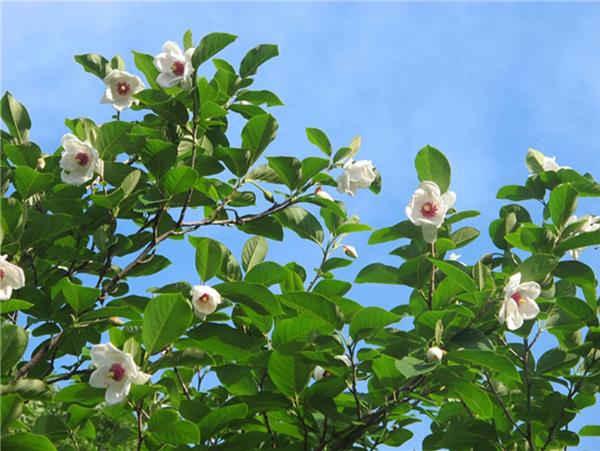
1. Ornamental use: Magnolia sieboldii has a beautiful plant form, lush branches and leaves, and lovely flowers with long flower stalks that wave in the wind, like a heavenly maiden scattering flowers. It is a famous ornamental tree for gardens. Magnolia sieboldii is a woody flower worth introducing and expanding in cultivation.
2. Beauty use: Magnolia sieboldii is treasured not only for its scarce numbers but also for the remarkable skin-nourishing factors it contains. Magnolia sieboldii is rich in vitamins, calcium, fiber and a variety of amino acids, and has outstanding effects in hydrating, moisturizing, antioxidant protection, clearing heat toxins and repairing damaged skin cells. The antibacterial and anti-inflammatory factors it contains can penetrate deeply to the root of acne, regulate the skin's water-oil balance, unclog pores, and cure skin problems such as acne and pimples. The magnolol contained in Magnolia sieboldii can quickly shed acne scars, fade acne marks, brighten skin tone, smooth fine lines, and restore a youthful, bouncy and smooth skin feel.
3. Economic value: The flowers can be made into fragrant extract and are also an important aromatic plant resource. The leaves can also be steam-distilled for aromatic oil, with an oil content of l%; the seeds have a very high oil content, and the oil is an important raw material for daily chemical products. Analysis shows the essential oil contains 19 components, which besides being used in fragrances can also be used medicinally.
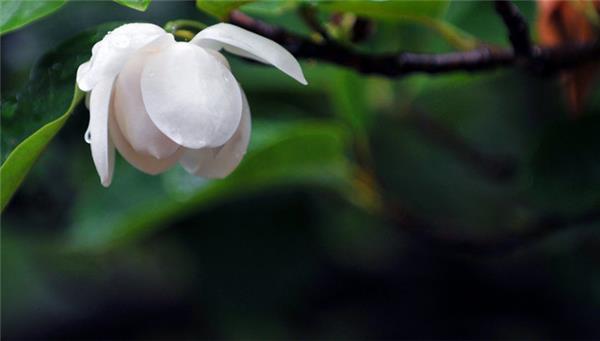
So, has this "heavenly maiden" on the steep cliffs moved everyone in the ordinary world? Growing Magnolia sieboldii at home requires suitable conditions, such as a fairly spacious courtyard. If you grow Magnolia sieboldii well, then during its blooming period you can enjoy a superb visual treat.