How to grow red spider lilies? A detailed guide to planting techniques and care methods
An ancient legend says that the red spider lily, the manjusaka that grows on the road to the underworld, represents the flower of death. Of course, that is just a legend, and many people still want to grow red spider lilies. Today we will take a look together at the planting methods and precautions for red spider lilies.
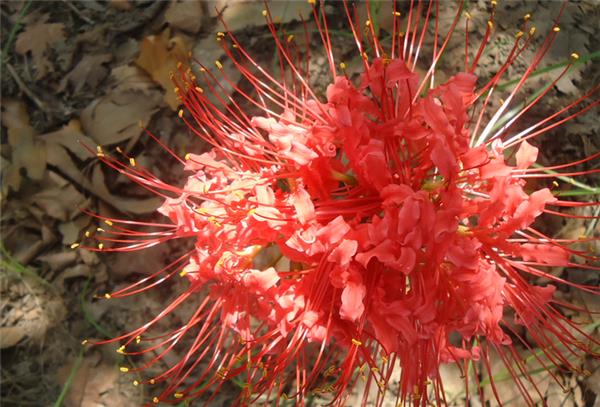
I. Planting techniques for red spider lilies
The cultivation method for red spider lilies is very simple: peel off the small bulbs around the main bulb for propagation. Trim off the residual roots of the main bulb, and once the wound is dry, it can be planted. For pot cultivation, choose a large bulb that has grown for 3 years and can bloom (with a diameter of more than 7 cm) for potting, and one bulb can be planted per pot. Plant it shallowly, so that 1/3 of the bulb sits above the soil surface. After potting, water once, just enough to make the soil slightly moist. Water again after new leaves emerge. Apply liquid fertilizer once every half month. Between February and March, after sprouting, repot or replace the potting soil. Water sparingly during the summer dormant period, and keep the potting soil moist regularly in spring and autumn. During the growing season, apply a diluted cake fertilizer solution once every half month. Lycoris radiata prefers partial shade; avoid direct sunlight in summer, keep it in partial shade in spring and autumn, strictly control watering during the overwintering period, and stop fertilizing. Common pests include: tobacco cutworm, Lycoris noctuid moth, thrips, and white grubs. Post-bloom handling and pest and disease control: after Lycoris radiata blooms, the flower scape should be cut off to reduce nutrient loss.
Red spider lilies should not be planted too deep; it is best if the top of the bulb is just buried at the soil surface. The soil should be sandy soil with good drainage or loose potting soil. During the vegetative growth period, water frequently; from 20 days before flowering to the flowering period, an appropriate amount of water must be supplied to achieve uniform flowering and to help the flowers last. Keep the soil moist, but not waterlogged, to prevent the bulb from rotting.
II. Pot cultivation methods for red spider lilies
Red spider lilies like scattered light and do not like strong light, so the light should not be too intense. Red spider lilies generally have no special requirements for soil. But after all, it is a southern flower, so the soil should be acidic, somewhat sandy, and breathable and well-draining. Red spider lilies have ornamental value above ground all year round: leaves without flowers, flowers without leaves.
Lycoris radiata has strong adaptability, and its bulbs have a dormant phenomenon. In the north, pot cultivation is needed for ornamental purposes, and Lycoris radiata planted at the end of May should also be able to bloom. The suitable time for cultivation in the north: plant in spring (April-May). Most varieties like a warm climate, with a maximum temperature not exceeding 30°C and a ten-day average temperature of 24°C, which is suitable for Lycoris radiata growth. Ten days after sowing, the root system grows vigorously, and leaves successively emerge above the ground. In winter, when the daily average temperature is above 8°C and the lowest temperature reaches 1°C, it does not affect Lycoris radiata growth. Do not water too much, otherwise its rhizome will rot.
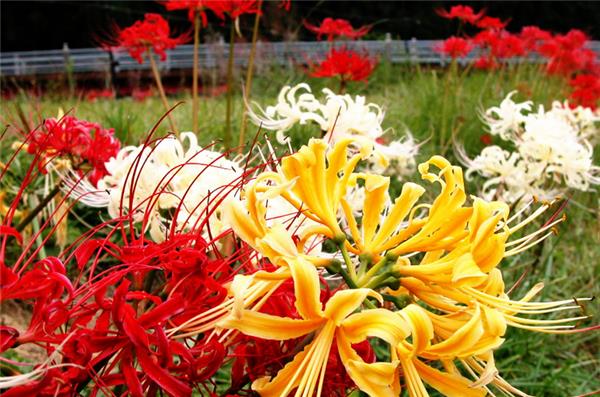
III. Management after planting red spider lilies
Topdressing: after potting, water once, just enough to make the soil slightly moist. Water again after new leaves emerge. Apply liquid fertilizer once every half month. When growing red spider lilies, watering can be stopped in autumn when the leaves thicken and mature. Between February and March, after sprouting, repot or replace the potting soil. The potting soil can be made by mixing 2 parts peat, 2 parts garden soil, and 1 part perlite, while adding a small amount of base fertilizer. When growing red spider lilies, water sparingly during the summer dormant period, and keep the potting soil moist regularly in spring and autumn. During the growing season, apply a diluted cake fertilizer solution once every half month. When growing red spider lilies, they prefer partial shade; avoid direct sunlight in summer, keep them in partial shade in spring and autumn, strictly control watering during the overwintering period, and stop fertilizing.
Pest and disease control: when growing red spider lilies, the flower scape should be cut off after blooming to reduce nutrient loss. The management of red spider lilies is extensive. Common diseases include anthracnose and bacterial soft rot. Before planting the bulbs, soak them in 0.3% copper sulfate solution for 30 minutes, wash them with water, and plant after drying. When growing red spider lilies, spray 50% carbendazim wettable powder at 500 times dilution once every half month for control. In the early stage of disease, spray 50% benomyl at 2500 times dilution.
Through the above introduction to red spider lily planting techniques, we have gained some understanding of red spider lilies. Friends who are interested can grow a pot of red spider lilies themselves to add a decorative touch to their living space.