When Is Sunflower Blooming Season? A Full Guide to Care Methods
The flower heads that sunflowers produce during their blooming season are very large, arguably among the finest of all flowers. When sunflower blooming season arrives, seas of golden sunflowers are absolutely sure to deliver a magnificent visual experience. But to get sunflowers to bloom and set seed on schedule, you still need to put plenty of effort into growing them.
I. Sunflower Blooming Season
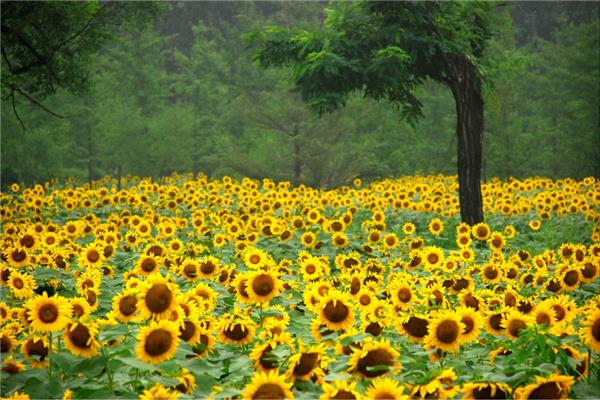
The main blooming season for sunflowers runs from mid-July to mid-to-late August. The blooming period can last more than two weeks.
When 75% of the plants in a field have opened their ray florets, the blooming period has begun. It generally takes 6 to 9 days for a single flower head to go from the opening of the ray florets to the completion of the opening of the tubular florets. From the second day to the fifth day is the peak blooming period of that inflorescence. The number of flowers opening during these 4 days accounts for about 75% of the total number of blooms. The flowers mostly open between 4 and 6 a.m., and pollination and fertilization take place the following morning. Unfertilized stigmas can stay fresh for 7 to 10 days without withering. Sunflower self-pollination has an extremely low seed-setting rate, only about 3%, while cross-pollination gives a high seed-setting rate.
II. How to Grow Dwarf Sunflowers
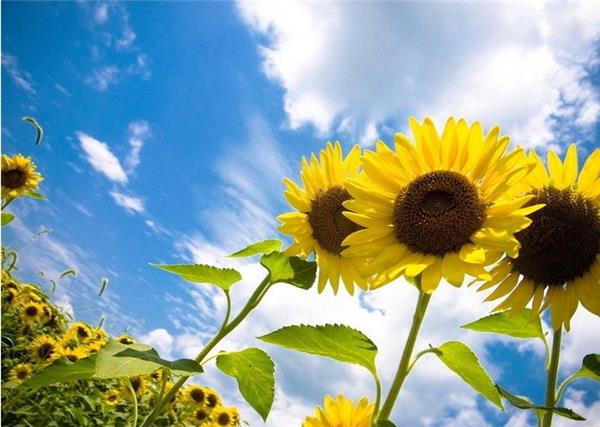
1. Seed selection: The Big Smile variety among dwarf sunflowers is recommended. This variety grows 30 to 40 cm tall, with flowers 10 to 17 cm across, bright golden-yellow single petals and a black center. It generally blooms 50 to 55 days after sowing and is suitable for pots and flower beds.
2. Sowing: Seed propagation is used for raising seedlings, generally sown in April. The optimum temperature for germination is 15 to 18°C. Sow in a shallow pot or shallow box; the medium should be loose, have good water retention and be sterile. Dibbling is the preferred sowing method, with 2 seeds per hole. After sowing, cover with 1 to 2 cm of medium to maintain the moisture needed for germination, increase stability during the seedling stage and reduce the occurrence of seedlings with the seed shell still attached.
3. Cultivation: Keep the soil moist right after planting. After the seedlings emerge, do not water too much, or the roots will rot. When watering, note that in hot weather you should water early in the morning, and if watering in the evening, do it late. After the seedlings emerge, keep two to three seedlings; more than that is bad for growth.
4. Light: Dwarf sunflowers love sun, so remember to keep enough light, preferably more than 8 hours a day! Be sure to apply plenty of base fertilizer, mainly phosphorus and potassium fertilizer, with only light applications of nitrogen fertilizer.
5. Planting out and care: Once the seedlings have all emerged, thin them out gradually, keeping 1 plant per hole. They can be planted out when the seedlings are 7 to 8 cm tall. A sandy soil rich in humus and well drained is best for the pot. When planting out, apply plenty of base fertilizer at the bottom of the pot, and take as much soil as possible with the seedlings when digging them up, damaging the roots as little as possible so the plants recover quickly.
6. Fertilizing: Fertilize once every 20 days during the growing period, but apply 2 to 3 light applications of phosphorus and potassium fertilizer before flowering. Keep the soil consistently moist, and water promptly especially during high summer heat and drought. To make the terminal bud of the main stem grow strong, side (axillary) buds can be removed.
III. Care During Sunflower Blooming Season
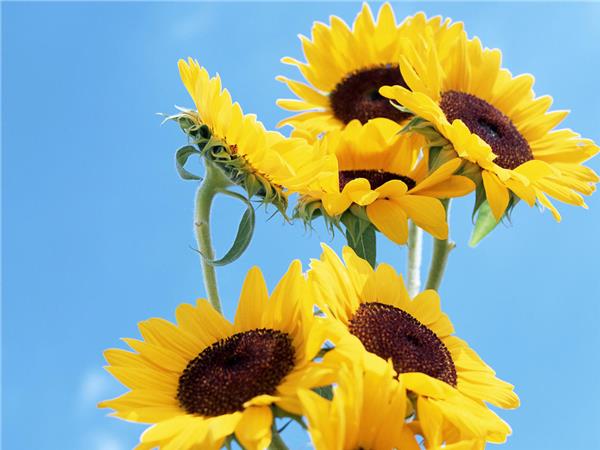
1. Sunflower self-pollination has an extremely low seed-setting rate, only about 3%; cross-pollination gives a high seed-setting rate. However, if temperatures are high, there is a lot of rain, humidity is high, light is insufficient or the soil is dry, the seed-setting rate will drop greatly. Therefore, adjusting the sowing date, fertilizing and watering at the right times, controlling pests and diseases, and taking measures such as releasing bees or hand pollination can raise the seed-setting rate.
2. From flowering to maturity takes 25 to 55 days for spring sowing and 25 to 40 days for summer sowing. Different varieties differ. About 15 days after flowering and pollination is the seed formation stage. During this period the weather needs to be clear, the day-night temperature difference fairly large and the soil moisture suitable.
3. During this period, the plants' water requirement accounts for more than 60% of their total water requirement over their whole life. If the water supply is insufficient, seed development will be poor and the proportion of empty shells will increase. Therefore, ensure an adequate water supply during this period, and you can apply extra fertilizer along with watering, with 5 to 10 kg of urea and 10 kg of diammonium phosphate per mu.
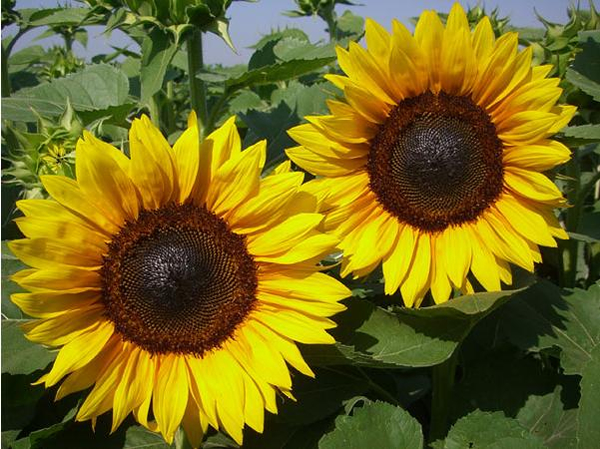
After reading the introduction above, do you feel more confident about growing sunflowers? I believe that as long as you follow the points mentioned above and pay close attention when planting and caring for them, everyone can make sunflower blooming season arrive on schedule and then produce delicious seeds.