What to do when the leaves of a Persian cyclamen turn yellow? How to care for a Persian cyclamen
The Persian cyclamen, also known as root begonia or rabbit ear flower, likes a cool, moist and sunny environment. It is suitable for growing indoors, and in winter it needs a greenhouse. There are many reasons why the leaves of a Persian cyclamen turn yellow. How can you learn the cultivation method for a Persian cyclamen? What should you do when the leaves of a Persian cyclamen turn yellow?
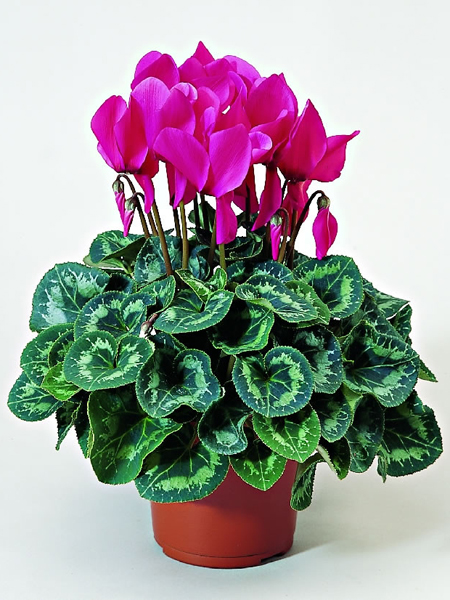
What should you do when the leaves of a Persian cyclamen turn yellow?
There are many reasons why the leaves of a Persian cyclamen turn yellow, and different solutions can be used according to the different causes.
First, if the leaves of the Persian cyclamen turn yellow due to high temperatures, the problem can be solved by appropriately lowering the ambient temperature.
Second, if the yellowing of the leaves is caused by improper watering, it can be solved simply by changing the watering.
Third, if the yellowing of the leaves is caused by red spider mites or whiteflies, pesticide should be sprayed as soon as possible for control. Pyridaben, imidacloprid and similar products can be used.
Fourth, if the yellowing of the leaves is caused by diseases such as leaf spot, a fungicide should be sprayed for control. Carbendazim, zineb, agricultural streptomycin and similar products can be chosen.
How should a Persian cyclamen be cared for?
1. Light: The Persian cyclamen likes sunlight, so it should be placed in a sunny spot for care. Sufficient light is very beneficial to its growth, but it is afraid of direct strong summer sunlight.
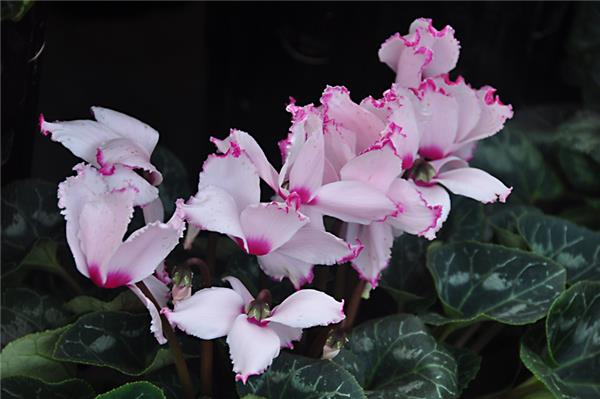
2. Fertilizing: The Persian cyclamen is a fertilizer-loving plant. Each spring and autumn, apply a 2‰ solution of monopotassium phosphate once each. Nitrogen fertilizer should not be applied during the flowering period, otherwise it will cause the branches and leaves to grow excessively and shorten the life of the flowers.
3. Temperature: The Persian cyclamen is not tolerant of high temperatures. Too high a temperature will make it enter a dormant state. Above 30°C the plant will stop growing and enter dormancy, and above 35°C it is prone to rotting and death. In winter during the flowering period, the temperature must not be lower than 10°C; if the temperature is too low, the flower color will be dull and the flowers will easily fall off. The suitable growth temperature is 15-20°C.
4. Watering: The Persian cyclamen is a moisture-loving plant that fears waterlogging. It should not be watered too much; overwatering will cause root rot and death. Simply keep the soil moist every day.
5. Pests and diseases: The Persian cyclamen suffers from more diseases than pests. The main diseases are gray mold and soft rot, mostly caused by bacterial infection. The affected parts appear soft and rotten. Thiophanate-methyl or chlorothalonil can be applied for prevention.
The yellowing of Persian cyclamen leaves may be caused by too high a concentration of fertilizer or pesticide, or by applying them too frequently. Generally, fertilizing once every 15 days in summer is enough, and the concentration of fungicides should not be too high; generally once every 7 days is fine. These may be common causes of yellowing leaves in Persian cyclamen.
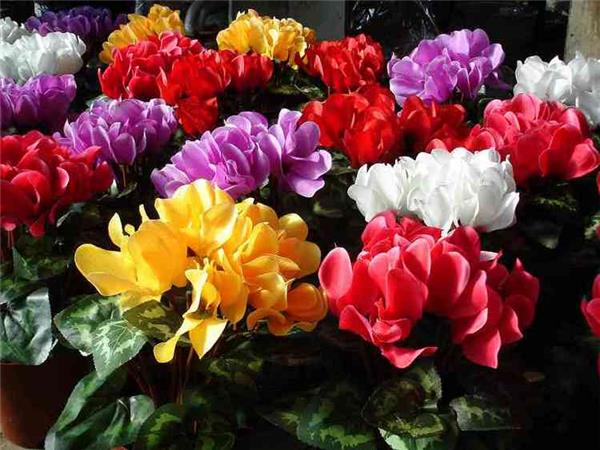
Of course, the yellowing of Persian cyclamen leaves is also related to the cultivation method. For example, when the temperature is high in summer, it should not be placed in a spot exposed to the blazing sun; watering is best done in the morning or evening, because its leaves cannot withstand the temperature difference when watered under strong sunlight; if the soil has not been turned for about a year, it should be turned in spring or autumn, and so on. These are several causes of yellowing leaves in Persian cyclamen.
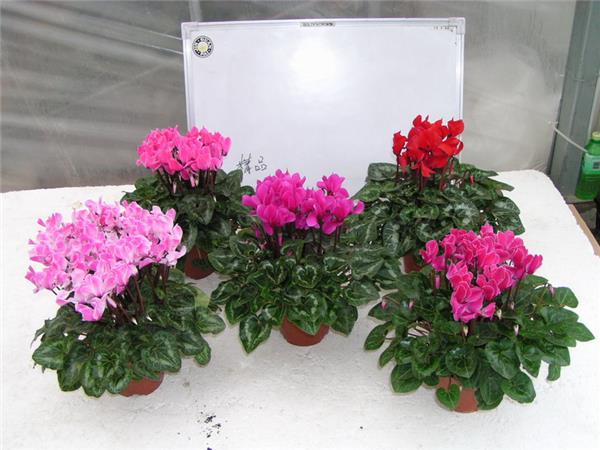
While learning how to deal with yellowing leaves in Persian cyclamen, friends who grow Persian cyclamen should also pay special attention: the tuber of the Persian cyclamen contains toxic plant alkaloids. If swallowed by mistake by humans or animals, it can cause symptoms such as dizziness, vomiting and diarrhea. While mastering the cultivation method for Persian cyclamen, you should also know this common knowledge, so as to avoid unnecessary trouble for yourself.