How to Grow Orchids? Detailed Care Methods and Tips
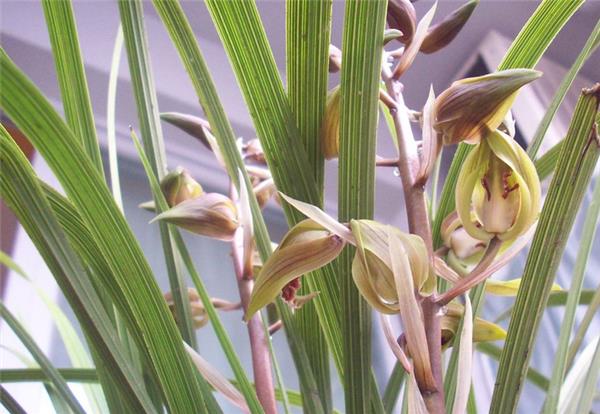
Orchids are actually the plants known as orchids (Cymbidium / Orchidaceae), and there are an extremely large number of orchid species. They are a very popular type of indoor flower, and because of their many forms and beautiful flower shapes, they are praised as the foremost of indoor flowers. Growing orchids also requires particular attention to technique, because they are relatively delicate flowers and plants. The article below will explain orchid care methods in detail.

I. Care of Orchids
Light. Orchids are semi-shade plants; they love sunlight, but must absolutely not be exposed to scorching sun. Semi-shade is most suitable, that is, a shading rate of 50% to 70% is required. Generally, a higher shading rate is required in summer, while in winter and spring the amount of light should be appropriately increased. Because indoor light is easy to control, it is best to grow orchids indoors at home. If orchids are grown outdoors, certain shading measures should be taken.
Temperature. Generally speaking, the temperature suitable for orchid growth is above 25-30°C, and different orchid varieties have different temperature requirements. When the temperature exceeds 30°C, be sure to water to lower the temperature.
Humidity. Orchids have relatively high humidity requirements. Generally, during the growing period from April to September, a relative humidity above 80% needs to be maintained, and in winter it can drop to around 50%. In summer and autumn more than winter and spring, and on sunny days more than rainy days, even more attention should be paid to letting orchids absorb moisture. If sprinkling water, it can be done 2-3 times a day, to the extent that the leaf surfaces and pot surfaces are moistened; if watering, it can be done once every 2-3 days, until water flows out from the bottom of the pot.
II. Precautions for Growing Orchids
Wounds must be protected against bacteria - when repotting or dividing plants, if the roots have wounds, first apply a fungicide to the wounds to prevent bacteria from invading.
Do not use too large a pot - planting a small plant in a large pot uses a large amount of growing medium, which easily leads to poor aeration, and watering is also difficult to control. If too much water is absorbed, the growing medium is not easy to dry, and bacteria invade and cause root rot.
Orchids should be planted shallowly - orchid plants must not be planted too deep, otherwise long-term moisture will cause rot. When planting, fill the growing medium around the roots, and the base or pseudobulbs must be exposed.
The roots should be spread out - when planting orchids, the roots should be evenly spread out and must not be squeezed together, so that each root can contact the growing medium and aeration is also better.
Do not water for several days - newly planted orchids may have injured roots. After applying fungicide to the wounds, do not water for 3-5 days, so that the efficacy of the medicine can be achieved and the growth of new shoots and new roots can also be promoted.
Avoid strong light - newly planted orchids must all avoid direct strong light to prevent dehydration, and should be placed in a warm and shaded place. Spraying can be used to increase the humidity in the air until the orchids resume normal growth.
III. Orchid Growing Methods
1. Choosing soil
Peat soil, black mountain soil, pine bark soil, garden soil, fern roots, moss, and bark chunks can all serve as orchid growing medium. The bottom of the pot should have good drainage to increase permeability. Tiles can be used to cover the drainage holes, then a layer of broken brick, tile, and stone granules should be laid down, with a thickness of one quarter of the pot's bottom depth, and finally the growing soil should be spread on top. When planting orchids, they should be held upright and inserted into the soil, then covered with soil up to the pseudobulbs. Firm the soil, and do not fill soil within 2 cm, to make watering convenient. After planting, water thoroughly, place in a cool environment, and after half a month move into a ventilated and sunny environment. The pot surface can be covered with small gravel, which both retains moisture and enhances ornamental value.
2. Light and moisture
As mentioned above, do not take them out in spring, do not expose them to sun in summer, do not let them dry out in autumn, and do not keep them wet in winter. This is the growing principle orchids need to follow. That is, in spring, due to the temperature, taking them out of the room makes them susceptible to cold and affects their growth, so taking them out in April is more appropriate. In summer, place them under a shade canopy and absolutely avoid direct sunlight; appropriate shading can be used. Autumn is the period when orchids sprout and send up flower spikes, so maintaining humidity is especially important. In winter, watering needs to be controlled, because their water demand is low, and too much water easily causes root and leaf diseases.
The orchid growing methods are introduced here. Orchids, these extremely delicate flowers, need to be cared for strictly according to their growing techniques in order to ensure their growth. There are very many types of orchids, and there are also many precious varieties. They are praised as the finest among flowers, and their value is also very high, often appearing in various exhibitions. The beauty of orchids makes countless people proud of them, and growing them indoors can beautify the environment and cultivate body and mind.