How to grow lantern flowers? Lantern flower care methods
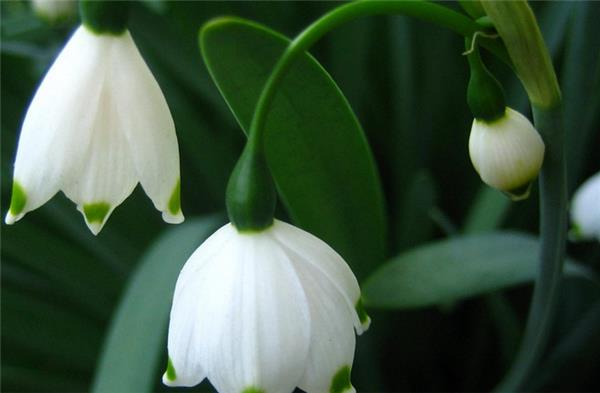
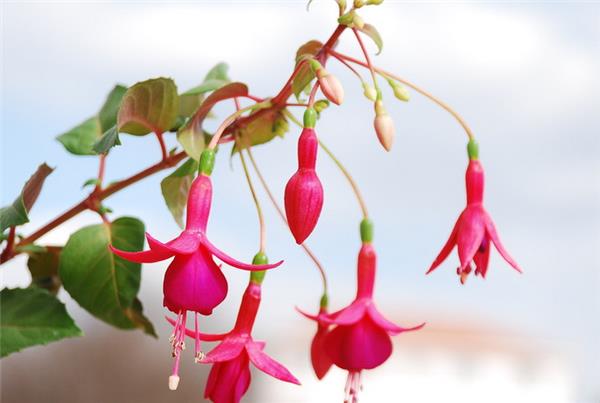
Lantern flower, also known as fuchsia, is a perennial herbaceous flowering plant with a great many varieties, and its main flower colors come in three types: red, purple and white. Although this plant is delicate and colorful, it cannot withstand the scorching sun of hot summer days. Therefore, the growing characteristics of this lantern flower are a cool, moist climate environment, with a temperature of 10-25 degrees. So, how is the lantern flower? And when growing it, what matters should be noted? Let's take a look together!
I. Care of lantern flowers
The environment that lantern flowers like is sandy soil with relatively good drainage, and they like cool and moist environments. Therefore, in summer, attention should be paid to shading, while in winter sufficient sunlight must be ensured. If in summer the temperature exceeds 38 degrees, the metabolism of the lantern flower will slow down, and its growth will also enter a stagnant state, at which point leaf drop, root rot and so on will occur. If it is not cared for in time, it can cause the entire plant to die. Before planting, there must also be sufficient organic fertilizer. As for water needs, in winter or on rainy days, water every 2 to 3 days; in autumn or on sunny days, water every day; while in summer the lantern flower is in a semi-dormant period, so water must be controlled, thereby preventing leaf drop, root rot and similar phenomena.
II. Notes on growing lantern flowers
Base fertilizer is generally applied as a top dressing after the fruit matures in September to October. The method is: dig circular trenches around the plant at 60-100 cm, with a trench depth of 15-20 cm, apply long-acting organic liquid fertilizer, and after the soil has absorbed the water, apply piled dry mixed fertilizer, and finally backfill the soil and level it. Top dressing is generally carried out after the fruit has set, applying organic liquid fertilizer mainly based on nitrogen. Lantern flowers also need a large amount of water during the growing season; in spring, irrigate 3-4 times. During the bud and flowering period, the soil is generally required to be slightly dry, but in places that are too dry, 1-2 thorough waterings should also be given, to favor flowering and fruit setting. For lantern flowers, watering in autumn should be less; after the fruit is harvested, combined with fertilizing, 1-2 thorough waterings may be given, and one more watering before winter sets in, so that they can overwinter safely.
III. How to grow lantern flowers after cuttings
Lantern flowers are often propagated by softwood cuttings in late spring and early autumn using branches of the current year, or by hardwood cuttings in early spring using branches from the previous year. The materials used are nutrient soil for cuttings, river sand, peat soil and so on. For home cuttings, due to limited conditions it is very hard to obtain an ideal cutting medium, so it is recommended to use a sterilized cutting medium; medium-coarse river sand can also be used, but it must be rinsed several times with clean water before use. Sea sand and river sand from saline-alkali areas should not be used, as they are not suitable for the growth of flowering plants.
When doing softwood cuttings of lantern flowers, during the vigorous growth period of the plant from late spring to early autumn, choose thick, strong branches of the current year as cuttings. After cutting the branches off, select the sturdy parts and cut them into sections 5-15 cm long, and each section must carry more than 3 leaf nodes. When cutting the cuttings, note that the upper cut should be made straight across about 1 cm above the topmost leaf node, and the lower cut should be made at an angle about 0.5 cm below the bottommost leaf node; both the upper and lower cuts must be smooth and level (the knife must be sharp).
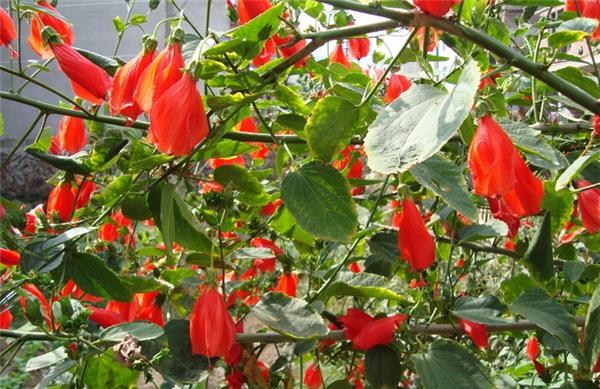
The above is the summary for users of the notes on growing lantern flowers, and because this flower has a unique shape and multiple flower colors, it brings users good decoration. When growing it, note also that this plant fears heat, so in summer attention should be paid to shading.