What to do when Cymbidium sinense leaves turn yellow? Here's how to care for Cymbidium sinense correctly
What to do when Cymbidium sinense leaves turn yellow, roots rot, or the plant wilts? Cymbidium sinense has poor cold tolerance. When grown in pots north of the Yangtze River basin, it is mostly overwintered indoors. Because of low winter temperatures, compacted soil, overwatering, and fertilizer burn, Cymbidium sinense is often prone to root rot. In mild cases this affects normal growth and flower bud formation and blooming; in severe cases it can cause the death of the whole plant.
What to do when Cymbidium sinense leaves turn yellow
When Cymbidium sinense leaves turn yellow, note that the difference between water temperature and soil temperature should not be too great, otherwise the leaves will be damaged. For fertilizing Cymbidium sinense, during the vigorous growth season after May in spring, apply well-rotted dilute liquid fertilizer; do not fertilize in winter or summer. Cymbidium sinense is propagated by division, carried out at the same time as repotting, after flowering or during September to October. Generally divide once every 2-3 years; after division each new clump should have at least 2-3 pseudobulbs. Do not plant a single shoot alone.
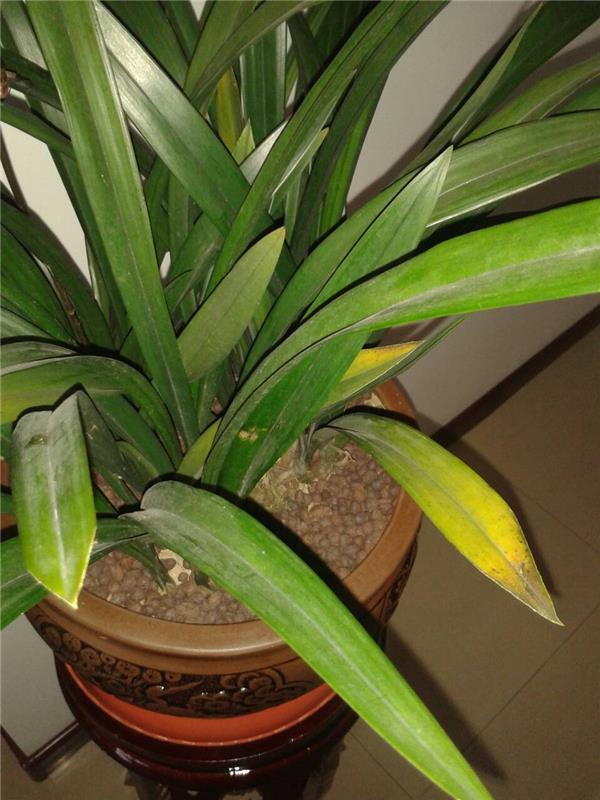
Cymbidium sinense leaves turn yellow because the roots are affected, either from too much water or too little. Usually spray the pot surface with water more often and water less. In winter in northern cities, when growing Cymbidium sinense indoors, watering once every twenty days is enough; usually just spray the pot surface and leaf surfaces more often. Also, do not place it too close to a radiator. The suitable growing temperature for Cymbidium sinense is 10°C to 25°C. If conditions at home allow, place the Cymbidium sinense in a spot with high humidity (not in the bathroom). If conditions do not allow, just put a little water beside the Cymbidium sinense to improve the environment. Finally, note that it should get plenty of sun, so it blooms faster; once flower buds appear, no more sunning is needed.
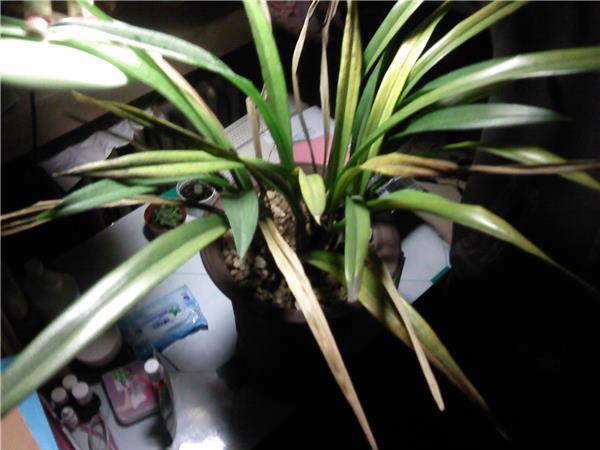
Whether Cymbidium sinense has root rot is mainly judged by leaf color and potting soil. When spring returns and the weather warms, if the leaves of the Cymbidium sinense plant gradually lose their oily green luster, and touching the leaves feels dry, hard, and wrinkled, then it can be preliminarily determined that the Cymbidium sinense has root rot. Second, when the weather is clear and fine, if the potting soil does not turn pale and dry for several days, this also indicates that the plant's fleshy roots have lost their absorption function. Of course, to accurately judge the degree of root rot, the plant must be taken out of the pot before a final determination can be made.
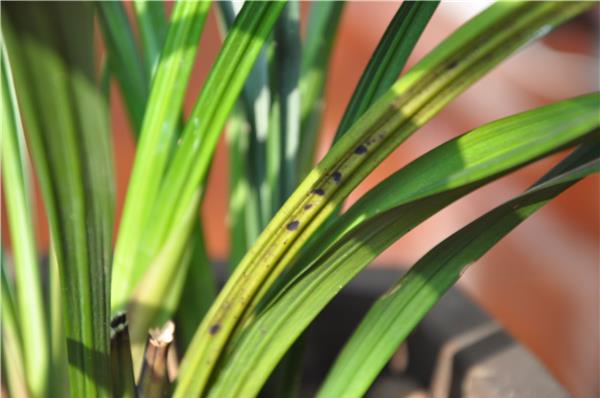
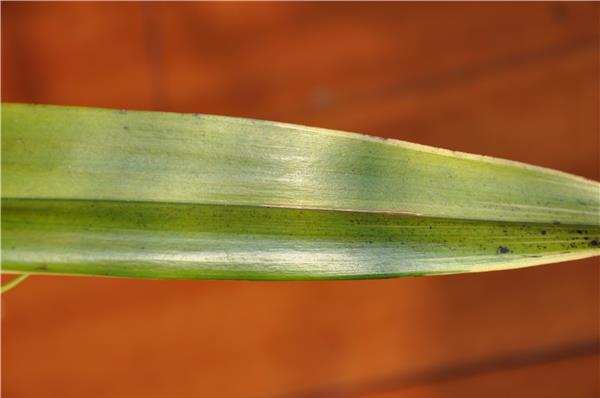
The rescue method for Cymbidium sinense root rot: repot and prune away the rotten roots, and use clean sand to stimulate rooting. When it is preliminarily determined from the leaf surface and potting soil that the root system of a potted Cymbidium sinense plant has rotted, the orchid plant can be tipped out of the pot, and the rotten parts and extent of damage to the root system can be seen directly. At this time, promptly cut off the moldy, blackened, and hollow roots, keep the parts that have not yet rotted, and also thin out some leaves with disease spots. As long as the corm-like pseudobulb has not rotted away, the plant can generally be rescued and revived. To prevent the plant from spreading pathogens again, when replanting, change to a clean plain clay pot and choose uncontaminated plain sand for planting. When planting, cover with plain sand only up to the base of the pseudobulb; never bury the pseudobulb. Finally, add a layer of clean culture soil or moss on top of the sand, then immediately place the replanted potted orchid in a cool, ventilated place with moderate shading. During the process of root recovery and regeneration of Cymbidium sinense, generally do not fertilize, and it must be protected from heavy rain. Only when the base leaf color turns green again and regains luster, the leaves stand upright, and small buds emerge from the base of the pseudobulb, can normal water and fertilizer management be resumed. This process takes about 3-4 months.
For watering Cymbidium sinense, rainwater or snow water is best. If tap water must be used to water the orchid, it must be exposed to the sun for one day before use. Use a watering can for watering, and do not spray water into the flower buds, to avoid causing rot. In summer, absolutely avoid being washed by showers; plastic film must be used to block rain.
For watering Cymbidium sinense, in summer and autumn do it around sunset, and it is best for the leaf surfaces to be dry before nightfall. In winter and spring, watering around sunrise is best, and misting should also be done to increase air humidity to benefit the growth of Cymbidium sinense. Fertilizing Cymbidium sinense should be "light rather than concentrated," generally starting in late spring and stopping in late autumn. When fertilizing, an air temperature of 18°C-25°C is suitable; do not fertilize on cloudy or rainy days. As for fertilizer types, either organic or inorganic fertilizer is fine. During the growing season, fertilize Cymbidium sinense once a week. In autumn and winter, Cymbidium sinense grows slowly, so fertilize less, once every 20 days. After fertilizing, spray a small amount of clean water to prevent the fertilizer solution from staining the leaves. Fertilizing must be done on a clear evening; fertilizing on cloudy days risks root rot.
Cultivation methods for Cymbidium sinense:
1. Potting medium preparation:
The soil requirement for Cymbidium sinense is slightly acidic soil rich in humus. You can choose a potting medium that is loose, breathable, drains well, and retains fertilizer, with a pH value of 5.5-6.5, such as: leaf mold from the forest, coarse river sand, sawdust, charcoal powder, decayed tree bark, crushed brick pieces, rice husks, sphagnum moss, spent edible mushroom substrate, etc.
2. Orchid pot selection:
Commonly used orchid pots include clay pots, ceramic pots, glazed pots, and plastic pots. They are suitable both for the ground and for balconies, rooftops, and indoors. Home orchid growing is mainly ornamental, so it is best to use purple clay pots or plastic pots. Special purple clay pots for orchids are mostly tall-stemmed and trumpet-shaped, with many holes at the bottom edge, draining water and breathing well, and with distinctive shapes. Plastic pots are deep, have many holes, are lightweight, neat, inexpensive, easy to move, and reduce pressure on floors.
3. Light:
Orchids prefer a semi-shaded environment and avoid dryness. In winter the sunlight is weak, and in spring the sunlight is soft, which is suitable for orchid growth, and full sunlight can be accepted. From early summer to mid-autumn, the light duration is long and the light intensity is strong, which is unfavorable for orchid growth, so shading is needed. It is best to place them under tree shade or under eaves, or in a place where sunlight can be seen in the morning and evening but not after 9 a.m., or where there is skylight but no direct sunlight.
4. Temperature:
For orchid rooting, sprouting, and normal growth, the suitable temperature is 20°C-28°C. Below 20°C growth is slow; above 25°C growth is rapid; at 30°C it is forced into dormancy. A daytime temperature of 10°C-16°C and a nighttime temperature of 5°C-10°C constitutes the winter dormancy period. Cymbidium sinense can tolerate a low temperature limit of minus 2°C. Home orchid growing is mostly overwintered indoors; in winter and spring no heating measures are needed, and it can safely pass through the severe cold period. If overwintering in a courtyard or on a balcony in a leeward spot, a temporary greenhouse can be built with plastic film.
5. Humidity:
The air humidity needed for growing orchids is 60%-80% during the growing period, and no less than 50% during winter dormancy; different orchid species also have different requirements for air humidity. In spring the temperature is low and water evaporates slowly, so misting is generally used, which can both increase the air humidity indoors or in the orchid shed and wash the orchid leaves, making them fresh and green.
6. Potting
After the pot is chosen, before planting first cover the drainage hole at the bottom of the pot with a large piece of broken tile, and lay window screen on it, then spread coarse mountain soil particles, and then place the orchid plant in (the root system of the orchid plant should be distributed evenly and spread out, not touching the pot wall), then fill the pot with humus soil and bury up to the leaf base of the pseudobulb. Also cover the surface of the soil with a layer of white stones or Selaginella uncinata, which is both attractive and helps keep the surface soil moist. Then use the bottom-seepage method to make the soil thoroughly wet, take it out, rinse the soil off the leaf surfaces with a watering can, place it in a shaded spot to recover, and after one week transfer to normal management.
7. Management
Cymbidium sinense is a semi-shade plant and requires environmental conditions of "warmth, moisture, diffused light, and ventilation." Whether it grows well depends entirely on care and management. The cultivation site requires good ventilation and shade facilities. The water requirements of Cymbidium sinense mainly depend on the temperature, light intensity, and plant growth. Gao Lian of the Ming Dynasty said in the appendix to the Orchid Manual, "Four Precepts for Cultivating Orchids": "Do not take them out in spring, do not sun them in summer, do not let them dry in autumn, do not keep them wet in winter." These twelve characters are indeed the experience of growing orchids. For watering Cymbidium sinense, rainwater or snow water is best. If tap water must be used to water the orchid, it must be exposed to the sun for one day before use. Use a watering can for watering, and do not spray water into the flower buds, to avoid causing rot. In summer, absolutely avoid being washed by showers; plastic film must be used to block rain. For watering time, in summer and autumn do it around sunset, and it is best for the leaf surfaces to be dry before nightfall. In winter and spring, watering around sunrise is best, and misting should also be done to increase air humidity to benefit the growth of Cymbidium sinense.
Avoid dryness. In winter the sunlight is weak, and in spring the sunlight is soft, which is suitable for orchid growth, and full sunlight can be accepted. From early summer to mid-autumn, the light duration is long and the light intensity is strong, which is unfavorable for orchid growth, so shading is needed. It is best to place them under tree shade or under eaves, or in a place where sunlight can be seen in the morning and evening but not after 9 a.m., or where there is skylight but no direct sunlight.4. Temperature:
For orchid rooting, sprouting, and normal growth, the suitable temperature is 20°C-28°C. Below 20°C growth is slow; above 25°C growth is rapid; at 30°C it is forced into dormancy. A daytime temperature of 10°C-16°C and a nighttime temperature of 5°C-10°C constitutes the winter dormancy period. Cymbidium sinense can tolerate a low temperature limit of minus 2°C. Home orchid growing is mostly overwintered indoors; in winter and spring no heating measures are needed, and it can safely pass through the severe cold period. If overwintering in a courtyard or on a balcony in a leeward spot, a temporary greenhouse can be built with plastic film.
5. Humidity:
The air humidity needed for growing orchids is 60%-80% during the growing period, and no less than 50% during winter dormancy; different orchid species also have different requirements for air humidity. In spring the temperature is low and water evaporates slowly, so misting is generally used, which can both increase the air humidity indoors or in the orchid shed and wash the orchid leaves, making them fresh and green.
6. Potting
After the pot is chosen, before planting first cover the drainage hole at the bottom of the pot with a large piece of broken tile, and lay window screen on it, then spread coarse mountain soil particles, and then place the orchid plant in (the root system of the orchid plant should be distributed evenly and spread out, not touching the pot wall), then fill the pot with humus soil and bury up to the leaf base of the pseudobulb. Also cover the surface of the soil with a layer of white stones or Selaginella uncinata, which is both attractive and helps keep the surface soil moist. Then use the bottom-seepage method to make the soil thoroughly wet, take it out, rinse the soil off the leaf surfaces with a watering can, place it in a shaded spot to recover, and after one week transfer to normal management.
7. Management
Cymbidium sinense is a semi-shade plant and requires environmental conditions of "warmth, moisture, diffused light, and ventilation." Whether it grows well depends entirely on care and management. The cultivation site requires good ventilation and shade facilities. The water requirements of Cymbidium sinense mainly depend on the temperature, light intensity, and plant growth. Gao Lian of the Ming Dynasty said in the appendix to the Orchid Manual, "Four Precepts for Cultivating Orchids": "Do not take them out in spring, do not sun them in summer, do not let them dry in autumn, do not keep them wet in winter." These twelve characters are indeed the experience of growing orchids. For watering Cymbidium sinense, rainwater or snow water is best. If tap water must be used to water the orchid, it must be exposed to the sun for one day before use. Use a watering can for watering, and do not spray water into the flower buds, to avoid causing rot. In summer, absolutely avoid being washed by showers; plastic film must be used to block rain. For watering time, in summer and autumn do it around sunset, and it is best for the leaf surfaces to be dry before nightfall. In winter and spring, watering around sunrise is best, and misting should also be done to increase air humidity to benefit the growth of Cymbidium sinense.