The Role and Harm of Algae and Effective Methods to Remove Them
When algae appear in a fish tank, they always easily make people feel annoyed, because they are neither good for the growth of aquatic organisms nor of much ornamental value. However, algae actually have their own unique roles too.
I. The Role of Algae
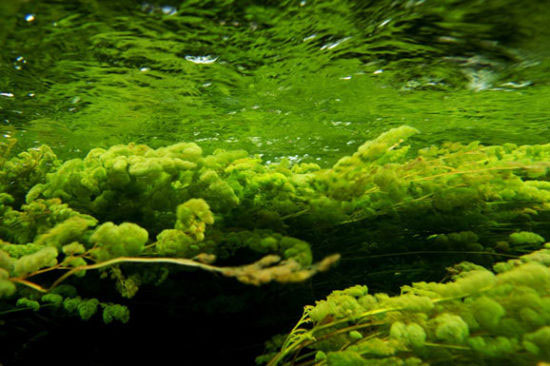
1. Because algae can produce oxygen and play an important role in the food web, algae are usually beneficial to aquatic organisms. However, if algae are in excess, that is, a sudden rapid growth phenomenon of large amounts of plankton, it can also cause many fish to die.
2. Larger algae, mainly kelp, are a very popular food in the Far East, and they can be dried in the sun and then compressed into flat cakes.
3. In Wales, there is a kind of red algae that can be used to make a flat bread called laver bread.
4. Algae are rich in vitamin C, thiamine and potassium.
5. Algae are also widely used as feed and fertilizer for livestock.
II. The Harm of Algae
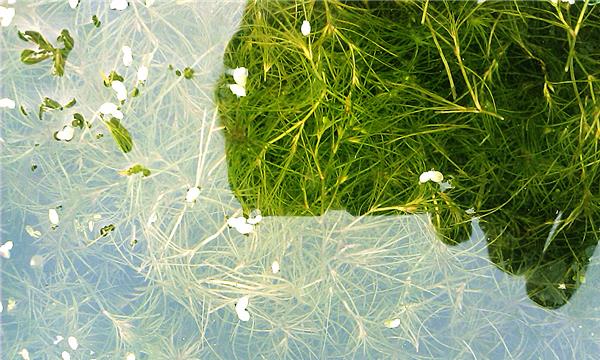
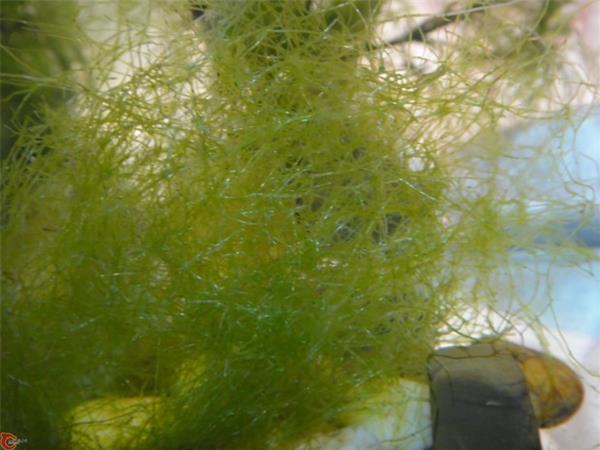
Filamentous algae, carpet grass and silk grass are actually just several different names for one kind of algae. These various filamentous algae can tangle messily into clumps around a pond, float at the edge of the pond in the shape of dark clouds, or form a dense, foamy layer of floating algae on the surface of the pond. Floating algae are not very harmful to a pond, they are just unsightly. Although most ponds have one kind of algae or another, under conditions of natural balance they generally do not cause any problems. Algae may enter a pond through various routes, such as being carried in on birds' claws, algae spores may also be blown in by the wind, and other aquatic plants may also bring algae into the pond.
The green water phenomenon is caused by thousands upon thousands of single-celled plants in the water - algae.
The main causes of a large outbreak of algae are poor water quality caused by not changing the water for a long time; incorrect and unreasonable lighting duration; deteriorated water quality caused by raising too many fish and aquatic plants; mistakenly introducing aquatic plant species that carry algae; poor fertilizer or adding excessive liquid fertilizer, and so on, all of which are the main reasons leading to excessive growth of aquatic plants in a fish tank.
III. How to Effectively Remove Algae
The main methods of removing algae are physical removal, chemical removal, biological removal and so on.
Physical removal: you can use a brush to scrub, and the magnetic brushes and fish tank brushes sold on the market are all very easy to use, but they often make the whole tank a chaotic mess, and once there are many tanks it is even more of a big project.
Chemical removal: using algaecide has an ordinary effect; the advantage is that it is effective against any kind of algae, and the disadvantage is that, depending on the quality, it has a certain degree of impact on fish and the ecological balance.
Biological removal: snails are often recommended to control the growth of algae. However, although they can eat large amounts of algae, their speed of elimination cannot keep up with the growth speed of algae. In addition, snails have another unpleasant disadvantage, which is that they will eat many precious aquatic plants! Herbivorous fish are also often used in some countries to control algae numbers. However, this is likewise no miracle cure. After all, herbivorous fish will not eat different kinds of filamentous algae.
The above is an introduction to algae as a kind of algal organism. Like all algal organisms, their reproductive capacity is really super fast, so if a large amount of algae is found in a fish tank or pond, it must be dealt with as soon as possible. In addition, measures such as applying as little fertilizer as possible in the water can also reduce the probability of excessive algae reproduction.