How do you care for a bird of paradise flower? Learn the correct care methods
Strelitzia (bird of paradise) is native to South Africa and is also known as the bird of paradise or paradise bird; its scientific name was given in honor of Queen Charlotte, wife of King George III of England. It resembles a crane holding its head up and gazing into the distance, with oblong-lanceolate leaves and unusual, brilliantly colored flowers, which is why it is called "crane-gazing orchid" (Strelitzia). Below, let us learn about the cultivation methods and precautions for Strelitzia.
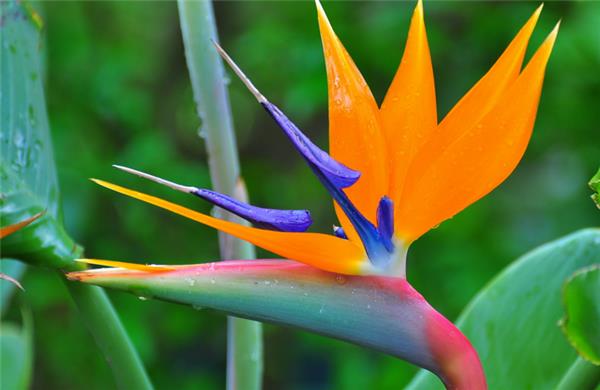
I. Care of the bird of paradise flower
Cultivation points: Organic Strelitzia prefers a sunny, warm and humid climate. The optimum growing temperature is 18-24°C; it is not cold-tolerant, and although it is drought-tolerant, it should not be allowed to dry out excessively, as prolonged high temperatures can cause physiological disorders and the death of flower buds. A sandy soil with deep, well-drained, organic-rich layers is best, with a pH of 5.5-6.5. Cultivating this flower in alkaline soil easily leads to yellowing leaves and even root rot and death.
Greenhouse planting technique: When organic Strelitzia is produced as cut flowers, it is generally planted in plastic greenhouses. Before planting, the soil must be sterilized, deeply plowed to make it loose and soft, and enough decomposed organic compost must be applied; drainage channels should be made to facilitate timely drainage during the rainy season. In the greenhouse, planting can be done from March to November, with a plant-to-row spacing of 80-120 cm and 9,000-13,500 plants per hectare. It can also be planted densely first and then transplanted after 3-4 months. For planting, healthy 2-year-old seedlings or division-propagated plants are mostly used; before planting, soak the seedlings in water for 1 hour to improve the survival rate. When planting plants that have already flowered, the planting hole diameter is 60-100 cm, and planting should not be too deep; it is best for the buds at the base of the plant to be level with the soil surface, to facilitate the sprouting of new buds.
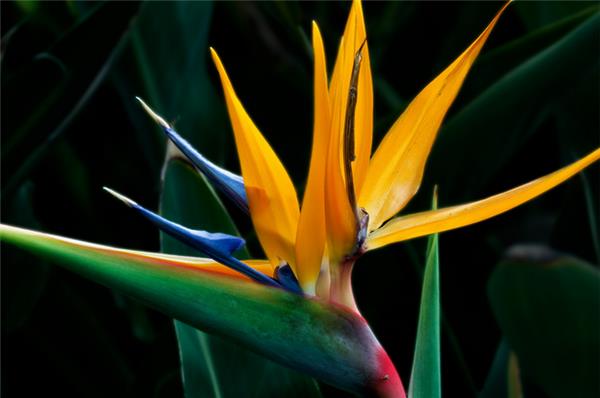
II. Precautions for growing Strelitzia:
Strelitzia prefers a warm and humid climate, and a sunny, humid-air environment; it fears strong direct sunlight and is not cold-tolerant. It has fleshy roots and fears both waterlogging and drought. If the potting soil accumulates water and stays wet for a long time, it easily causes root rot, so watering should alternate between dry and wet. In addition to sufficient watering in summer and during the flowering period, watering should be appropriately reduced in early spring, and in winter when room temperature is low, watering must be controlled even more.
In summer, be sure to spray water on the leaves and sprinkle water on the surrounding ground 1 to 2 times a day to increase air humidity and lower the temperature. Appropriate shading should be provided to avoid direct strong light, otherwise the leaves will be scorched. The optimum growing temperature is 18-24°C; when it exceeds 32°C, spray water to cool it down.
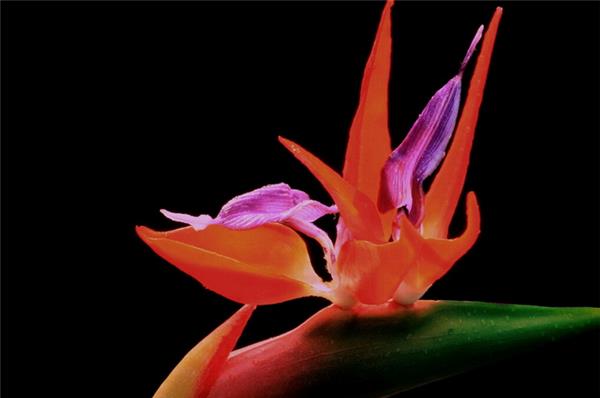
III. Factors affecting the cut flower yield of Strelitzia
Although shading flowering Strelitzia plants in summer has no significant effect on the summer cut flower yield and the rate of first-grade flowers, it can increase the rate of second- and third-grade flowers. Its main effect is to reduce the exposure of plant leaves to intense sunlight and high-temperature scorching, keeping the plants growing well and helping improve cut flower yield and quality in winter and spring.
Using heat-preservation cultivation for flowering Strelitzia plants in winter can significantly increase cut flower yield, but it has no significant effect on the rate of first-grade cut flowers. The main factor limiting the improvement of cut flower quality is that the number of florets inside the bud does not reach the standard of more than 7. Therefore, when carrying out heat-preservation cultivation in winter, fertilizer and water management for the plants should be strengthened to promote the formation of more florets.
For Strelitzia clumps with many divisions, the pruning principle is to first remove the plant's diseased leaves, broken leaves, and leaves that turn yellow after flowering; second, prune out weak plants, diseased plants, crowded plants, and especially weak small side buds, keeping the plant distribution relatively even; third, pruning is generally carried out on sunny days, and fungicide should be sprayed on the wounds promptly. Do not water for 1-2 days, keeping the wounds dry so they heal as quickly as possible and to prevent infection by pathogens.
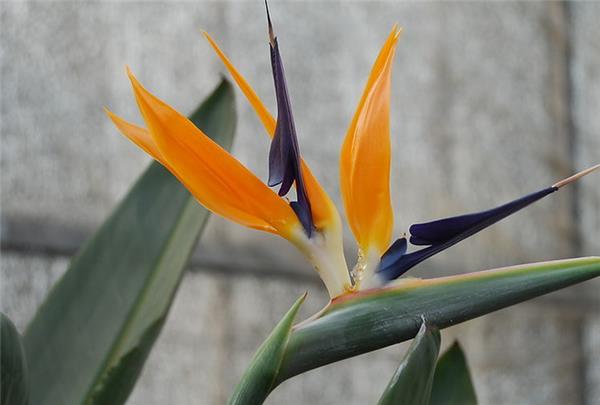
The above is an introduction to the cultivation methods and precautions for the bird of paradise flower. Through the content above, we have learned some knowledge about water and fertilizer, soil, and temperature in the process of growing Strelitzia, as well as related precautions. We should now have a fairly clear understanding of Strelitzia, right?