How to Grow a Kalanchoe? A Detailed Guide to Practical Care Methods
Kalanchoe, also known as the longevity flower, false kalanchoe, Christmas kalanchoe, and dwarf kalanchoe, belongs to the Crassulaceae family, Kalanchoe genus. It is a succulent plant, forming a low clump of thick, glossy leaves that stays green all year round. In spring, summer, and autumn it is planted outdoors as a border edging, and from December to April of the following year it produces bright, eye-catching flowers. Each flowering stem can bear as many as dozens of flowers, and the flowering period lasts over 4 months, which is how the kalanchoe got its name, the "longevity flower." Below, we introduce the growing methods and points to note for kalanchoe.
I. Kalanchoe Care
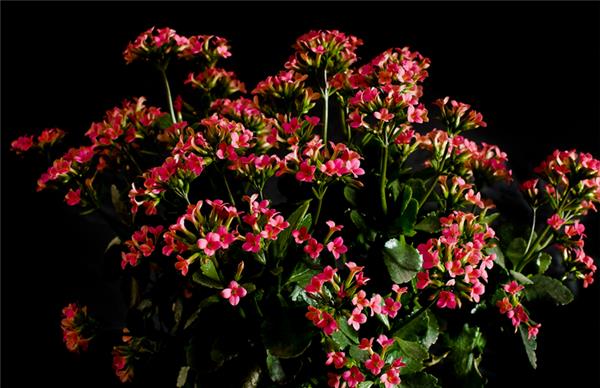
The kalanchoe plant is small and compact, with dense green leaves and flowers in a rich range of colors. Because its flowering period comes close to Christmas and lasts a long time, it has become a "holiday flower" used to highlight the festive atmosphere. In addition, kalanchoe leaves are thick and fleshy, densely deep green, and glossy, with high ornamental value; even when not in bloom, the foliage can be enjoyed, making it an ideal indoor potted flower. Kalanchoe has strong adaptability to soil, but if planted in clayey soil it will develop root rot, while it grows best in loose, fertile, sandy soil. Kalanchoe prefers light; in an environment with ample sunlight, its stems are sturdy and its leaves are green and textured. If kept in a light-deficient environment for a long time, not only do the leaves turn pale yellow and drop easily, but the stems also become very thin and weak, and it will not bloom or will bloom sparsely. Therefore, sufficient sunlight is very important. Apart from needing appropriate shade at midday in the height of summer, it should be placed in a sunny spot at all other times. In addition, because the plant is phototropic, it is best to turn the pot once every half month to avoid uneven light exposure, which would cause lopsided growth and make it less attractive.
II. Points to Note When Growing Kalanchoe
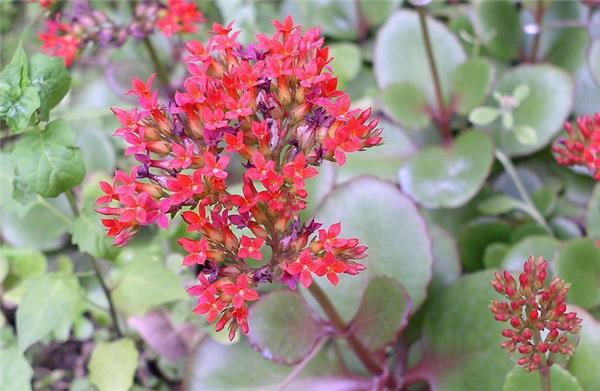
1. Kalanchoe likes ample sunlight. If grown at home, it should be placed in direct sunlight throughout all four seasons. However, around midday in summer it should be given appropriate shade and can be moved indoors, otherwise strong light can easily turn kalanchoe leaves yellow. If there is insufficient light, the branches become thin, weak, and elongated, the leaf surface is thin, and the plant shape is unattractive; moreover, it produces few flowers, the flower colors are not vivid, and a large number of leaves may drop, causing it to lose its ornamental value.
2. Although kalanchoe is a perennial herbaceous plant, when grown for more than 2 years its old roots tend to rot. To make the kalanchoe branches more robust, it is recommended to carry out cuttings and divide the pots every 1-2 years. In winter, take care to protect it from the cold; the best conditions are 15°C-18°C during the day and above 10°C at night. If the temperature is too low, the kalanchoe leaves turn red, affecting the flowering period and preventing normal blooming, which in turn affects holiday viewing.
III. Can Kalanchoe Be Placed in the Bedroom?
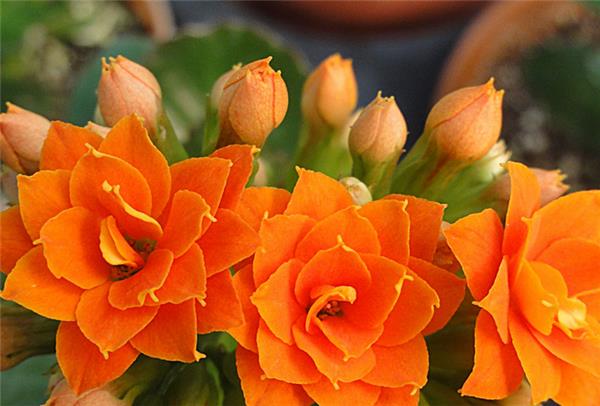
Kalanchoe has a compact plant shape, crystal-clear and translucent leaves, dense and vivid flowers, and a long flowering period, and its flowering period coincides with Christmas, New Year's Day, and the Spring Festival, giving it excellent ornamental effect. So growing kalanchoe in the bedroom can make the home environment full of vitality, especially in the bleak winter, where it is used to decorate halls and living rooms, showing even more of a spring feeling.
Kalanchoe, with its small and exquisite plant, compact shape, clustered growth, green leaves, dense flowers, rich colors, and long flowering period, is a lovable indoor potted plant that brings a very festive atmosphere. Therefore, kalanchoe is suitable as an ideal potted flower for indoor arrangements in winter and spring. Moreover, the flowering period of kalanchoe coincides with Christmas, New Year's Day, and the Spring Festival, so it can be used to decorate windowsills, desks, and tabletops, which is very fitting, and when used for flower troughs, display windows, and halls, its overall ornamental effect is excellent. So no matter what style of home decor, pairing it with kalanchoe can add a festive holiday atmosphere.
Kalanchoe is a sun-loving plant and is suitable for places with abundant sunlight. Therefore, having such a plant in the bedroom makes it look bright and lively. Furthermore, because of its auspicious meanings of great fortune and prosperity, long life, and good fortune and celebration, it makes a simple home style of free individuality look even brighter and more cheerful, makes European-style decor look beautiful and luxurious, and makes Chinese-style decor look even more elegant and dignified.
I believe that after reading the above, you should have some understanding of the growing methods and points to note for kalanchoe. Now that you know how to grow kalanchoe, we should take good care of it in our daily lives.