A Detailed Guide to Clivia Growing Methods and Care Tips
Clivia, also known as sword-leaf bush lily and large-leaf bush lily, is an ornamental flower of the genus Clivia in the Amaryllidaceae family. It is native to southern South Africa. Next, let us introduce clivia growing for you.
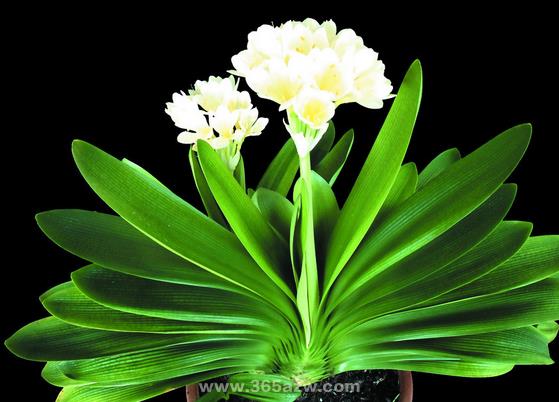
Clivia Growing Methods
Clivia is best grown in soil rich in humus. This kind of soil has good aeration and good water permeability, and the soil is fertile with a slightly acidic pH (PH6.5). Mixing about 20% sand grains into the humus soil can help root development.
Many flowers like fertilizer, but even for fertilizer-loving flowers, fertilization must have a limit. Too much fertilizer will be harmful to growth and may even cause root rot or scorching of the plant. Clivia also belongs to this category of plants, so fertilizer must be applied in appropriate amounts. Clivia has relatively well-developed fleshy roots, and the roots store a certain amount of water. Therefore, this flower is relatively drought-tolerant. However, even drought-tolerant flowers cannot be severely deprived of water, especially in summer when high temperatures are combined with dry air; do not forget to water in time, otherwise the roots and leaves of the flower will be damaged, which will prevent new leaves from sprouting and cause the original leaves to scorch. This will not only affect flowering but may even cause the plant to die.
The most suitable growing temperature for clivia is 15-25°C. At 10°C it stops growing, and at 0°C it suffers cold damage. Therefore, in winter it must be kept warm and protected from freezing. After the flower stem emerges, maintaining around 18°C is advisable. If the temperature is too high, the leaves and flower scape will grow leggy and thin, the flowers will be small and poor in quality, and the flowering period will be short. If the temperature is too low, the flower stem will be short and the plant will be prone to premature flowering (blooming), affecting quality and thus reducing ornamental value.
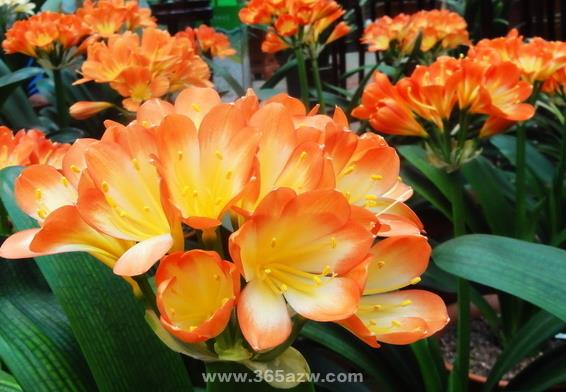
Introduction to Clivia Varieties
Large-flowered Clivia
Large-flowered clivia is a perennial herb with white, unbranched roots. The leaves are neatly arranged in a fan shape and are evergreen. The flowers are trumpet-shaped, usually orange or red, with a yellow-white inner center. Of course, there are other color lines as well.
Drooping Clivia
The growth cycle of drooping clivia is extremely long, generally requiring about 10 years. The leaves of drooping clivia are hard and thick, strip-shaped, about 300-800mm long and 25-50mm wide, with very blunt leaf tips. The flowers generally number 20-26 and hang downward. The flower color is mostly dark orange, with green flower tips. Its fruit generally contains about 2 seeds, the fruit skin is red, and the ripening period takes 9 months.
Garden Clivia
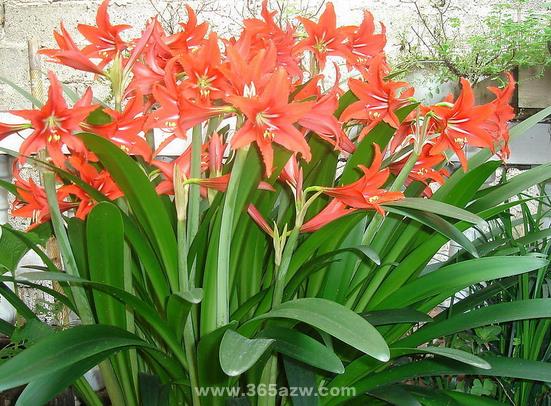
Garden clivia generally reaches a height of 80-130mm. The leaves are bright green, 350-900mm long and 25-60mm wide, with pointed leaf tips. The flowering period is long, from late autumn to winter. The flower color is generally orange-red, and there are also other colors ranging from yellow to red, with very obvious green at the flower tips. The flowers droop in an arc shape. Each berry contains 1-2 seeds, and the fruit takes 12-15 months to ripen.
Clivia Prices
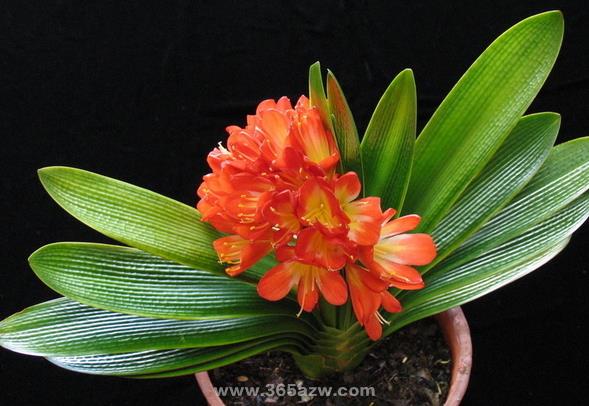
Clivia is divided into many varieties: clivia seedlings (5-30), flowering clivia (50+), and high-quality clivia (for clivia, it depends on the variety; better ones can cost several thousand, while ordinary prices are between 50 and 150, or higher). The price of clivia is determined by its quality. To judge whether a clivia is good or bad, you can identify it from four aspects: brightness, fineness, stiffness, and thickness.
1. Brightness refers to the degree of reflection on the leaf surface, in order: oily bright, bright, shiny, slightly shiny, not shiny.
2. Fineness refers to the degree of smoothness and delicacy of the leaf surface, in order: delicate, relatively delicate, average delicacy, relatively rough, rough.
3. Stiffness refers to the overall degree of resistance to bending of the leaves, or understood as the degree of bending rather than breaking, in order: strong, relatively strong, relatively weak, weak.
4. Thickness refers to the degree of thickness of the leaf flesh in cross-section. The smaller the difference in thickness between the leaf edge and the middle, the better, in order: 2.2mm, 2mm, 1.8mm, 1.6mm, 1.4mm and below.
The above is an introduction to clivia growing methods. I hope you enjoy it.