Detailed Guide to Making a Boxwood Bonsai: Steps and Cultivation Techniques
More Plant Bonsai Care Recommendations
I Sandalwood Bonsai Care and Making Methods
II Caragana Bonsai Care and Making Knowledge
III How to Care for Home Bonsai, Home Bonsai Care Precautions
In daily life, boxwood bonsai is a very common type of plant bonsai. Because of its graceful tree posture, leaves as small as broad beans, and ability to stay evergreen all year round for year-round viewing, it is deeply loved by consumers. As a result, many people are very interested in this plant bonsai. So what are the methods and steps for making boxwood bonsai? When you buy a boxwood bonsai from the market that is growing quite well, how should you care for it? Below let us take a look at the steps for making boxwood bonsai and a detailed guide to cultivation techniques.
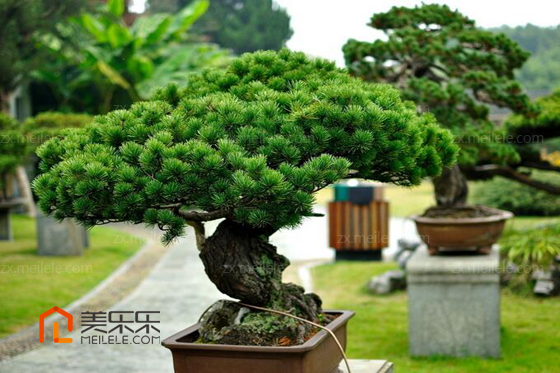
¤ Steps for Making Boxwood Bonsai
1. Bonsai Material Selection
One cannot make bricks without straw. To make a good boxwood bonsai, you first need enough boxwood material. Little-leaf boxwood is a very common evergreen shrub or small tree in the Buxaceae family. It has a long lifespan and grows slowly, making it an excellent bonsai tree material. When making bonsai, choose little-leaf boxwood propagated by sowing or cutting, dig up its old stump, wrap the plant roots well in plastic bags for moisture retention and protection. Then plant it, cut off the downward main root and most of the excess leaves to prevent soil erosion. After about 2 years of cultivation, this little-leaf boxwood can be used for shaping and production.
2. Potting Soil
Before making the bonsai, prepare the flower pot and soil for the little-leaf boxwood. The flower pot for little-leaf boxwood can be a Yixing purple clay pot or a light-colored glazed ceramic pot. Both types of pots are very exquisite and elegant, making them perfect for decorating bonsai. At the same time, when choosing a flower pot, fully consider the later bonsai shape and trunk size of the little-leaf boxwood, and choose a suitable pot shape and size. Usually, cascade-style shapes use square or round pots, while slanting-trunk and curved-trunk styles use round or oval pots. In addition, little-leaf boxwood prefers fertile sandy loam, so preparing loose, breathable sandy loam is sufficient.
3. Bonsai Shaping
Bonsai shaping emphasizes following its natural tendency, meaning making slight adjustments based on the boxwood's naturally grown posture to create such an artistic shape. The purpose of doing this is to preserve more of the tree material's original beauty and naturalness. There are many shaping methods: you can prune, wire, or bend. Although little-leaf boxwood has fairly good sprouting ability, it will not sprout without leaves, so shaping must proceed gradually downward, using the method of retaining leaves section by section and short pruning to force buds. Never assume things arbitrarily and blindly pursue a one-step bonsai shape, as this may directly damage the little-leaf boxwood's original appearance.
¤ Detailed Guide to Little-Leaf Boxwood Bonsai Cultivation Techniques
A finished little-leaf boxwood bonsai usually does not look particularly exquisite yet, because the time is still short, so people need to carefully care for and cultivate it. So how should little-leaf boxwood bonsai be cultivated and cared for?
1. Watering: Little-leaf boxwood absorbs moisture, so it needs frequent watering. Moreover, as the plant grows, the amount of watering should also increase day by day, and each watering must soak through. But in the later growth stage, once the plant becomes woody, watering should be stopped. At the same time, note that each watering is best done in the early morning and evening every day. Watering at noon is the most taboo.
2. Fertilizing: After little-leaf boxwood enters summer, it enters a period of vigorous growth and needs sufficient nutrient supply. At this time, fertilizing can be done together with watering, and a few applications of thin decomposed cake fertilizer are sufficient.
3. Pruning: In daily care, little-leaf boxwood should also be pruned in time to maintain the bonsai's beautiful tree shape. Simply prune away excess branches such as leggy branches and overlapping branches. If you find that the little-leaf boxwood has produced fruit, remove these fruits in time as well. This prevents the little-leaf boxwood from consuming unnecessary nutrients.
4. Repotting: After 2 or 3 years of bonsai cultivation, repotting can be carried out. For weaker-growing plants, repotting should be done in time, and at the same time cut away old roots that are too densely grown, then replace with new cultivation soil for growing.
Summary: Little-leaf boxwood bonsai is a very beautiful plant bonsai. Its posture is graceful, elegant, and natural, and it remains evergreen all year round with extremely high ornamental value. So having such a bonsai at home is absolutely something to be happy about.
(Note: This article is an original article from Meilele Decoration Network. Reproduction is prohibited without permission. Malicious reproduction will definitely be pursued legally. If you like it, share it a lot.)
[You May Be Interested In]
☑ Fragrant Lily Flower Language ☑ Blue Enchantress Price ☑ Indoor Flower Varieties ☑ Characteristics of Ginkgo Trees ☑ Bowl Lotus
☑ Gardenia Flower Language ☑ Bedroom Plant Feng Shui ☑ Radiation-Proof Plants ☑ Complete Collection of Plant Pictures ☑ Haworthia