What are indoor foliage plants? Introduction to common varieties
Green plants are now used by many people as home decorations, and they can also absorb some toxic gases from the air. Foliage plants are very common. Next, we will introduce some of the more common foliage plants.
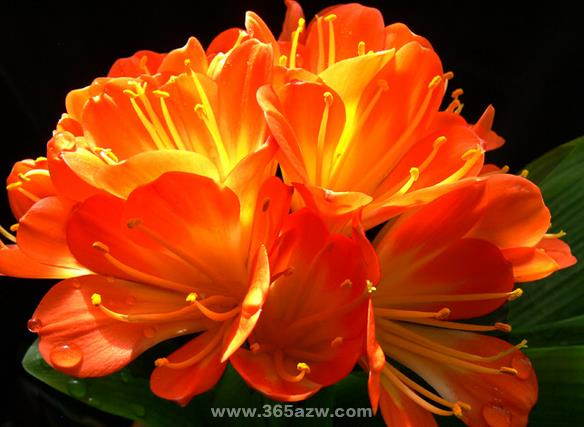
Clivia
Clivia is a famous greenhouse flower and a perennial herbaceous plant. Its flowering period lasts 30-50 days, mainly in winter and spring, and it also blooms around New Year's Day to the Spring Festival. Under normal circumstances, it blooms once a year. If the indoor temperature is suitable, it can bloom around the Spring Festival. Clivia, known as the flower of wealth and honor, generally blooms once a year after it grows up; blooming twice a year is rare, and blooming three times is extremely rare.
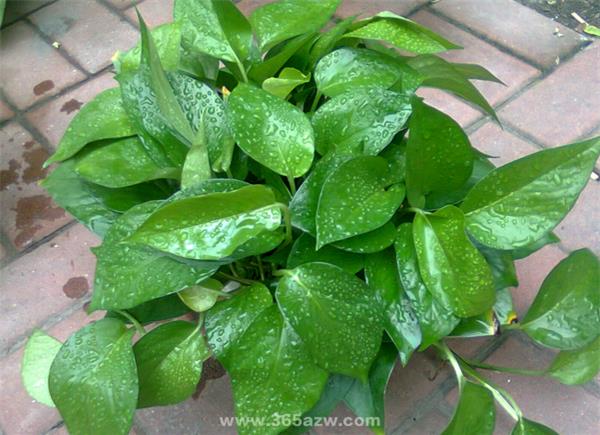
Pothos
Pothos is one of the very excellent indoor decorative plants, a climbing vine foliage flower. It can be allowed to climb on a cylinder tied with palm fiber and placed in an entrance hall or hotel, or it can be trained into a hanging form and placed in a study or on a windowsill. It is a flower relatively suitable for indoor placement.
Hyacinth
Grape hyacinth flowers are like strings of purple grapes, very beautiful. It has strong cold resistance and can overwinter outdoors even in North China. Hyacinth likes a cool environment with humid air and sufficient sunlight. It is relatively tolerant of low cold but afraid of heat. It is suitable for growing in well-drained sandy loam soil and grows poorly in heavily clayey soil. Hyacinth bulbs can bloom only after growing to 19 cm. It blooms every year from March to April.
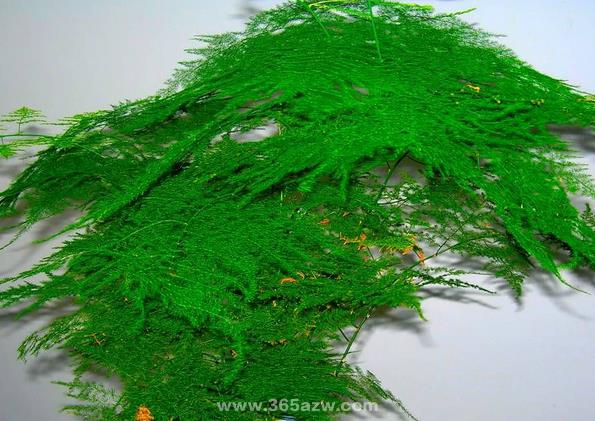
Asparagus fern
Asparagus fern means "elegant bamboo." In fact, it is not bamboo. It is named asparagus fern only because its leaves are soft, evergreen all year round, its branches are jointed like bamboo, and its posture is elegant and unrestrained. Its leaves are slender and beautiful, densely growing like feathers, with layers of green clouds. Its plant shape is elegant and uniquely charming, deeply loved by people, and it is a famous indoor foliage flower.
Boston fern
Also known as centipede grass, round fern, comb grass, and stone yellow skin, it is a perennial evergreen herbaceous foliage plant of the genus Nephrolepis. The Boston fern is a medium-sized terrestrial or epiphytic fern, generally 30-60 cm tall. Underground it has rhizomes, including three types: short and upright stems, stolons, and spherical tubers. The Boston fern has no true root system, only adventitious roots growing from the main axis and rhizomes.
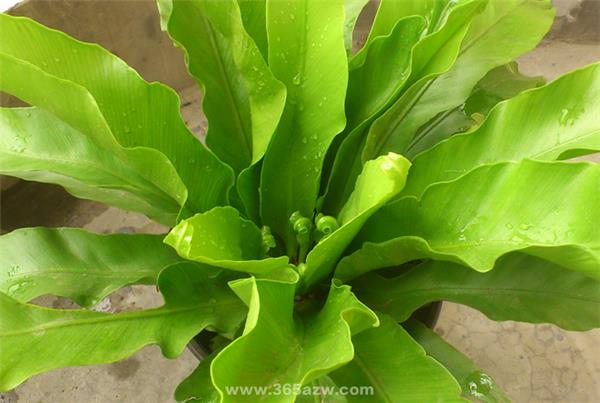
Bird's nest fern
Also known as nest fern, mountain sushua, and crown fern, it is a perennial shade-loving herbaceous foliage plant of the genus Asplenium in the family Aspleniaceae. The bird's nest fern is a medium-sized epiphytic fern, with a funnel-shaped or bird's-nest-shaped plant form, and a height of 60-120 cm. The rhizome is short and upright, and the stalk is thick and densely covered with large clusters of spongy fibrous roots, which can absorb a large amount of water. The leaves are clustered and arranged radially at the top of the rhizome, with a hollow nest-like structure that can collect fallen leaves and bird droppings; the leathery leaves are broadly lanceolate, about 100 cm long, 9-15 cm wide in the middle, smooth on both sides, and the veins are slightly raised on both sides. The sori are elongated and grow on the upper side of the lateral veins on the back of the leaves, reaching 1/2 of the leaf blade. Its ecological habit is that it likes high temperature and humidity and is not tolerant of strong light.
The above is an introduction to indoor foliage plants. I hope you will like it.