Mimosa Pictures and Plant Information Introduction
More Houseplant Recommendations
❶ How to Care for a Small Potted Boston Fern ❷ How to Care for Jade Plant, A Summary of Jade Plant Cultivation Methods
❸ How to Care for a Small Potted Pitcher Plant ❹ How to Care for Black-eyed Susan, An Introduction to Black-eyed Susan Planting Methods
Nature is magical, and it has given humanity many particularly interesting plants, and the mimosa is one of them. Most people are surely familiar with the mimosa, and are very fond of that plant that seems like a shy little girl; every time they think of it, they cannot help but smile. But do you really know the mimosa, do you know that information about the mimosa, and have you seen mimosa pictures? Below, let us take a look at the information about the mimosa.
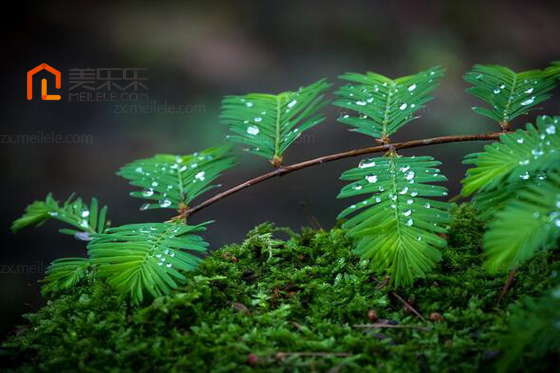
¤ A Brief Introduction to the Mimosa
1. What Is the Mimosa
The mimosa is also called the "see-me-laugh grass" or the "shy-knowing grass," and is a perennial herb or subshrub in the Fabaceae family. Because the plant's leaves react to external light and heat, when touched by an outside force they immediately close their leaflets, just like a shy little girl, which is why people call it the mimosa. It is a very common plant in people's daily lives; the whole plant is green, and its shy characteristic has left a deep impression on people, making it deeply loved by the general public.
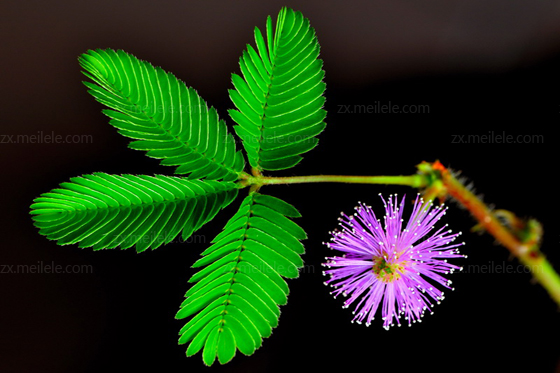
(Mimosa picture - Figure 1)
2. Physical Characteristics of the Mimosa
The mimosa is a plant that can bloom, and its flowering period is concentrated in September each year. The flower colors are simple and elegant, mostly white and pink, and the flower shape is relatively small. The capitulum is oblong, and the calyx is bell-shaped, looking very petite and lovely. The shape of the mimosa is rather like a pom-pom; it is a plant that first blooms and then forms pods. Its fruit is flat and round, and its leaves are pinnate compound leaves arranged alternately, appearing in a palmate arrangement. The flowers, fruits, and leaves of the mimosa all have good ornamental value, so it is often kept by people at home.
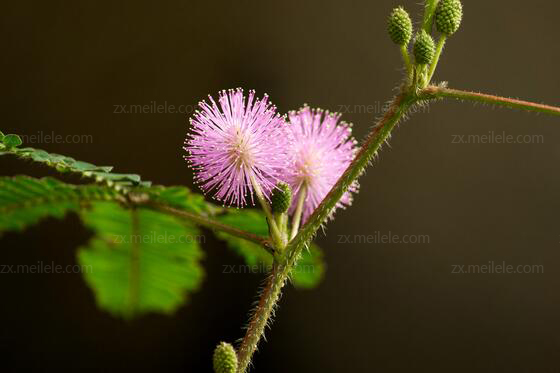
(Mimosa picture - Figure 2)
¤ The Mimosa's Flower Language and Meaning
The mimosa's unique "shy" characteristic means that the flower language contained in the plant itself is inevitably connected to it, because the mimosa's flower language is shyness, sensitivity, and politeness, among others. Why the mimosa is so shy, and why the mimosa folds up its leaves as soon as it is touched, are the same thing: the plant is very sensitive to external light and heat, and when touched by an outside force it becomes startled and forms self-protection, closing its leaflets, thus creating such a shy scene. So the mimosa's flower language is exactly this shyness and sensitivity.
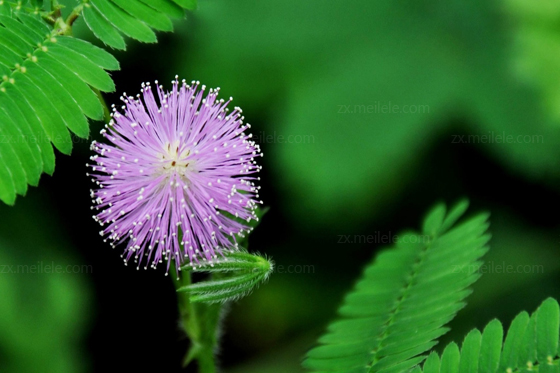
(Mimosa picture - Figure 3)
¤ How to Care for the Mimosa
The mimosa is a taproot plant, so it has relatively few fibrous roots. For cultivation, the method of propagation by sowing is usually suitable. Moreover, for annual mimosa cultivation, it is generally best to sow indoors in early spring. So how exactly do you care for a mimosa?
1. Temperature and Light: The mimosa likes a sunny and warm environment. After all, it is a bred plant native to tropical America. In daily cultivation, a warm environment must be maintained, and in winter the cultivation temperature must not be lower than 10 degrees. At the same time, place the plant in a 20-degree diffused-light environment, so that the plant enjoys both warm temperatures and sufficient light.
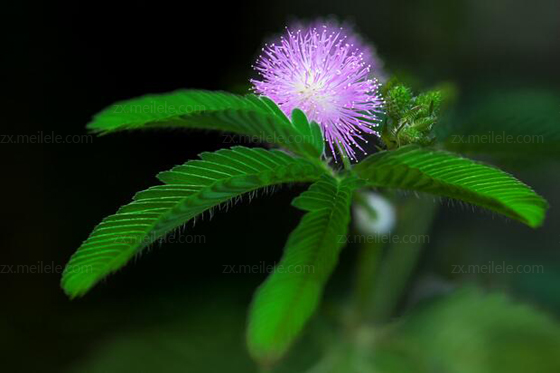
(Mimosa picture - Figure 4)
2. Watering and Fertilizing: The mimosa likes moisture and has a relatively high demand for water, needing to be watered every day. In summer, when the temperature is dry and water evaporates quickly, it needs to be watered both morning and evening. If the plant lacks water, its leaves will turn yellow, and even when touched it will not shyly close. When this happens, replenish the water promptly. The mimosa does not have a great demand for fertility. During the seedling stage, the plant needs a top dressing once every half month, and afterward the amount of fertilizer can gradually be reduced, letting the mimosa grow slowly.
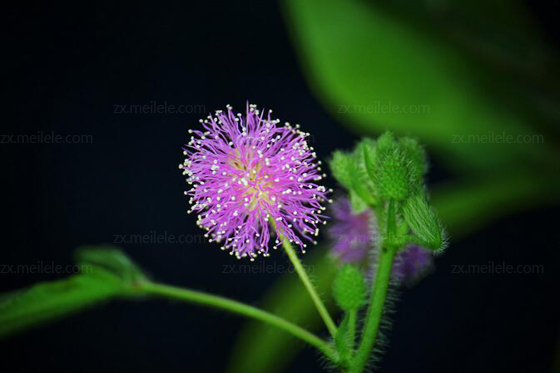
(Mimosa picture - Figure 5)
Summary: The mimosa is a very interesting plant. It is just like a real person, very shy, so that in the process of growing it, people not only harvest nature and greenery, but also gain a unique kind of companionship.
(Note: This article is an original article from Meilele Decoration Network. Reproduction is prohibited without permission. If malicious reproduction is discovered, legal action will definitely be pursued. If you like it, share it a lot.)
[You May Be Interested In]
☑ Knowledge About Narcissus ☑ Information About Chinese Rose ☑ How to Care for Alocasia Amazonica ☑ Pictures of Azaleas ☑ Chinese Rose ☑ Sago Palm
☑ The Uses of Alocasia Amazonica ☑ The Flower Language of Rosemary ☑ The Uses of Lucky Bamboo ☑ Information About Cactus ☑ Flower Language ☑ Peperomia