What are the characteristics and grafting methods of the rose tree?
The rose tree is an artificially created modern ornamental horticultural plant, also known as the tree rose. Let us introduce it to you below.
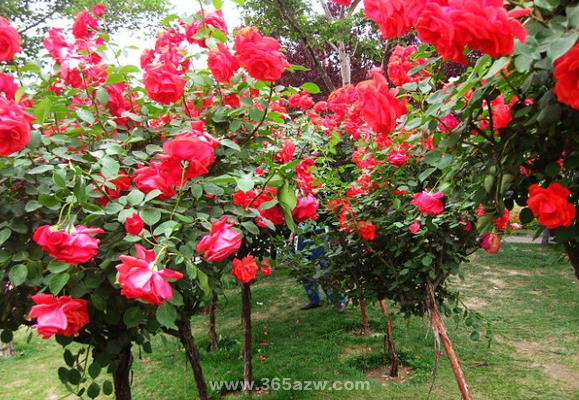
Characteristics of the rose tree
Unique in shape, noble and elegant, with distinct layers, it is visually refreshing; the forms are diverse, including spherical, fan-shaped, cascading, and miniature types; it retains the advantages of ordinary roses such as strong fragrance, long flowering period, and diverse flower colors, while also appearing more novel and more noble, and therefore has higher ornamental value.
Wide landscaping use. In ring roads, parks, scenic areas, community courtyards, and all places with green space, the tree rose can play a finishing touch in beautification.
Strong adaptability. The flower crown of the tree rose is farther from the ground than that of ordinary flowers, making it less susceptible to soil-borne pests and diseases; the trunk is taken from Rosa multiflora, with a well-developed root system and extremely strong vitality. Especially in areas with relatively high alkalinity, where planting ordinary roses is difficult, the tree rose fills the gap. It was selected as a designated flower species for the 2008 Olympic Games flowers.
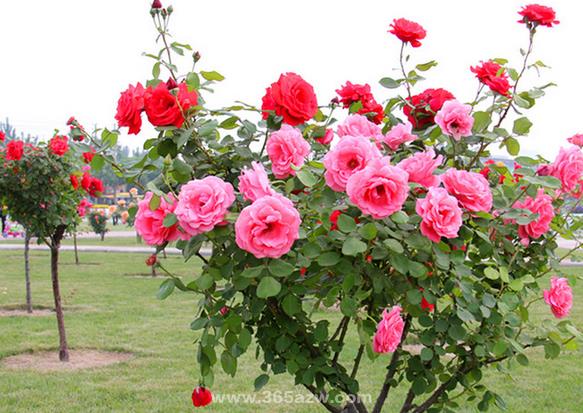
Types of rose trees
Miniature rose tree: about 30-40 cm in height, suitable for pot cultivation. In China it is generally used for home display or office decoration as well as venue decoration.
Small rose tree: about 50-60 cm in height, suitable for medium-sized pot cultivation, and more often placed at home. It can also be used for placement in gardens.
Floribunda rose tree: around 90 cm in height. This kind of rose tree blooms in large numbers and is generally placed in parks for beautification; at home it can be placed in the living room. This variety is generally also intended for road beautification.
Large-flowered rose tree: around 110 cm in height. This kind of rose tree blooms in large clusters and is relatively beautiful; after pruning, it can achieve a very good beautification effect with the environmental landscape. It is generally placed at doorways or office entrances.
Large rose tree: the height of the large rose tree reaches about 2 m, and it can already be considered a true tree. It generally grows mostly in a pendulous form. It is generally propagated by cuttings by flower beds or roadsides.
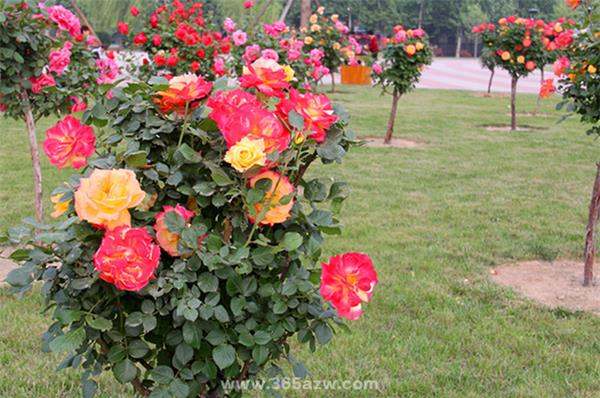
Grafting methods for rose trees
Grafting conditions for rose trees: the grafting period is mid-to-late September, with a temperature of around 20°C. During grafting management, pay attention to the harm of both and grafting management. The soil should be selected as deep soil with appropriate humidity and balanced moisture.
Selection of grafted varieties for rose trees: for the grafted rose tree varieties, it is necessary to select rose trees with relatively strong viability and relatively strong reproductive capacity. They should also have a certain cold resistance. When cultivating multiple rose flowers on the same tree, the flower shape and flower size must be ensured among the varieties. The selected branches are relatively weak, and during rootstock cultivation, different varieties of rose trees need different branching.
Selection of grafting methods for rose trees: there are two methods for grafting roses. One is direct grafting, grafting the scion through bark grafting. The other is directly using the shoots on the crown for budding.
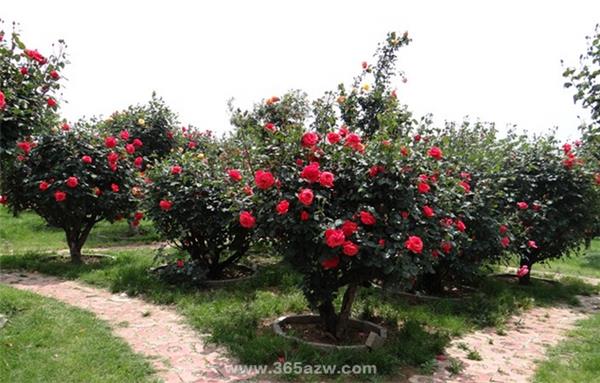
The above is an introduction to the rose tree. I hope you enjoy it.