A Detailed Guide to Rose Cultivation Techniques: Teaching You How to Grow Roses Well
Roses are extremely common plants, beautiful and elegant, and next we will introduce rose cultivation techniques for you.

Rose Classification
Climbing Roses
A rising star in landscaping - the climbing rose is a climbing shrub of the genus Rosa in the subfamily Rosoideae, and the plant is relatively tall and large. Each year it sends out thick, strong new canes from the base, and thicker lateral branches grow from the tips of two-year-old canes. It has a habit of blooming in all four seasons, but the greatest number of flowers appears only in late spring or early summer, in the two seasons of bloom. It is a climbing growth type with a well-developed root system and extremely strong resistance; the branches sprout rapidly and the growth is vigorous. A single plant sends out 7 to 8 main canes per year, and each main cane branches in an open manner. The maximum annual growth can reach 5 m, and it has a very strong ability to resist disease.
Large-Flowered Hybrid Tea Roses
There are many varieties, and they form the main body of modern roses. Their characteristics are: robust plants, single or clustered flowers, large blooms, elegant and graceful flower form, many colors, bright and lively, with a fragrant scent and strong ornamental value.
Miniature Roses
A new variety in the rose family, with a short, ball-shaped plant type and numerous flower heads. Because of its unique character, it is also called "diamond rose." It is mainly used for potted ornamental display, embellishing lawns and arranging color patterns.
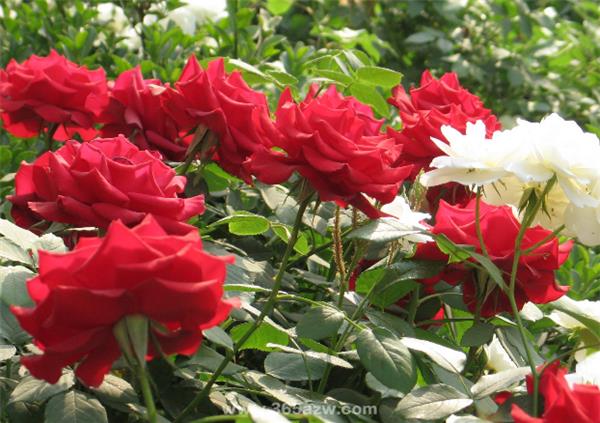
Rose Cultivation Techniques
Management: Rose transplanting is carried out between November and March of the following year. Pruning can be done at the same time as transplanting. First cut away dense branches and dead branches, then cut away old and weak branches, leaving 2--3 outward-growing buds so the plant spreads in all directions; appropriately shorten especially strong branches to strengthen the growth of weak branches. In summer, when new branches grow too densely, thinning pruning should be carried out. After each batch of flowers fades, promptly cut off the upper part of the branch connected to the spent flowers so that it does not set seed and consume nutrients, and retain the plump middle and lower branches to promote early emergence of new branches and another round of blooming.
The main pests of roses include aphids, leaf-rolling moths, and slug moths. Control is mainly carried out with 1000--1200 times diluted dimethoate or isocarbophos and other pesticides.
Propagation is mainly by grafting and cuttings, with sowing and tissue culture as supplements. Commonly used grafting rootstocks include: wild rose, pink cluster rose, "Baiyutang" (rose), etc.
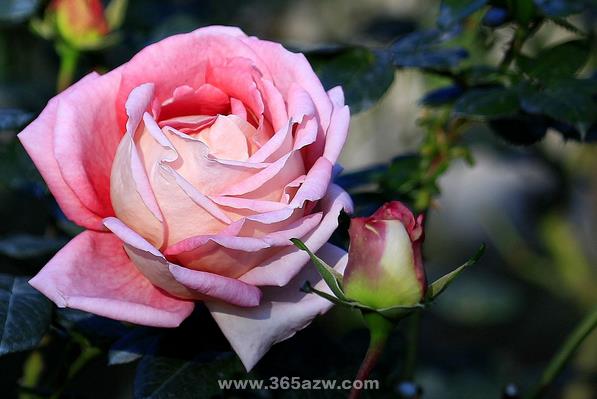
Introduction to Rose Propagation Methods
Cutting Propagation
For rose cutting propagation, first prepare the cutting hotbed well. Fermenting materials such as horse manure or tree leaves should be placed in the hotbed, watered and compacted, and they will all produce a certain amount of heat. Cut semi-lignified branches about 10 cm long from the mother rose plant after the flowers have faded. Generally, a branch has three bud eyes. All the leaves on the lower part of the cutting must be removed, leaving only the two leaves at the top for photosynthesis. Too many leaves should not be left, as they consume nutrients in the stem and evaporate a large amount of water. Cut the base of the cutting into a "horse hoof" slanted shape, place it in a basin of clean water to prevent air-drying, and carry out cutting promptly.
Grafting Propagation
Grafting is the main means of propagating roses. When grafting, the choice of rootstock is very important. The cutting source is abundant, rooting is easy, it can adapt to the local climate conditions, and it has good affinity with the scion. At present, the rootstock commonly used in China is rose. Dormant-season grafting often uses stem grafting, before the leaf buds sprout in spring. Growing-season grafting often uses bud grafting.
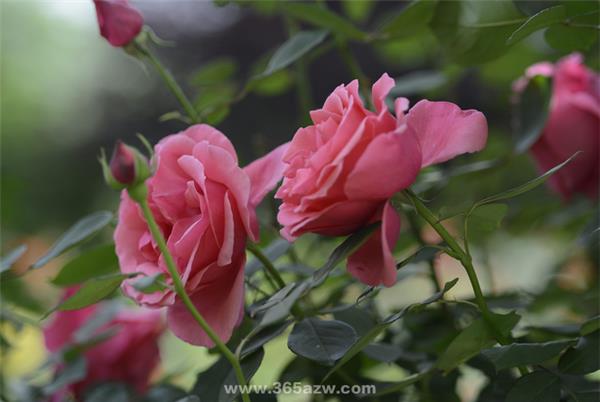
The above is an introduction to rose cultivation. I hope you enjoy it.