What varieties of climbing roses are there? A detailed guide
Climbing roses belong to the Rosaceae family and are deciduous shrubs. Their branches are vine-like or trailing and can grow to 1 m to 5 m. The branches do not grow fully upright, so they have very strong plasticity. Let us introduce them to you below.

Characteristics of climbing roses
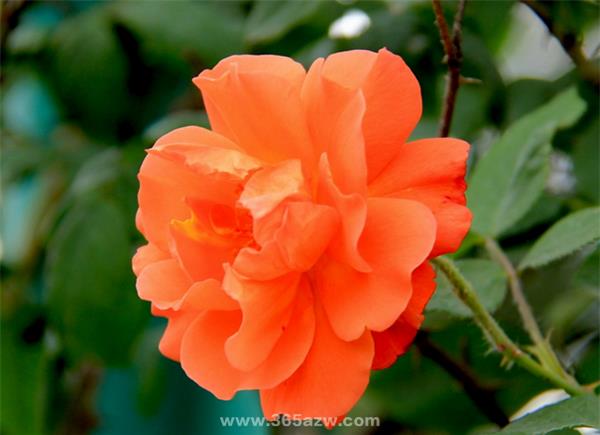
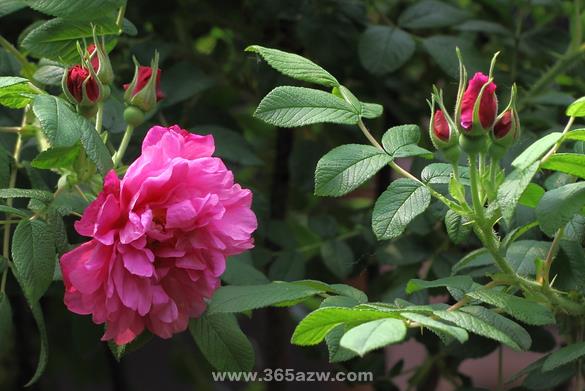
Climbing roses are deciduous shrubs with vine-like or trailing growth and varied forms, and they have strong plasticity. Short-stemmed varieties have branches only 1 m long, while long-stemmed ones reach 5 m. Their stems bear sharp thorns of varying density, with forms including straight thorns, slanted thorns, curved thorns and hook-shaped thorns, depending on the variety. Flowers are solitary, clustered or in groups, with flower diameters ranging from 2.5 cm to 14 cm. Flower colours include red, pink, yellow, white, orange, purple, edged colours, solid colours, and two-tone front-and-back colours, and so on, making them very rich. Flower shapes include cup-shaped, spherical, flat and high-centred.
Climbing growth type, with a well-developed root system and extremely strong resistance. The branches sprout quickly and grow vigorously. A single plant sprouts 7-8 main branches per year, and each main branch in turn branches in an open pattern. Annual maximum growth can reach 5 m, and it has a very strong ability to resist disease. It is easy to manage, tolerant of pruning, rich in flower shapes, and flowers continuously through all four seasons, with brilliant, exuberant colours, a long flowering period and a rich fragrance.
Climbing rose varieties
According to growth characteristics (mainly distinguished by the growth length of the canes), climbing roses can be divided into climbing roses and ground-cover roses:
The branches of climbing roses begin to bend downward when they grow to 1 m-1.4 m, with long internodes. Flower shapes include single and double, and the flowers are medium and large. Some bloom for one season, and some for multiple seasons.
The branches of ground-cover roses bend downward when they grow to 30 cm-50 cm, with short internodes. The flower shape is single, and the flowers are small. The flowering period is extremely long, from May in early summer to November after the start of winter.
According to flower colour, there are six groups: red, yellow, pink, white, bicolour and orange:
In the red group, Uncle Walter is the classic variety, and others include Imperial Carriage, Dushutai, Orange-Red Flame, Vermilion Queen, Chang'e Flying to the Moon, Summer Camp, Mozart and so on;
The yellow group includes Jubilation, Changhong, Golden Sunshine, King of Light and so on, while Spectrum is the representative work of this colour group;
The pink group includes Blue Moon, Parade (a classic variety), Angela and so on;
The white group includes White River and Climbing Green Cloud, these two;
In the bicolour group, Eden Rose and Zipao Yudai are both highly reputed, and there are also Huaxian, Climbing Caixia, Flying Tiger, Flower Soul, Climbing Electronic Watch and so on;
The orange group includes varieties such as Kunten, Western Land, Sweet Dream and Stream.

Growing climbing roses
Sunlight
When growing roses, plenty of sunlight is indispensable. This is because roses like an environment with ample sunlight, air circulation and relatively good drainage. When growing roses, do not plant them on the shady side of buildings or in places that cannot receive sunlight for a long time. However, in the rather hot summer, choosing a spot with appropriate shade for growing roses is better for their growth.
Soil
There are also particular requirements for the soil needed to grow roses. Usually, the soil for planting roses needs to be a loose, fertile and very well-drained neutral soil. Take special care when choosing soil not to choose clumpy mud, because that kind of mud is very poor in drainage and air permeability. Therefore, you can choose some humus-rich acidic soil to grow roses.
Fertilising
When fertilising roses, what we need to pay special attention to is applying an appropriate amount of fertiliser according to their growth stage. Usually, during the growth period of roses, fertiliser should be applied about once a month together with an appropriate amount of watering. In spring, when many new roots are sprouting, it is not suitable to apply strong fertiliser, so as to avoid harming the new roots. Of course, after entering autumn, fertilising should be stopped to prevent the roses from growing excessively and then suffering frost damage.
The above is an introduction to climbing roses. We hope you enjoy it.