A Guide to Pest and Disease Control and Care Methods for Fuchsia
Fuchsia has a peculiar flower shape, just like hanging lanterns, graceful and very beautiful, and is a great accent when placed in the home. However, fuchsia has relatively high requirements for its growing environment, otherwise it is prone to pests and diseases. Below let us take a look at the common pests and diseases of fuchsia and how to deal with them:
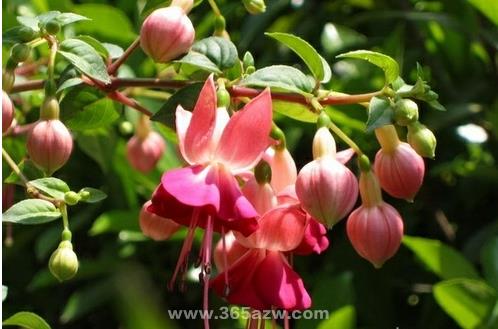
Fuchsia Pest and Disease Control Handbook: Teaching You How to Care for Fuchsia. Fuchsia pests and diseases:
Fuchsia pests and diseases: 1. Gray mold
Gray mold occurs during continuous rainy weather, or when too much nitrogen fertilizer is applied, or when there is insufficient light. It mainly harms stems, leaves and flowers, causing water-soaked spots on the affected parts. If not controlled in time, they will gradually expand into a rotting state covered with gray hairy mycelium, and in severe cases will cause the plant to die.
Solution: At the early stage of the disease, promptly spray 500-times diluted 65% zineb or 50% carbendazim or other new fungicides, spraying once every 7~10 days, for 3~4 consecutive sprays. Usually pay attention to ventilation and light so that the plant grows well and its disease resistance is improved. After the disease occurs, promptly prune and dispose of diseased branches and leaves to reduce sources of infection.
Fuchsia pests and diseases: 2. Powdery mildew
Powdery mildew mainly harms stems, leaves and flower buds. After infection, there is a layer of white powder on the surface, and in severe cases the leaves shrivel and the flowers become smaller.
Solution: Pay attention to ventilation and light, apply more phosphorus and potassium fertilizer, and improve the plant's disease resistance. After the disease occurs, promptly spray 800-times diluted 70% thiophanate liquid or 2500-times diluted triadimefon or other suitable fungicides, spraying once every 10 days, for 2~3 consecutive sprays.
Fuchsia pests and diseases: 3. Root rot
Root rot is a physiological ☆forbidden☆ disease, often occurring under conditions of excessive watering or continuous rainy days and hot summer weather that cause oxygen deficiency, causing the roots to turn black and rot. In mild cases the branches and leaves wilt and turn yellow, and in severe cases the whole plant dies.
Solution: After the disease occurs, promptly drench the root-zone soil with 300-times diluted 50% amobam. At the same time, in summer pay attention to ventilation and cooling, and do not water the potting soil too much.
Fuchsia pests and diseases: 4. Fusarium wilt
Solution: Apply 1000-times diluted 10% antibacterial agent 401 liquid into the soil for control.
Fuchsia pests and diseases: 5. Rust
Solution: Spray 400-times diluted 20% diniconazole EC for control.
Fuchsia pests and diseases: 6. Whitefly
Whitefly mainly harms the young leaves of fuchsia, sucking the leaf mesophyll sap; after the nymphs hatch, they immediately settle on the underside of the leaves and pierce and suck to cause damage, making the leaves curl and even dry up. In addition, after the honeydew secreted by whitefly contaminates the leaves, it very easily causes sooty mold.
Solution: When pests are found, promptly spray 1000-times diluted 40% omethoate or 2000-times diluted 20% fenvalerate. Spray once every 7 days, for 3~4 consecutive sprays. When spraying, be sure to spray both the front and back sides of the leaves.
Fuchsia pests and diseases: 7. Aphids, red spider mites
Pests such as aphids and red spider mites mainly suck the sap of leaves, buds and flowers, affecting normal growth and development, and in severe cases the whole plant withers and dies.
Solution: Spray with 1:1000 dimethoate solution, 10% deltamethrin solution, or 50% menazon 2000-times diluted solution.
Fuchsia has strict requirements for growing conditions, but as long as you mainly understand the growth characteristics of fuchsia and do a good job in care and handling, growing healthy, high-quality fuchsia to accent and beautify the home is not a difficult task.