Pest and Disease Control for Cymbidium goeringii: How to Grow Healthy Cymbidium goeringii
Cymbidium goeringii has elegant leaves and branches and a captivating floral fragrance. It is an excellent indoor ornamental flower and one of the most prized flower varieties, often placed in living rooms, studies and other places in the home, with a very good decorative effect. However, Cymbidium goeringii is a variety prone to disease. Below, let us look at the pest and disease control for Cymbidium goeringii:
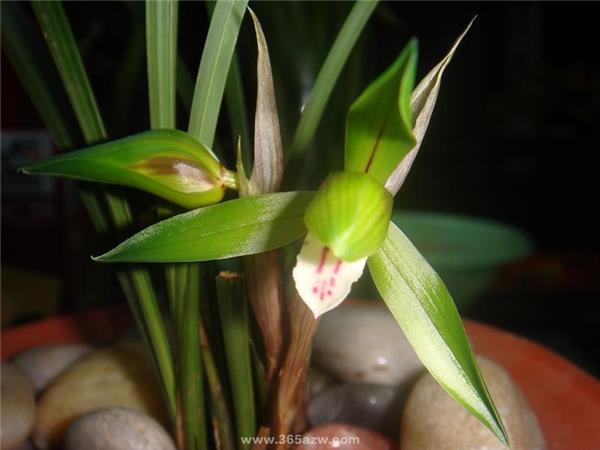
Pest and disease control for Cymbidium goeringii:
1. Soft rot of Cymbidium goeringii
In spring and summer, with high temperature and humidity, poor ventilation and excessive application of nitrogen fertilizer, soft rot is more likely to occur. In the early stage of the disease, bacteria invade the leaves or heart leaves and produce water-soaked lesions, which rapidly expand and contain much water. In the later stage, a foul odor develops, the diseased leaves turn yellow and drop off, and the whole plant rots soft and dies.
Solution: Improve growing conditions, increase ventilation, reduce temperature and humidity, and use streptomycin at 1000 times dilution with water, or lime sulfur mixture or Bordeaux mixture at 500 times dilution with water, spraying once a week.
2. Anthracnose of Cymbidium goeringii
Planting too densely, poor ventilation, water imbalance or wounds and injuries make anthracnose infection more likely. In the early stage of the disease, brown sunken small spots appear on the leaves, which later expand into round or irregular lesions. In severe cases, the center of the lesion shows necrosis.
Solution: Do not plant too densely, cut off the diseased leaves, apply Daconil-45 at 1/500 dilution with water, or Wan Jun Qing at 1/800 dilution to the wounds, and spray thiophanate-methyl or carbendazim at 1/1000 dilution with water once a week.
3. Southern blight of Cymbidium goeringii
When southern blight occurs, the base of the stem turns black and rots, white mycelium gradually forms on the lesions, and the diseased plant gradually withers and dies.
Solution: Cut off the diseased pseudobulbs, and burn them together with the planting pots and potting medium, and spray Daconil-45 at 500 times dilution, or carbendazim at 1000 times dilution with water, once a week.
4. Scale insects
Scale insects are usually most damaging from June to September, often gathering on the basal sheaths and veins of orchid leaves to suck nutrients and secreting large amounts of pathogens. The stems and leaves turn moldy brown, causing various diseases, blocking photosynthesis and weakening the growth of the orchid. In severe cases, pale yellow small spots and yellow spots appear on the leaves, then gradually enlarge, until the entire leaf withers yellow, loses its green color and drops off, and even the whole plant dies.
Solution: An appropriate amount of 50% omethoate emulsion (or 80% dichlorvos emulsifiable concentrate) plus Xin Gao Zhi Mo can be sprayed on the front and back of the leaves, once every 5 to 7 days, spraying continuously more than 3 times.
Cymbidium goeringii is a relatively expensive flower variety. During cultivation, attention should be paid to care and maintenance to avoid infection by pests and diseases, which would affect plant growth and also reduce the decorative effect of Cymbidium goeringii in home arrangements.