Key Care Points for Hydroponic Dieffenbachia: Teaching You the Correct Hydroponic Method
In today's home greenery arrangements, people are increasingly drawn to hydroponic plants, mainly because hydroponic plants are simple and easy to grow, and they also look great displayed in the home, beautifying the home while making it appear more stylish and elegant. Below, let's talk about the key care points for hydroponic Dieffenbachia:
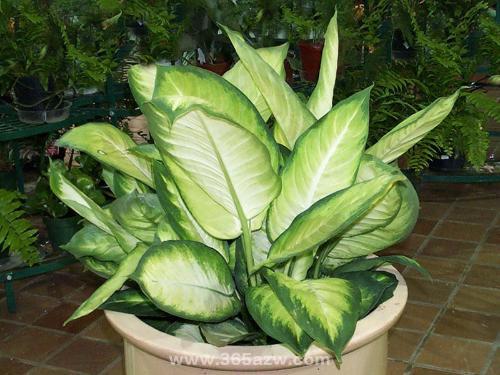
Key care points for hydroponic Dieffenbachia:
1. Selection of plant stock
For hydroponic Dieffenbachia, you naturally need to first select good plant stock. Generally there are two main methods now: taking branch cuttings from a planted Dieffenbachia and rooting them in water, which can sprout new roots in about 10 days. You can also use the root-washing water culture method, which means washing the roots of a soil-grown Dieffenbachia and then growing it hydroponically; you can rinse it repeatedly under running tap water, but be careful not to damage the roots.
2. Choice of water quality
The water source for hydroponic Dieffenbachia care should be disinfected tap water that meets national drinking water standards, with a salt concentration of
3. Choice of water volume
For root-washed Dieffenbachia in the early stage of hydroponics, no nutrient solution is needed, because the roots are injured (they will inevitably be somewhat damaged when the soil is removed), and the water should not be too much, just slightly covering the roots. The water quality should be clean; it is best to use rainwater or tap water that has been left to stand.
4. Use of nutrient solution
For hydroponic Dieffenbachia, nutrient solution can be added after about 3 weeks. The first time should be a small amount, and afterwards it can be applied as appropriate according to growth. The pH value of the hydroponic nutrient solution is 6.0 to 7.0, and its height in the bottle should not exceed 50% of the root height. Replace with fresh nutrient solution 1 to 2 times per week; the higher the ambient temperature, the more frequently the fresh nutrient solution should be replaced. This is because the amount of dissolved oxygen in the nutrient solution should be increased as much as possible.
5. Humidity care
Dieffenbachia likes relatively high humidity and dislikes dryness. During the growing period, water should be sprayed on the stems and leaves frequently.
6. Safety maintenance
The sap in the stems and leaves of plants in the Dieffenbachia genus is toxic. During hydroponic care and propagation, special attention should be paid to preventing children from touching it, so as to avoid accidents.
Hydroponic Dieffenbachia is a common cultivation method in homes today. When grown in a glass bottle, you can appreciate not only the leaves but also the very attractive pure white roots. For those who like hydroponic plants, Dieffenbachia is a good choice.