What are the precautions for propagating Haworthia cooperi?
Some friends who enjoy growing plants always like to grow some favorite plants at home for ornamental purposes. Usually, many potted plants are seen in flower markets. Some friends like to learn about the habits of various plants in order to choose their own growing targets. I wonder if everyone knows about Haworthia cooperi, a succulent plant. In fact, there are many types of Haworthia cooperi. Although its ornamental value is not high, it has a certain nobility. Haworthia cooperi originally came from South Africa, and by now it has many evolved varieties. Its fleshy leaves are arranged in an orderly way, and there is much more to its habits. Today I will introduce relevant knowledge about Haworthia cooperi as well as how to grow it.
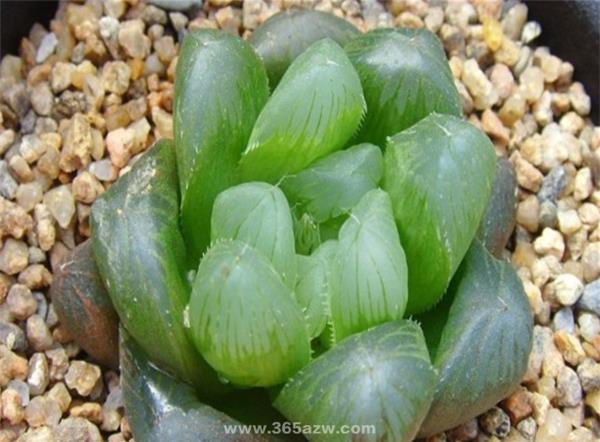
Haworthia cooperi can be divided together with repotting, or during the growing season the young plants beside the mother plant can be dug out. They can survive with or without roots. Those with roots can be planted directly. Rootless seedlings should be aired for 1?2 days, and planted after the wounds are dry. Newly planted plants should not be watered too much, so as to avoid rot. After new roots grow, carry out normal management.
Propagating Haworthia cooperi by cuttings
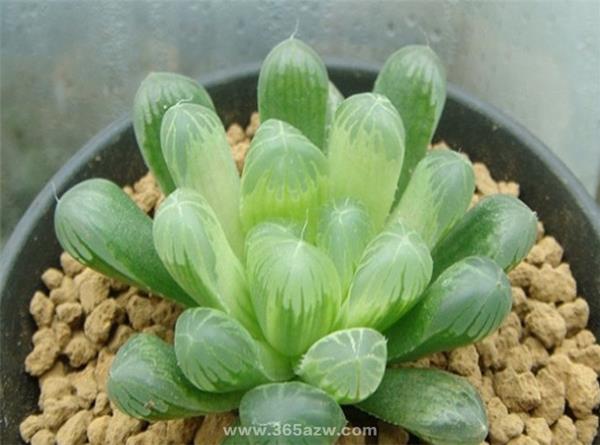
Haworthia cooperi will grow young shoots in the leaf axils on the lower part of the plant. For types that do not easily produce young shoots, the growth point in the center of the plant can be damaged to encourage shoots to sprout. After the small shoots grow to 2?3 cm, remove them, air them for 2?3 days, and after the wounds are dry, insert them into the growing medium for cuttings. After insertion, keep the soil in a semi-dry state. After 2-3 weeks, new roots can grow.
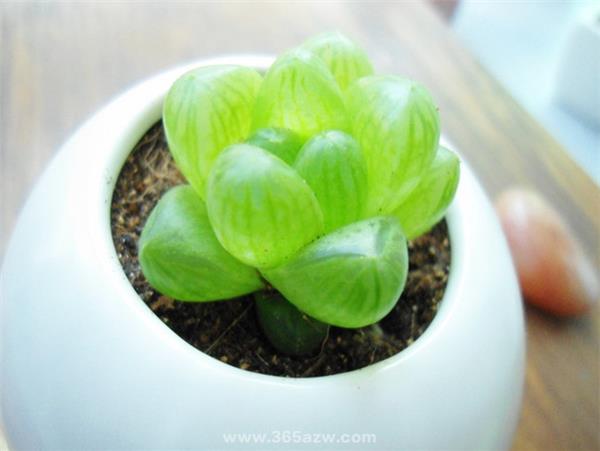
Propagating Haworthia cooperi by leaf cuttings
You can choose healthy, plump fleshy leaves and, during the growing season, insert them into a well-draining medium such as vermiculite or coarse sand. After insertion, keep the potting soil slightly moist. The base of the fleshy leaf easily takes root and produces small shoots. Once the small shoots are a little larger, plant them separately.
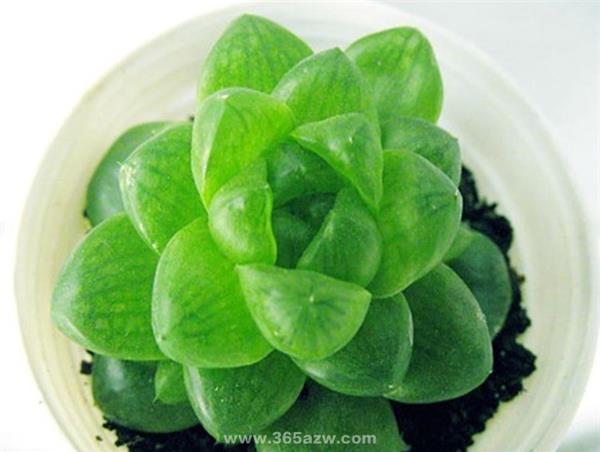
Propagating Haworthia cooperi by sowing
Only through artificial pollination can Haworthia cooperi set seeds. Generally, this is done on a sunny morning during flowering. The method is to choose two Haworthia cooperi plants flowering at the same time, or you can also use varieties such as Haworthia retusa and Haworthia maughanii of the same Haworthia genus for pollination. The parents are required to have a compact plant shape, thick and plump leaves, and high transparency in the "window." When pollinating, remove the petals, take the pollen, and smear it onto the stigma of the flower on another plant. You can also remove the pollen on the afternoon of the previous day, store it carefully, and pollinate again the next morning, which gives a higher success rate. After the plant's seeds mature, sow them. The seeds can be sown as soon as they are collected. The sowing soil can be mixed with 3 parts vermiculite and 2 parts leaf mold or peat soil. Before sowing, it is best to sterilize the soil at high temperature to eliminate pathogens and insect eggs in the soil. After sowing, cover with a piece of glass. Seedlings emerge in about 20 days. After the seedlings emerge, remove the glass, pay attention to ventilation, do not let the soil become overly dry, and when the seedlings are too crowded, pay attention to dividing and transplanting them.