The Benefits and Effects of Qingmuxiang and Its Differences from Muxiang
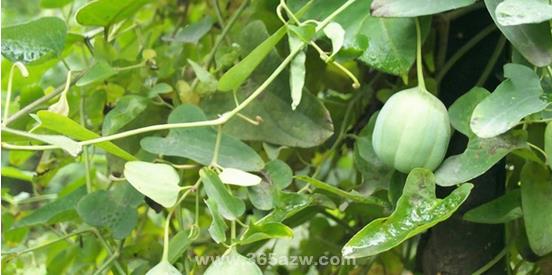
In ancient times, Qingmuxiang was another name for Muxiang, referring to high-quality Muxiang. What we now call Qingmuxiang was called Tuqingmuxiang in the Tang Dynasty, so this name has caused a lot of confusion. The vine of its plant is called Tianxianteng, and its fruit is called Madouling (Aristolochia fruit). Let us learn more about Qingmuxiang below.
I. The Benefits and Effects of Qingmuxiang
The Benefits of Qingmuxiang
1. Pain in the chest, hypochondrium, epigastrium and abdomen
This product is pungent in flavor and moves qi, bitter in flavor and drains downward, mainly entering the Liver and Stomach meridians. It can move qi and soothe the liver, harmonize the middle and stop pain. To treat distending pain in the chest and hypochondrium and pain in the epigastrium and abdomen due to qi stagnation of the liver and stomach, taking it alone is already effective, or it can be used together with Xiangfu (Cyperus rotundus), Chuanlianzi (Melia toosendan) and Foshou (Citrus medica var. sarcodactylis).
2. Diarrhea and dysentery with abdominal pain
This product is bitter and cold, clears heat, resolves toxin and dispels filth, and its pungent flavor moves qi and stops pain. It can be taken by pounding fresh material into juice or by grinding dried material into powder, or it can be combined with Gegen (Pueraria lobata), Huanglian (Coptis chinensis) and Muxiang, and used to treat diarrhea and dysentery with abdominal pain caused by unclean food and summerheat-dampness obstructing internally in summer.
3. Ding sores and swollen toxin, damp skin sores, and venomous snake bites
This product is bitter and cold, and has the effects of clearing heat and drying dampness, resolving toxin and reducing swelling. To treat ding sores and swollen toxin, it can be ground alone into powder and applied mixed with water and honey, or fresh material can be pounded and applied; if treating damp skin sores, this product can be decocted in water for external washing and also ground into powder for external dusting, or combined with Mingfan (alum), Wubeizi (Galla chinensis) and Luguanshi (calamine); to treat venomous snake bites, it is often combined with Baizhi (Angelica dahurica) and taken internally while also applied externally, or used together with Chuanxinlian (Andrographis paniculata) and Zaoxiu (Paris polyphylla).
The Effects of Qingmuxiang
1. Lowering blood pressure
Crude preparations of Qingmuxiang have a blood pressure-lowering effect, and its active ingredient is magnoflorine.
2. Inducing vomiting
Its acidic components have an emetic effect and can cause nausea and vomiting. Its refined extract has no obvious effect on intestinal movement.
3. Antibacterial effect
The total alkaloids of Qingmuxiang have varying degrees of inhibitory effect on Staphylococcus aureus and Pseudomonas aeruginosa, Escherichia coli, Proteus and other bacilli.
4. Improving immunity
Aristolochic acid has the effect of improving the body's immune function and can enhance the phagocytic activity of peritoneal macrophages; studies have confirmed that aristolochic acid has certain mutagenic and carcinogenic effects.
5. Effects on smooth muscle
The extract of Qingmuxiang has no effect on the movement of isolated rabbit intestinal segments and uterus. On the intestinal movement of anesthetized dogs with in situ intestinal segments and dogs with chronic intestinal fistula, intravenous injection showed mild inhibition, but even oral administration of 10 times the dose did not cause inhibition.
6. Anticancer effect
Mouse sarcoma 37 cells incubated with aristolochic acid 100-200 mcg for 3 h were completely inhibited. After mice were transplanted with sarcoma 37 cells, 1 m aristolochic acid 2.5-5 mg/kg/d for a total of 30 days produced a growth inhibition rate of 40-50%; in mouse sarcoma 37, subcutaneous injection of aristolochic acid for 5 days significantly prolonged the survival time of the mice. Aristolochic acid also has an inhibitory effect on mouse adenocarcinoma-775, and the acetone extract of its stem has an inhibitory effect on the solid form of mouse Ehrlich ascites carcinoma.
7. Effects on the gastrointestinal tract
Among the people, Qingmuxiang is used to treat abdominal pain, and clinically its crude preparation also causes side effects such as nausea, vomiting and dizziness. The emetic effect of Qingmuxiang is mainly caused by the ether-soluble acidic components it contains; the essential oil can also cause vomiting, but its effect is weaker. Neither of these two components lowers blood pressure, so refining can eliminate this side effect. The refined extract has little effect on the movement of isolated rabbit intestinal segments; on in situ intestinal movement (anesthetized) and chronic intestinal fistula (unanesthetized), intravenous injection shows mild inhibition; oral administration, even at 10 times the dose, also does not cause inhibition.
8. Other effects
Crude preparations of Qingmuxiang have a sedative effect on mice. The refined extract has little effect on the isolated uterus of rabbits and on the chemoreceptors in the spleen and lower limbs of cats. At large doses, it has some anti-chicken malaria effect and in vitro inhibitory effect on Shigella dysenteriae.
II. The Differences Between Qingmuxiang and Muxiang
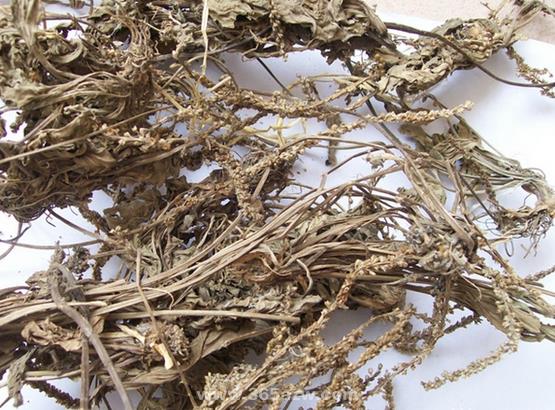
Although Muxiang and Qingmuxiang differ by only one character, the differences between Muxiang and Qingmuxiang are very great. Both Muxiang and Qingmuxiang are dried roots of plants in the Asteraceae family, but Muxiang is the dried root of Muxiang, while Qingmuxiang is the dried root of Chuanmuqiao or Huimao Chuanmuqiao, belonging to the dried roots of two completely different plants.
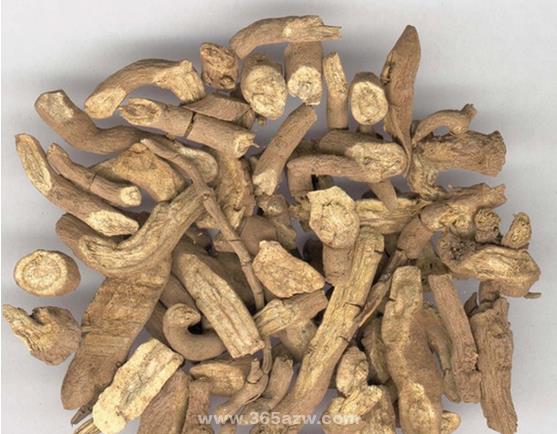
1. Muxiang is cylindrical or semi-cylindrical, with a length between 5 and 10 cm and a diameter between 0.5 and 5 cm. Its surface is grayish-brown or brownish-yellow, the texture is hard, and it is not easy to break. Its cross-section is brown to dark brown, and the taste is slightly bitter. Qingmuxiang is cylindrical or semi-cylindrical with longitudinal grooves, slightly curved, with a length of 10 to 30 cm and a diameter between 1 and 3 cm.
2. In addition to the different plant sources of Muxiang and Qingmuxiang, their pharmacology is also very different. Muxiang specifically moves qi and stops pain; its nature is warm, and it is most suitable for patterns of qi stagnation due to deficiency cold, qi stagnation due to cold congelation, and qi stagnation due to dampness obstruction. If qi movement is blocked due to heat, it must be combined with cold-natured medicines. As for Qingmuxiang, its nature is cold; in addition to moving qi and stopping pain, it can also calm the liver and extinguish wind, resolve toxin and reduce swelling. The qi stagnation patterns it treats are suitable for those caused by heat.
3. Qingmuxiang is pungent and can move qi stagnation, bitter and can disperse qi binding, and warm in nature and can warm and unblock. Overall, it excels at moving qi and dispersing stagnation, is good at moving gastrointestinal qi stagnation to relieve distention and stop pain, and also moves liver and gallbladder qi stagnation. It is an important medicine for moving qi and stopping pain and is widely used for various patterns of qi stagnation. If there is qi stagnation due to spleen deficiency, Qingmuxiang can be combined with Dangshen (Codonopsis pilosula), Baizhu (Atractylodes macrocephala) and Sharen (Amomum villosum), such as Xiangsha Liujun Tang in Shifang Gekuo; if abdominal distention and pain are caused by overeating and failure to digest food, use Qingmuxiang with Qingpi (Citrus reticulata Blanco), Binglang (Areca catechu) and Dahuang (Rheum officinale), such as Muxiang Binglang Wan in Yifang Jijie; if there is spleen-stomach qi deficiency with food obstruction and qi stagnation, it can be combined with Sharen and Baizhu, such as Xiangsha Zhishu Wan in Shesheng Mikuo.
4. Qingmuxiang is pungent and dispersing, bitter and draining, and cold in nature, and enters the Liver and Stomach meridians. In addition to moving qi and stopping pain, it can also calm the liver and extinguish wind, resolve toxin and reduce swelling. To treat distending pain in the hypochondrium and distending pain in the waist and abdomen caused by liver-stomach qi stagnation and depressed heat, it can be taken alone as a powder or AT preparation, or combined with other medicines that move qi and stop pain; to treat dizziness and distending pain due to liver yang rising, it is often made into a fluid extract and used alone, or combined with Shijueming (Haliotis shell), Juemingzi (Cassia tora) and Baishao (Paeonia lactiflora) and decocted in water for internal use.
Modern research shows that Qingmuxiang contains volatile oil, whose main component is aristolone, and also contains magnoflorine and others. Qingmuxiang decoction has a significant blood pressure-lowering effect on hypertension caused by various causes, and the mechanism of action is related to the integrity of the sympathetic nervous system; its active ingredient magnoflorine has a significant blood pressure-lowering effect on renal hypertension. The p-soluble acidic components contained in Qingmuxiang have an emetic effect.
From the above introduction to Qingmuxiang, you can believe that your understanding of Muxiang is deeper. Although they differ by only one character, the difference is profound. Do not confuse them in the future.
It can be taken alone as a powder or AT preparation, or combined with other medicines that move qi and stop pain; to treat dizziness and distending pain due to liver yang rising, it is often made into a fluid extract and used alone, or combined with Shijueming (Haliotis shell), Juemingzi (Cassia tora) and Baishao (Paeonia lactiflora) and decocted in water for internal use.Modern research shows that Qingmuxiang contains volatile oil, whose main component is aristolone, and also contains magnoflorine and others. Qingmuxiang decoction has a significant blood pressure-lowering effect on hypertension caused by various causes, and the mechanism of action is related to the integrity of the sympathetic nervous system; its active ingredient magnoflorine has a significant blood pressure-lowering effect on renal hypertension. The p-soluble acidic components contained in Qingmuxiang have an emetic effect.
From the above introduction to Qingmuxiang, you can believe that your understanding of Muxiang is deeper. Although they differ by only one character, the difference is profound. Do not confuse them in the future.