Is Aquilaria sinensis agarwood? Understanding the Aquilaria sinensis tree in one article
There are many kinds of agarwood, are you interested in Aquilaria sinensis? Let us now take a closer look at Aquilaria sinensis.
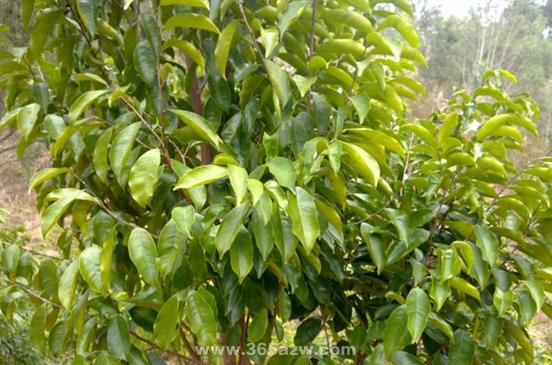
I. The Aquilaria sinensis tree
The Aquilaria sinensis tree prefers to grow in low-altitude mountainous areas, hills, and open sparse forests on roadsides in sunny spots. Its distribution area lies near the Tropic of Cancer and to its south, belonging to a high-temperature, rainy, humid tropical and southern subtropical monsoon climate. It prefers moist, loose laterite or mountain yellow soil with thick soil layers and abundant humus. It often grows mixed with Cyclobalanopsis patelliformis, Endospermum chinense, Canarium album, and Gmelina hainanensis. It is a weakly light-demanding tree species, and young plants are still shade-tolerant. Young plants grow relatively slowly, gradually speeding up after 10 years; for 20-30 year old plants, the average annual height growth can reach 90 cm, and the average diameter at breast height growth can reach 1 cm. It flowers from March to June, and the fruit matures from September to October.
Among Aquilaria sinensis trees in nature, only very few individuals produce agarwood resin. The usual view is that after being injured, such as by rats eating, insects biting, pathogen erosion, typhoons breaking it, or artificial felling, the agarwood tree, through its own wound-healing mechanism, secretes a special resin to protect itself. Accidental factors such as injury cause some external substances to enter the metabolic process of the agarwood tree, causing abnormal enzyme transformation in the core of the agarwood tree, thereby producing agarwood resin. Current artificial induction agarwood-forming techniques are basically all based on the above mechanism or theory.
Operating steps for the agarwood-inducing bacterial mother liquor product;
1. Drilling method; (according to the specification of 6-year-old trees or 12 cm diameter at breast height) drill 2 holes in the Aquilaria sinensis tree, drilling at a 45-degree angle vertically, with a hole diameter of 0.55-0.6 cm, and a hole depth reaching 1/2 of the way into the tree trunk wood. The 2 drilled holes need to correspond but be drilled 15 cm apart in a crossing upper-lower arrangement. After 1-2 months, for the parts more than two meters above the infusion port that have not been stained, another 2 holes can be drilled to supplement the infusion to promote staining and agarwood formation up to the top branches of the tree.
2. Use of the bacterial mother liquor; acidified nutrient bacterial mother liquor and clean water are expanded into a diluted solution at a ratio of 1 to 6 or 1 to 12. The proportional concentration of the infusion and the total infusion amount can be flexibly adjusted according to the size of the tree, water content, and health condition of the tree. If the bacterial liquid is too concentrated, it may cause a strong reaction in the tree and cause leaf drop; if too dilute, it may affect the staining and agarwood-forming effect. If the infusion amount is based on a tree with a diameter of 12 cm, the total infusion amount can be about 1500 ml. The first time, 1000 ml can be infused first. Note that after dilution, the bacterial medicine needs to be filtered through three layers of gauze before being poured into the bag to prevent needle blockage. At the same time, pay attention to adjusting the tight pressure at the contact part between the infusion needle and the drilled opening to prevent overflow of the medicine. The speed of dripping depends on the tree's own health level and water content. After 1-2 months, for the parts more than two meters above the infusion port that have not been stained, an additional 500-800 ml of infusion can be supplemented to promote staining and agarwood formation throughout the tree... 3. Storage of nutrient bacterial mother liquor; each bottle of bacterial liquid has a capacity of 500 ml. It can be stored at room temperature for one and a half months, and refrigerated at low temperature of 2-4 degrees for up to 6 months. Therefore, if not used temporarily, it can be stored well at low temperature.
4. Agarwood-forming effect; usually after the infusion is carried out, staining can occur after one week, agarwood formation begins after one month, preliminary agarwood can be formed in half a year, agarwood products can be harvested in one year, and after two years it approaches natural quality. After 3-5 years, the agarwood quality can be sinking or semi-sinking; the economic benefit is increased by 10 times or even dozens of times compared with simply selling the tree.
5. Quality and grade; after 2 years of agarwood formation, it can reach natural agarwood quality. After 3-5 years of agarwood formation, it can reach the international A1 or A2 quality standard, and its selling price is higher. When harvesting, the formed brown oily substance or yellow-brown agarwood wood can be cut off, and after removing the non-resin-containing xylem with a knife and drying it in the sun, it becomes agarwood.
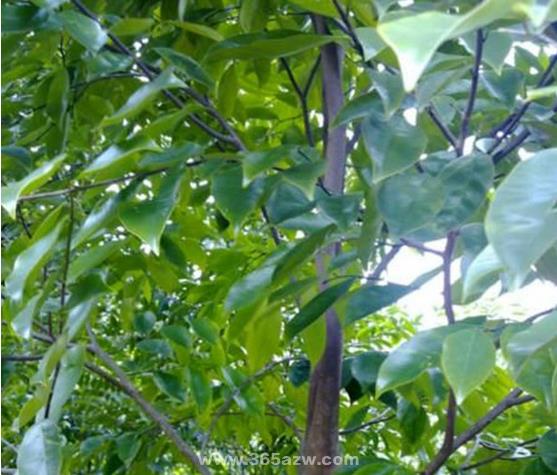
II. Is it agarwood?
It is not agarwood. Agarwood is formed after a maple tree is eroded by pests and diseases and secretes oil. The so-called Aquilaria sinensis should be maple wood that has not secreted oil. To identify agarwood, just look at whether oil has formed. If there is no oil formation in the brown eyes of the tree, it is not agarwood.
White wood is just white wood. In the market it is called agarwood tree because when it is injured it most easily secretes resin, grows bacteria, and forms agarwood. In fact, several other trees can also form agarwood, but white wood is the most common. Agarwood is the oil formed when the secreted resin encounters fungi. Earth agarwood is when a tree falls into soil, and due to chemical reactions with various so-called substances produced by soil decomposition, what remains is called earth agarwood. Previously, some people in Vietnam also specially buried agarwood in soil, then wrote down a location for their descendants to dig it up after some years.
Therefore, agarwood can be collectively called the oil formed by aromatic trees for the reasons I mentioned above, and then classified into different grades according to differences in its production process. There is insect-bitten agarwood, called insect leak, and that in soil is called earth sinking, etc. What is quite strongly faked on the market now is made from processed green sandalwood. A slightly better one is made by soaking white wood in oil using a pressure cooker or steam cooker. For the most ordinary agarwood, if 1.4, bought retail in an ordinary wholesale market, it is 500 to 1000. There is no fixed price for this, only a range can be given.
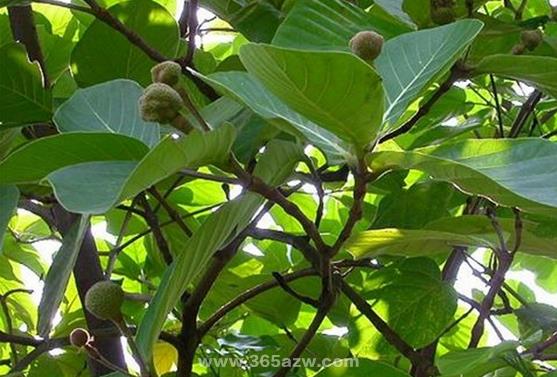
How to identify the authenticity of Aquilaria sinensis, and do you know how to artificially induce agarwood formation? Let us then uncover more value of the Aquilaria sinensis tree.
How to identify the authenticity of Aquilaria sinensis, and do you know how to artificially induce agarwood formation? Let us then uncover more value of the Aquilaria sinensis tree.