The Benefits and Uses of Eucalyptus Leaves, Ready to Use After Reading
Eucalyptus leaves are the exclusive food of koalas and are often used to extract insect repellents and deodorizers. So do eucalyptus leaves have any other uses, or any downsides?

I. The Benefits and Uses of Eucalyptus Leaves
Benefits:
1. For the body:
The greatest benefit of eucalyptus essential oil in application is that it is effective against various kinds of inflammation and fever. For patients with high fever, eucalyptus essential oil can quickly produce a body-temperature-lowering effect.
Eucalyptus essential oil is one of the best bactericides, with strong bactericidal power, and it also has the effect of reducing the viscosity of mucus in the body, so it can be used in the physiotherapy of pulmonary tuberculosis, bronchitis, diphtheria, etc., easing inflammation and making the mucous membranes comfortable.
Eucalyptus essential oil has antispasmodic, analgesic, and muscle soreness and rheumatic pain-relieving effects, and is often added to base massage oils to relieve muscle stiffness and soreness and other discomforts through massage.
Eucalyptus leaves have a disinfecting effect
Hiroki Hamada, a professor at Okayama University in Japan, and researcher Fuliang De and others found through experiments that cultured cells of eucalyptus leaves can effectively eliminate the toxicity of the harmful chemical bisphenol A.
Bisphenol A is a compound often used in the manufacture of plastics and coatings. Recently it has been found that this substance may reduce sperm counts in animals and other effects, so in Japan it has been placed on the list of "environmental hormones" -- chemical substances that disrupt endocrine system function.
According to Professor Hamada's recent disclosure to the media, they placed cultured eucalyptus leaf cells processed into granular form into a bisphenol A solution with a concentration of 1 PPM (one part per million), and after three days found that the toxicity of the bisphenol A had disappeared, becoming a harmless substance.
According to Haruo Akita, manager of an ecological technology company conducting collaborative research with the two scientists, this function of eucalyptus leaves can be further strengthened through transgenic technology. At present, the company is working to further develop and improve this technology, ultimately reaching the practical application stage and producing environmentally friendly products that can be actually used.
2. For the mind:
The cool, pleasant scent of eucalyptus essential oil extracted from eucalyptus leaves lifts the spirits, clears the mind, and improves concentration. Students should use less. 3. Skin and hair care:
Eucalyptus essential oil has the effects of eliminating pore blockage, eliminating acne, promoting blood circulation, and promoting tissue regeneration.
4. Precautions:
People with high blood pressure, epilepsy patients, and patients with favism should avoid using it.
II. Eucalyptus Leaves
Eucalyptus leaves are the exclusive food of koalas and are often used to extract insect repellents and deodorizers.
Eucalyptus Leaf Blight
1. Distribution and harm
Eucalyptus leaf blight is distributed throughout South China. It harms Eucalyptus exserta, Eucalyptus robusta, Eucalyptus rudis, and Eucalyptus torelliana, etc. 2. Symptoms: The disease often occurs at leaf tips and leaf margins. In the early stage of the disease, chlorotic spots appear on infected leaves, which later gradually expand into irregular lesions; the lesions are brown or gray, causing more than 1/3 or 1/2 of the leaf to die. In the late stage of the disease, small black dots appear on the lesions, which are the pycnidia of the pathogen. On Eucalyptus robusta, the lesions often show concentric rings.
3. Pathogen
The pathogen is a fungus of the genus Coniothyrium (Coniothyrium sp.), belonging to Deuteromycotina, Coelomycetes, Sphaeropsidales. 4. Occurrence pattern: The pathogen lurks in the host tissue, and when conditions are suitable it produces conidia to carry out infection. The disease is more severe on young trees and causes greater harm; when the weather is dry, the soil is poor, and plant growth is poor, the disease is severe.
5. Control methods
Strengthen tending and management, timely drought resistance, and appropriate topdressing, so that the plants grow well and the disease resistance of the seedlings is improved.
Chemical control: Periodically spray Guoguang Yintai (80% zineb wettable powder) at 600-800 times dilution + Guoguang Sita Ling (foliar fertilizer with amino acid-chelated multiple trace elements), for pre-disease prevention and nutrient supplementation, improving ornamental value; in the early stage of the disease, spray 25% prochloraz emulsifiable concentrate (such as Guoguang Bixian) at 500-600 times dilution, or 50% mancozeb wettable powder (such as Guoguang Yingna) at 400-600 times dilution. Use 2-3 times consecutively, with an interval of 7-10 days.
III. Are Eucalyptus Leaves Toxic?
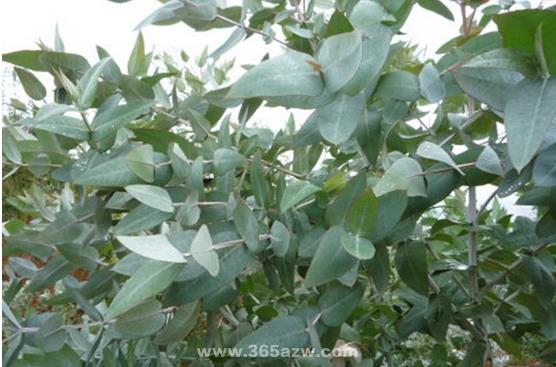
One view is that eucalyptus is not only non-toxic, but can also be directly used by animals and humans. In Australia there is an animal called the koala (tree-dwelling bear), which lives in eucalyptus forests and feeds exclusively on eucalyptus leaves. If eucalyptus were toxic, could animals eat it? In addition, eucalyptus forests are found everywhere from south to north in Australia, and the water-conservation forests for the drinking water sources of major cities are basically all eucalyptus. Yet Australians, who put life above all else, have never reported that the water in eucalyptus forest areas is bad, let alone toxic. Furthermore, eucalyptus has a by-product -- eucalyptus oil, a class of natural compounds extracted from eucalyptus leaves, which is a raw material used in cosmetics and medicines. Many throat lozenges contain eucalyptus oil ingredients. Therefore, saying eucalyptus is toxic is completely groundless, mainly caused by people not understanding eucalyptus.
Another view is that the koala is an animal very picky about food, feeding only on eucalyptus leaves from Australia. Eucalyptus leaves are particularly high in fiber but particularly low in nutrients, and for other animals, eucalyptus leaves are also highly toxic.
To adapt to this low-nutrient food, over a long period the koala has evolved a special fiber-digesting organ -- the cecum. Other animals, such as humans, also have a cecum, but compared with the koala's cecum, which is up to 2 m long, it is simply negligible. The millions of microorganisms in the cecum can break down fiber in food into nutrients that the koala can absorb.

Eucalyptus leaves have both pros and cons. We must choose to use eucalyptus leaves correctly in order to maximize the effects of eucalyptus leaves.
but particularly low in nutrients, and for other animals, eucalyptus leaves are also highly toxic.To adapt to this low-nutrient food, over a long period the koala has evolved a special fiber-digesting organ -- the cecum. Other animals, such as humans, also have a cecum, but compared with the koala's cecum, which is up to 2 m long, it is simply negligible. The millions of microorganisms in the cecum can break down fiber in food into nutrients that the koala can absorb.
Eucalyptus leaves have both pros and cons. We must choose to use eucalyptus leaves correctly in order to maximize the effects of eucalyptus leaves.