What are the side effects of dwarf lilyturf? These precautions are needed when taking it
As a common traditional Chinese medicinal herb in the tonic category, dwarf lilyturf has a wide range of applications, and its efficacy has been well received and affirmed by the public. So does dwarf lilyturf also have side effects? Below let us look at an introduction to the side effects of dwarf lilyturf and folk remedies for treating illness.
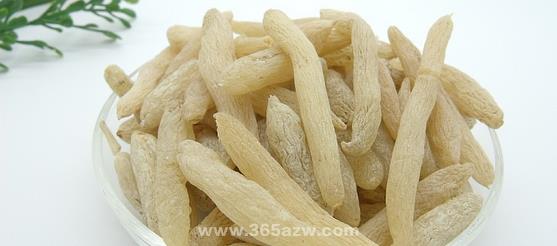
I. Side effects of dwarf lilyturf
Dwarf lilyturf is cold in nature. If due to deficiency-cold of the spleen and stomach, there is diarrhea with loose stools, white greasy tongue coating, or indigestion, it should not be used. For all cases of deficiency-cold of the spleen and stomach with diarrhea, phlegm-fluid and damp turbidity in the stomach, and sudden wind-cold cough, it is contraindicated. (1) "Collective Annotations to the Classic of Materia Medica": "Rehmannia and plantain are its guiding herbs. It is antagonistic to coltsfoot and bitter gourd. It is incompatible with sophora root and green lotus leaf." (2) "On Medicinal Properties": "It is antagonistic to bitter medicine. It is incompatible with wood ear." (3) "Compendium of Materia Medica": "Those with weak qi and cold stomach must absolutely not take it."
1. Dwarf lilyturf has good clinical safety; subacute toxicity experiments in animals prove that the drug's toxicity is very low.
2. There are reports that taking dwarf lilyturf causes allergic reactions manifested as nausea, vomiting, palpitations, restlessness, generalized erythema, and itching.
3. Dwarf lilyturf is cold in nature and moistening in quality, with a relatively good effect of nourishing yin and moistening dryness. It is suitable for patterns of illness with yin deficiency internal heat and dry cough with depleted fluids, and is not suitable for patterns of illness caused by failure of the spleen's transformation and transportation due to spleen deficiency, such as water dampness, cold dampness, phlegm turbidity, and obvious qi deficiency. When using dwarf lilyturf clinically as a tonic to supplement deficiency, attention should be paid to pattern differentiation; improper use will generate dampness and phlegm, causing adverse reactions such as excessive phlegm, bland taste in the mouth, and poor appetite.
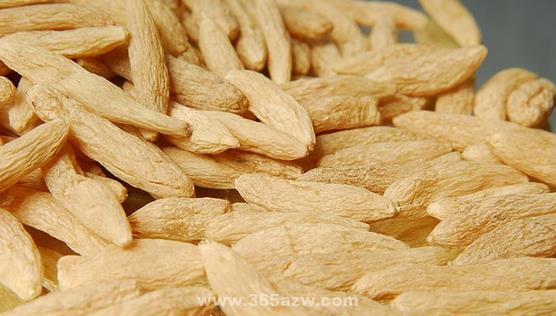
II. Folk remedies of dwarf lilyturf for treating illness:
1. Constitutionally yin-deficient: dwarf lilyturf (fresh product, with the core removed) 2500 grams, mash thoroughly, cook, squeeze out the juice, add 500 grams of honey, place in a pot (do not use an aluminum pot or iron pot) and cook in a double boiler, stirring constantly, until the liquid is thick like syrup, then store in a porcelain container for later use. Take 1 spoonful each time mixed with warm wine, 2 times daily. Taken long-term, it has the effect of nourishing and strengthening the body and prolonging life.
2. Chronic atrophic gastritis: dwarf lilyturf, codonopsis, adenophora, fragrant solomonseal rhizome, and trichosanthes root 9 grams each; mume fruit, anemarrhena rhizome, and licorice 6 grams each. Decoct in water, 1 dose daily.
3. Chronic gastritis: dwarf lilyturf 9 grams, astragalus 9 grams, codonopsis 10 grams, fragrant solomonseal rhizome 10 grams, polygonatum 10 grams, trichosanthes root 12 grams. Decoct in water, 1 dose daily. It has good effect on those with insufficient stomach yin.
4. Diabetes, thirst with frequent drinking: dwarf lilyturf 12 grams, rehmannia 12 grams, trichosanthes root 10 grams, anemarrhena rhizome 12 grams, coptis 5 grams. Decoct in water, 1 dose daily. It has the effect of relieving dry thirst.
5. Dryness of the intestines with constipation, dry bound stool: dwarf lilyturf 15 grams, rehmannia 15 grams, scrophularia 15 grams. Decoct in water, 1 dose daily. It has the effect of moistening the intestines and relieving constipation.
6. In summer, excessive sweating with thirst and fatigue: dwarf lilyturf 10 grams, ginseng 10 grams, schisandra 6 grams. Decoct in water, 2 doses daily. This method also has good effect for symptoms of sweating with collapse, palpitations, and abnormally low blood pressure.
7. Acute and chronic bronchitis, presenting as dry cough due to yin deficiency: dwarf lilyturf, asparagus fern, anemarrhena rhizome, Sichuan fritillary, and stemona 9 grams each, adenophora 12 grams. Decoct in water, 1 dose daily.
8. Coronary heart disease with angina pectoris: dwarf lilyturf 45 grams, add water and decoct into 30-40 milliliters, take in divided doses, continuously for 3-18 months. It has a certain effect on relieving angina pectoris, chest tightness, and improving the electrocardiogram.
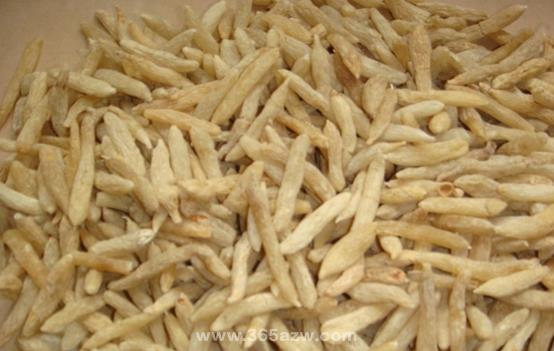
Because dwarf lilyturf is a herbaceous plant and itself has no side effects on the human body, in the dry environment of winter, people who understand health preservation often brew dwarf lilyturf in water to drink; long-term drinking can clear heat and moisten the lungs, effectively relieving dryness, constipation, and other symptoms.