What to Do When Dieffenbachia (Dumb Cane) Leaves Turn Yellow? Common Causes and Solutions
Dieffenbachia (Dumb Cane) is a beloved, excellent ornamental plant. Small potted specimens can be placed on a desk or windowsill for viewing. Medium-sized potted plants are suitable for the living room, placed beside the sofa as decoration, filling the interior with green vitality. But what should you do if your Dieffenbachia suddenly turns yellow?
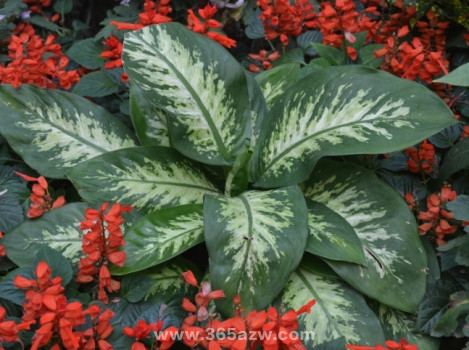
Dealing with Yellowing Leaves on Dieffenbachia (Dumb Cane)
1. Normal Aging
If cared for properly, yellowing leaves on Dieffenbachia are a normal part of metabolism; as the plant grows, the lower leaves begin to age and turn yellow.
Solution: There is no need to worry about yellowing leaves caused by normal aging in Dieffenbachia, but yellow leaves, remnant leaves and some old leaves at the lower part of the plant should be pruned promptly.
2. Overwatering
Dieffenbachia has fleshy roots and is most afraid of waterlogging. Therefore, it should not be watered too much, otherwise root rot is easily caused, which in turn leads to yellowing leaves.
Solution: Normally, just water an appropriate amount; do not water unless the potting soil is dry. It is better to keep it on the dry side than too wet. Apart from summer, when the potting soil should be kept moist, watering in spring and autumn should not be too frequent. However, the air must be kept humid, as dry air can also easily cause undesirable conditions such as yellowing leaves in Dieffenbachia.
3. Excessive Sunlight
Dieffenbachia prefers a semi-shaded environment and should be protected from direct strong sunlight in summer. Direct strong sunlight easily causes the leaf edges to scorch or even turn yellow and withered. Too much light easily causes sunburn, while too little light makes it difficult to flower and fruit, affecting the ornamental effect.
Solution: In spring, summer and autumn, Dieffenbachia should be shaded by more than 60%; in winter, shade by 40%.
4. Temperature Too Low
The suitable growing temperature is 15-18°C, and the lowest temperature must not fall below 5°C, otherwise frost damage easily occurs, causing the leaves to turn yellow.
Solution: In winter, when Dieffenbachia goes dormant, it should be moved into a greenhouse, placed in a sunny spot, and kept at a temperature above 10°C; the following year it will sprout new leaves again.
5. Overfertilizing
Overfertilizing is another common cause of yellowing leaves in Dieffenbachia, mainly because it causes fertilizer burn, damaging the roots and so on.
Solution: During the growing season, apply liquid fertilizer once every 10-15 days as a top dressing; fertilizing should be stopped in winter.
6. Pest and Disease Infestation
Brown soft scale infestation can also cause yellowing leaves in Dieffenbachia. When brown soft scale harms Dieffenbachia leaves, it generally gathers in clusters on the leaf surface or on tender leaves, sucking the plant's sap and excreting a sticky substance. Its excrement easily causes sooty mold fungi to multiply in large numbers, turning the stems and leaves black, affecting the plant's photosynthesis, resulting in weakened growth, yellowing leaves and reduced ornamental value.
Solution: If there are few affected plants or few insects, simply scrape off the insects with a bamboo strip or similar. If during the insect hatching period, spray with 40% dimethoate emulsifiable concentrate at 1000 times dilution (or 40% omethoate emulsifiable concentrate at 1000 times dilution); spraying with 5% phosmet emulsifiable concentrate at 1000 times dilution can also eliminate them.
7. Leaves Too Dirty
Normally, care should be taken to keep the leaves of Dieffenbachia clean and tidy. If too much dust accumulates on the leaves and affects photosynthesis, it can also cause the leaves to turn yellow.
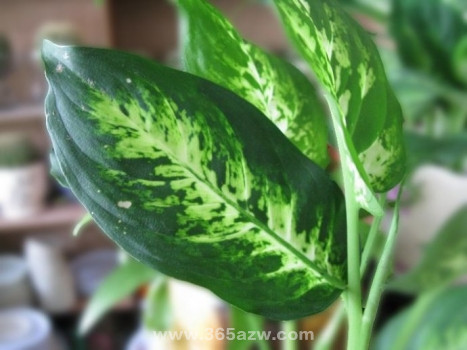
Solution: At regular intervals, wipe the leaves with a clean damp cloth to keep them clean.
Tip: Dieffenbachia can generally be grown in ordinary garden soil, but a slightly acidic sandy loam rich in humus and loose, well-draining soil is best.